Blog

  • Pastora is expelled for having a large… See more

    Pastora is expelled for having a large… See more

    The auditorium held its breath the way a church holds incense. Warm amber lights poured down from the rigging and found her at once, turning the black of her long-sleeved blouse into something almost liquid and the high-waisted beige pencil skirt into a second skin that caught every fold and highlight. Elena Vale stood center stage with a black handheld microphone whose blue band glinted once when she lifted it. Her light-brown hair, streaked with quiet blonde, fell past her shoulders in a straight, shining sheet that the lights treated like another instrument.


  • What swe.lling in your hands and feet might mean for your health? 😨

    What swe.lling in your hands and feet might mean for your health? 😨

    What swe.lling in your hands and feet might mean for your health? 😨

    See any of these symptoms? Don’t hesitate — get checked immediately!


    The liver plays a vital role in filtering toxins, aiding digestion, regulating metabolism, and supporting the immune system. Despite its importance, liver damage often develops silently, without clear pain in the early stages, making it easy to overlook until it becomes serious.

    As the liver begins to fail, the body sends warning signals. These signs are not random—they indicate that the liver is struggling to perform essential functions. Recognizing them early can help prevent severe complications.

    One of the earliest warning signs is persistent itching. This type of itching often occurs without a visible rash and may feel deep under the skin. It can worsen at night and does not respond well to typical treatments.

    This happens because bile salts build up in the bloodstream when the liver cannot process them properly. Over time, the skin may also appear dry, irritated, or slightly yellowish, signaling a deeper issue.

    Another major sign is jaundice, where the skin and the whites of the eyes turn yellow. This occurs due to a buildup of bilirubin, a substance the liver normally processes and removes from the body.

    Jaundice is often accompanied by dark urine and pale stools. When this symptom appears, it usually means the liver is already under significant stress and requires immediate medical attention.

    Unexplained fatigue is also common in liver problems. Feeling constantly tired, even after proper rest, may indicate that the body is not processing energy efficiently due to liver dysfunction.

    While these symptoms do not always mean severe disease, they should never be ignored. Early medical evaluation can make a critical difference, helping detect problems before they progress further.


  • THE DEVASTATING TRUTH ABOUT WHY YOUR CHILDREN ARE SECRETLY RUNNING AWAY FROM HOME

    THE DEVASTATING TRUTH ABOUT WHY YOUR CHILDREN ARE SECRETLY RUNNING AWAY FROM HOME

    Behind the polished veneer of suburban perfection lies a silent, suffocating epidemic that is shattering the hearts of a generation. You think you are giving your children everything—the best schools, the finest clothes, and a roadmap to success—but you are actually building a gilded cage. Every time you push for higher grades or demand they follow your precise blueprint, you are tearing them apart from the inside out. They are suffocating under the weight of your expectations, trading their authentic souls for your approval. You are losing them one day at a time, and the reason why will haunt you forever.

    In the modern landscape of family dynamics, a quiet crisis is unfolding behind the closed doors of seemingly idyllic homes. It is a crisis not of material lack, but of an emotional deficit that is far more difficult to detect: the systematic erosion of unconditional love. For decades, parents have been misled, convinced that their primary role is to act as architects of their children’s lives, molding them into predetermined shapes that fit societal standards, academic benchmarks, or inherited family legacies. However, as we navigate 2026, the harsh reality is undeniable. This sculpting approach often overlooks the most critical requirement for human flourishing: the fundamental need for a child to be seen, heard, and accepted exactly as they are, without the looming shadow of performance.

    The concept of being enough has become terrifyingly fragile for today’s youth. When a home is built on the foundation of expectations rather than empathy, the message received by the child is that love is merely a commodity to be earned through achievement. This creates a conditional environment where affection is inextricably linked to report cards, athletic prowess, or the forced suppression of one’s true personality. The psychological toll of this dynamic is catastrophic. Research in child development consistently demonstrates that a child’s long-term well-being depends entirely on the presence of emotional safety. Without this sanctuary, the home transforms into a high-stakes arena where the child must constantly mask their true self just to maintain the peace.

    At its core, emotional safety is the invisible thread that holds the fabric of a healthy family together. It is the unwavering assurance that honesty will be welcomed even when it is uncomfortable, and that individuality will be honored even when it deviates from the family script. When a child feels that their home is a place where they can express themselves without the paralyzing fear of judgment or the withdrawal of affection, they develop an internal sense of security that serves as armor against a harsh world. This kind of environment builds a foundation of trust that cannot be manufactured through strict discipline or rigid control; it is nurtured through thousands of small, consistent acts of radical understanding and patience.

    The scientific community has been sounding the alarm on the dangers of pressure-cooker parenting for years. Children who feel forced to meet unrealistic expectations or hide core parts of their identity are significantly more likely to experience chronic stress, debilitating anxiety, and a fractured sense of self-worth. They are learning to navigate life by external validation, constantly looking to others to tell them who they should be. In stark contrast, children who grow up in a nurturing environment where love is offered without strings attached demonstrate remarkable resilience. They are better equipped to navigate the inevitable challenges of adulthood because they possess a solid internal compass rooted in the profound knowledge that they are inherently valuable. They do not spend their lives starving for validation because they received the ultimate validation at home: the right to exist as their authentic, unedited selves.

    Ultimately, the shift from a culture of judgment to a culture of radical empathy benefits more than just the individual child; it strengthens the entire community. When we prioritize understanding over control, we are raising a generation of confident, secure individuals who are capable of extending that same grace to others. A home rooted in kindness and open communication becomes fertile ground for the development of emotional intelligence, the very trait that defines leadership and meaningful relationships in the modern world. By choosing to listen instead of lecture, and to support instead of steer, parents can transform a house into a true foundation for a fulfilling life.

    Creating this space requires a courageous departure from traditional power-over parenting models. It involves a commitment to curiosity, asking who are you? rather than dictating this is who you should be. It means acknowledging that a child’s path may look nothing like their parents’ path, and that this divergence is not a failure, but a triumph of individuality. In a world that is increasingly demanding and competitive, the home must remain the one sanctuary where the mask can be removed. If a child cannot be honest at the dinner table, they will eventually find a table where they can be—and often, those tables are found in places that lead far away from the family’s core values and safety.

    The warning signs of a home lacking in emotional safety are often subtle. They manifest as a child who appears too perfect, a teen who has stopped sharing their day-to-day life, or a young adult who keeps their parents at a painful emotional distance. These are survival mechanisms, desperate attempts to protect the self from the sting of rejection. To break these patterns, parents must be willing to engage in the difficult work of self-reflection, examining their own biases and the conditions they may be unconsciously placing on their love. It is about realizing that the most powerful lesson a parent can teach is not how to follow a pre-written script, but how to write their own unique story.

    As we look toward the future, the families that will thrive are those that embrace the acceptance model. These are the families that view mistakes as learning opportunities rather than character flaws, and that celebrate the unique quirks of every member. A home built on this level of acceptance becomes more than just a roof and four walls; it becomes a launchpad. It provides the psychological fuel necessary for a child to reach their full potential on their own terms. Love without conditions is the greatest gift a parent can give, and in 2026, it is the most revolutionary act of parenting possible. By choosing empathy, we are not just helping our children grow; we are ensuring that the bonds we build today will be strong enough to last a lifetime, regardless of what the future holds.

  • Kimberly Guilfoyle, the U.S. ambassador to Greece and Donald Trump Jr.’s ex-fiancée, reportedly asked a Kentucky Republican radio host and donor to cover $100,000 she owed to American Express just days before her Senate confirmation hearing. Click the link in the first comment for the full story. ⬇️

    Kimberly Guilfoyle, the U.S. ambassador to Greece and Donald Trump Jr.’s ex-fiancée, reportedly asked a Kentucky Republican radio host and donor to cover $100,000 she owed to American Express just days before her Senate confirmation hearing. Click the link in the first comment for the full story. ⬇️

    Kimberly Guilfoyle Reportedly Asked for Trump Donor to Pay Her $100K Credit Card Bill: ‘Honey Please’

    The U.S. ambassador to Greece and Donald Trump Jr.’s ex-fiancée disputed the authenticity of the text messages published by ‘The Wall Street Journal’

    • Kimberly Guilfoyle reportedly asked a Kentucky Republican radio host to cover $100,000 she owed to American Express just days before her Senate confirmation hearing
    • The U.S. ambassador to Greece and Donald Trump Jr.’s ex-fiancée denied the claims and the authenticity of the text messages included in a Wall Street Journal report
    • “It won’t show up anywhere if you wire money to American Express,” the report claims Guilfyole reportedly texted Eric Deters on July 3, 2025, six days before her hearing

    Kimberly Guilfoyle, the U.S. ambassador to Greece and Donald Trump Jr.’s ex-fiancée, reportedly asked a Kentucky Republican radio host and donor to cover $100,000 she owed to American Express just days before her Senate confirmation hearing.

    “It won’t show up anywhere if you wire money to American Express,” Guilfyole, 57, is said to have texted Eric Deters on July 3, 2025, according to messages published by The Wall Street Journal this week. “Please.”

    She allegedly added, “Honey please I need you to get this done for me today,” alongside a prayer hands emoji and payment instructions for American Express. “You could just send it here.”

    Deters told the Journal in their report published on Wednesday, Oct. 7, that he couldn’t make the payment because it would cost him his marriage. The former congressional candidate let the paper review hundreds of text messages, emails and letters with the ambassador.

    Guilfoyle’s lawyer, Jesse Binnall, told the Journal that the text messages — which were sent over the encrypted messaging app Signal — were inauthentic in some form, but did not offer evidence or explanation.

    Binnall told the paper that Guilfoyle “was owed a balance for traveling to and supporting” events ahead of her nomination last summer, but Deters denied owing her any money.

    “Guilfoyle’s career in and out of public service is guided by deep and abiding values,” a U.S. embassy official told the Journal. “She was fully vetted by the bipartisan Senate Foreign Relations committee and confirmed by the U.S. Senate. The Ambassador remains committed to representing the American people with dedication and integrity.”

    When reached for comment, Deters shared with PEOPLE 292 pages of purported correspondence with Guilfoyle and others in President Donald Trump’s orbit; pictures of him with the president, Guilfoyle and Don Jr.; and an eight-page statement calling Guilfoyle “a wicked grifter” and accusing the Trump family — including the president — of using their political power to enrich themselves.

    PEOPLE could not immediately verify the authenticity of the texts Deters shared.

    The White House, the State Department, the U.S. Embassy in Greece, and Guilfoyle’s lawyer did not immediately respond to PEOPLE’s requests for comment on Thursday, Oct. 8.

    “Here is what no one writes about. Trump ONLY aligns himself with billionaires, MAGA congressmen, senators and governors and any story which he can benefit from the press,” Deters wrote in his statement shared with PEOPLE. “How many boards have Eric and Don Jr. been appointed to and instantly financially gain? Right out in the open.”

    Deters said he made the text messages and other correspondence public because Guilfoyle did not help him get federal assistance for the victims of an Ohio-area doctor who the Department of Health and Human Services says fled the country after he was indicted on federal charges in 2013 for performing unnecessary spinal surgeries and billing fraudulent insurance claims.

    The Kentucky Republican, who says he’s donated hundreds of thousands of dollars to the president’s campaign and adjacent political operations in recent years, said in his written statement that he emailed Guilfoyle, Don Jr., White House chief of staff Susie Wiles, and a producer who works for Don Jr. on Oct. 1, “giving President Trump and them one final opportunity” before sharing the texts with the media.

    When asked about the Journal’s report on Guilfoyle as he left Greece on Thursday, Secretary of State Marco Rubio told reporters, “Guys, let me tell you something, okay? You’re going to ask me this, you’re going to ask me again in Portugal. I know the game. I’m not going to comment on a story that literally posted a few hours ago.”

  • 60-Year-Old Man Goes Viral After He..SEE MORE

    60-Year-Old Man Goes Viral After He..SEE MORE

    A touching video showing a 60-year-old man helping a woman who was reportedly experiencing homelessness has captured widespread attention online. The brief nighttime clip has been shared across social media, with many viewers praising the stranger for stopping when others might have continued driving.

    In the footage, the woman appears to be lying on pieces of cardboard near a busy road. Cars pass only a short distance away as the older man approaches her carefully and checks whether she is responsive. He then bends down and attempts to help her move from the pavement.

  • 😢Teen Sentenced to 52 Years in Prison After He Ra…See moree

    😢Teen Sentenced to 52 Years in Prison After He Ra…See moree

    Teen’s Prison Sentence Sparks Worldwide Debate Over Juvenile Justice

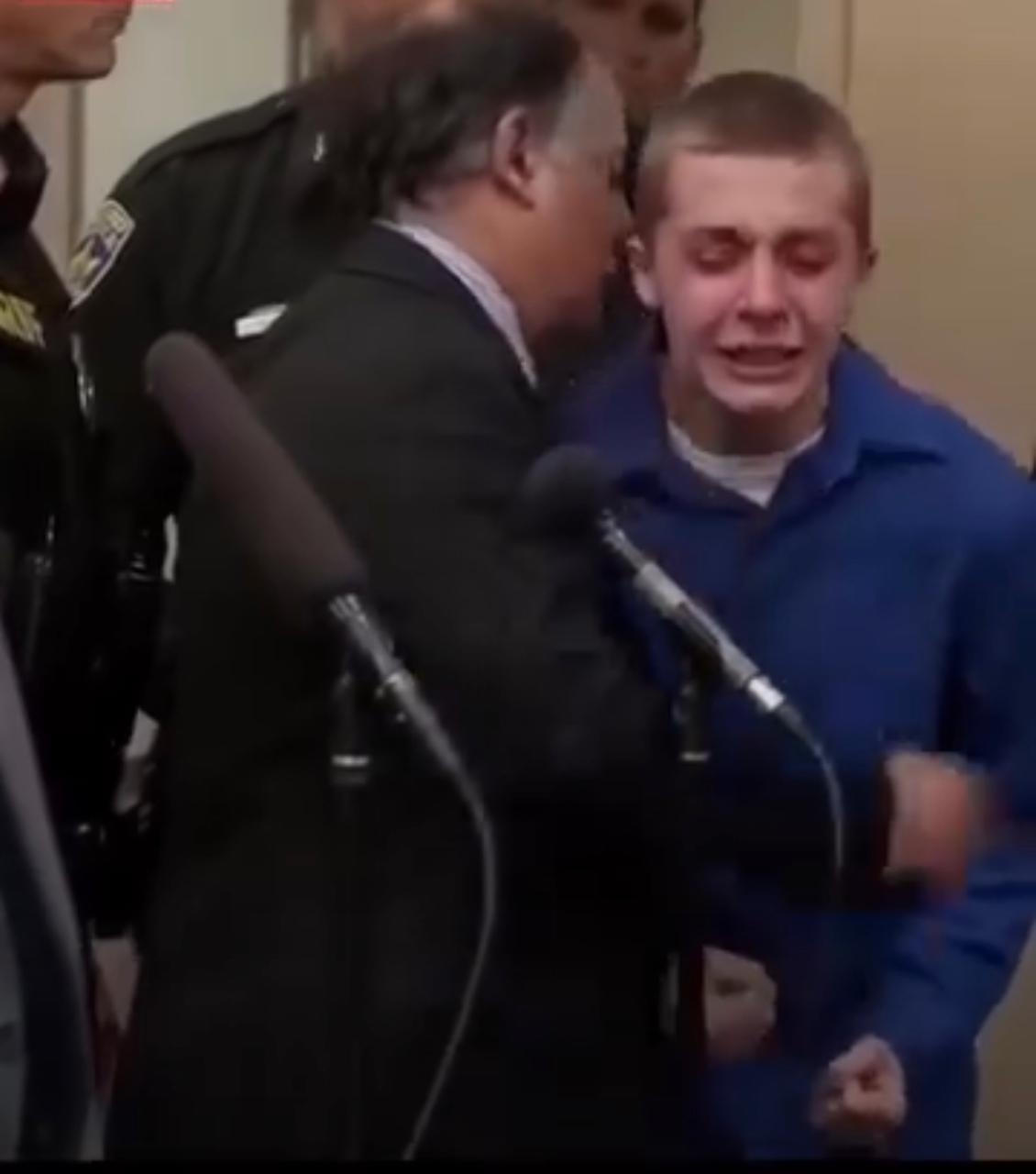
    A courtroom became the center of national attention after a teenage defendant received an extraordinarily long prison  sentence. The moment shocked everyone present as the judge calmly announced the decision. Witnesses described the room falling completely silent while the young defendant processed the outcome. Soon after, videos and reports from the sentencing spread widely online, turning the case into a major topic of public discussion.

  • Iran Hits U.S. Host Sites in the Gulf; Defenses and Hormuz Stay on Alert

    The war may have started in Iran, but tonight, its danger is spreading across the Persian Gulf.

    Iran has repeatedly launched missiles and drones toward countries that host American forces, including Bahrain, Qatar, Kuwait, and the United Arab Emirates. Tehran says it is targeting U.S. military facilities. Gulf governments say they are intercepting weapons, dealing with falling debris, closing airspace, and protecting civilians.

    That distinction matters because the bases are surrounded by cities and critical infrastructure.

    The UAE hosts U.S. forces at Al Dhafra, west of Abu Dhabi. Qatar is home to Al Udeid, a major U.S. command hub. Kuwait has several facilities connected to American forces, while Bahrain hosts the U.S. Fifth Fleet.

    Iran has repeatedly named these locations in its claims of military strikes. Gulf officials, however, have often reported interceptions rather than confirmed direct hits on the bases themselves.

    Yet the danger does not disappear when a missile is intercepted. Debris can fall into populated areas, damage infrastructure, or injure civilians.

    The biggest concern may now be beyond the bases themselves. The Strait of Hormuz remains a critical shipping route, and military warnings, attacks, mines, and insurance risks are already disrupting commercial traffic.

    For Gulf governments, the dilemma is becoming harder to avoid: the American military presence is intended to provide security, but Iran says that same presence makes their territory a target.

    And with every new night of sirens, the distance between a regional conflict and a much wider war becomes harder to ignore.


  • A quiet afternoon in a suburban backyard turns into a terrifying emergency when a neighbor’s powerful Doberman suddenly breaks through a damaged fence and rushes toward a mother’s two toddler twins playing in a sandbox. In a moment of panic, the dog grabs both children by their jackets and begins dragging them across the yard toward the street, causing immediate chaos and fear. The mother rushes outside and manages to fight the dog off, pulling her children to safety despite its intense strength and resistance. While she believes the attack is over, the dog behaves strangely, repeatedly returning to the sandbox and digging frantically instead of fleeing or continuing aggression. As authorities arrive and the situation escalates, it becomes clear that the dog’s behavior may not have been a simple attack. His actions suggest he was focused on something hidden underground, hinting at a deeper and more dangerous threat beneath the family’s yard. (Check first in all comments👇)

    A quiet afternoon in a suburban backyard turns into a terrifying emergency when a neighbor’s powerful Doberman suddenly breaks through a damaged fence and rushes toward a mother’s two toddler twins playing in a sandbox. In a moment of panic, the dog grabs both children by their jackets and begins dragging them across the yard toward the street, causing immediate chaos and fear. The mother rushes outside and manages to fight the dog off, pulling her children to safety despite its intense strength and resistance. While she believes the attack is over, the dog behaves strangely, repeatedly returning to the sandbox and digging frantically instead of fleeing or continuing aggression. As authorities arrive and the situation escalates, it becomes clear that the dog’s behavior may not have been a simple attack. His actions suggest he was focused on something hidden underground, hinting at a deeper and more dangerous threat beneath the family’s yard. (Check first in all comments👇)

    A quiet suburban afternoon was unfolding like any other, with children playing outside and parents briefly stepping away from the constant supervision that usually defines early childhood safety. In the backyard of a modest family home, two young twins were playing in a sandbox, absorbed in their usual imaginative games while their mother watched intermittently from inside the house.

    The neighborhood was calm, and nothing suggested that this ordinary moment would soon turn into a sequence of events that would later be described as life-changing for everyone involved.

  • Kobe Bryant’s Final Mome…..See more😢😳👇

    Kobe Bryant’s Final Mome…..See more😢😳👇

    obe Bryant: The Final Chapter of a Legendary Life and the Legacy of Mamba Mentality

    LOS ANGELES — Few athletes in the history of sport have left behind a legacy as powerful, complex, and enduring as Kobe Bryant. With his laser-focused stare, extraordinary footwork, relentless work ethic, and uncompromising competitive spirit, Bryant became much more than a basketball superstar. He became a symbol of determination, discipline, ambition, and the relentless pursuit of excellence.

    For millions of fans around the world, Kobe represented something bigger than basketball. His career was built on difficult shots, unforgettable performances, championships, setbacks, comebacks, and an extraordinary willingness to work harder than almost anyone around him. His famous “Mamba Mentality” became a philosophy that reached far beyond the basketball court.

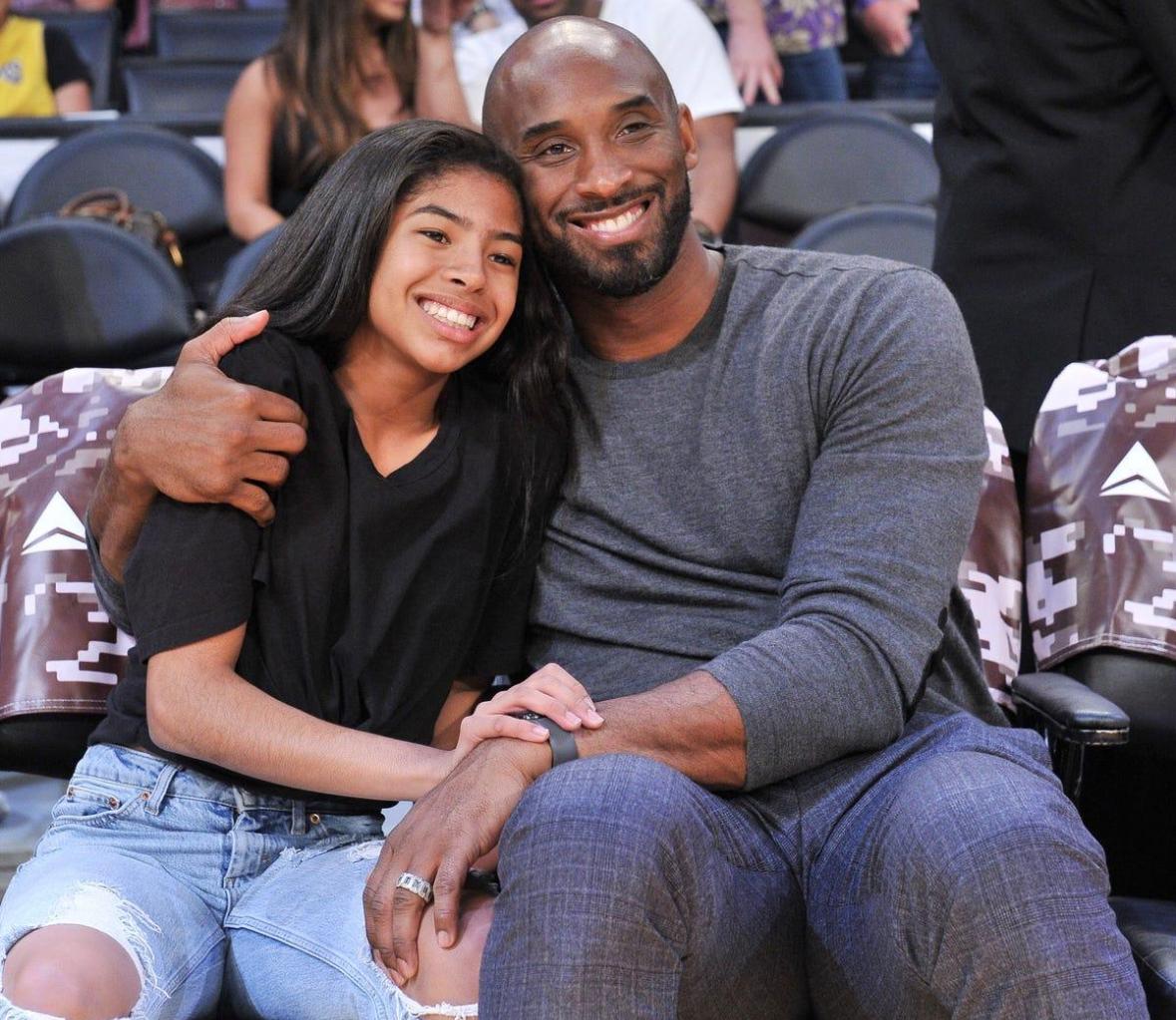
    Bryant’s life was tragically cut short on January 26, 2020, when a helicopter crash in Calabasas, California, claimed his life along with the lives of eight other people, including his 13-year-old daughter, Gianna. The tragedy shocked the sporting world and millions of people who had never met him.

    Yet Kobe Bryant’s story cannot be reduced to the circumstances of his death. His final chapter is only one part of a much larger story — a story about a young boy who dreamed of becoming a professional basketball player, a teenager who entered the NBA, and a competitor who spent two decades challenging himself to become better.

    A Childhood Built Around Basketball

    Kobe Bean Bryant was born on August 23, 1978, in Philadelphia, Pennsylvania. Basketball was part of his life from an early age. His father, Joe “Jellybean” Bryant, was a professional basketball player, and the family eventually spent several years living in Italy while Joe continued his career overseas.

    Those years had a profound influence on Kobe. He learned to speak Italian and developed a love for basketball while watching and playing the game in Europe. Rather than simply treating basketball as entertainment, he became fascinated by the details of the sport.

    By the time Bryant returned to the United States, his ambitions were already enormous.

    At Lower Merion High School in Pennsylvania, he quickly established himself as one of the country’s most talented young players. His performances attracted national attention, and after graduating from high school, he made the extraordinary decision to enter the NBA directly rather than play college basketball.

    In 1996, the Charlotte Hornets selected Bryant with the 13th overall pick before he was traded to the Los Angeles Lakers.

    He was only 18 years old.

    Becoming a Laker

    Bryant’s early NBA years were not immediately defined by dominance. He was a teenager learning how to compete against experienced professional athletes. There were spectacular moments, but there were also mistakes and difficult lessons.

    Instead of allowing those challenges to discourage him, Bryant used them as motivation.

    His work ethic became legendary. Stories circulated about his willingness to arrive at the gym before sunrise and continue practicing long after teammates had left. Whether working on footwork, shooting, conditioning, or individual moves, he approached improvement with extraordinary intensity.

    That mentality eventually transformed him from a promising teenager into one of the NBA’s most formidable players.

    In 1998, Bryant was selected as an NBA All-Star for the first time. He was only 19 years old.

    The following years brought increasing success. Alongside Shaquille O’Neal and under coach Phil Jackson, Bryant became part of a Lakers team that dominated the NBA at the beginning of the new millennium.

    Three Championships and a New Era

    The Lakers won three consecutive NBA championships from 2000 through 2002.

    For Bryant, those championships established him as one of the game’s elite young stars. But success also brought pressure.

    His relationship with O’Neal became a major subject of public discussion. The two superstars had different personalities and approaches, and their partnership eventually ended when O’Neal was traded away from Los Angeles in 2004.

    Many wondered what the Lakers would look like without O’Neal.

    Bryant responded by taking an even larger role.

    The 81-Point Game

    One of the defining performances of Bryant’s career came on January 22, 2006, when the Lakers played the Toronto Raptors.

    Bryant scored 81 points.

    It was the second-highest scoring performance by a player in a single NBA game at the time, behind only Wilt Chamberlain’s 100-point game.

    The performance became a defining example of Bryant’s offensive ability. He attacked from every area of the court, combining footwork, shooting, athleticism, and an extraordinary ability to create difficult shots.

    But the 81-point game was not simply about scoring.

    It demonstrated Bryant’s mentality.

    He believed that when an opportunity existed to improve or compete, he had to embrace it. That approach could sometimes make him controversial, but it also helped make him extraordinary.

    From Superstar to Champion Again

    Bryant eventually found championship success again.

    In 2008, he won the NBA Most Valuable Player award, recognizing him as the league’s best regular-season player.

    The Lakers returned to the NBA Finals that year but lost to the Boston Celtics.

    That defeat became fuel.

    In 2009, the Lakers defeated the Orlando Magic to win the NBA championship, and Bryant was named Finals MVP.

    One year later, the Lakers returned to the Finals and faced their historic rivals, the Boston Celtics.

    The Lakers won the series in seven games.

    For Bryant, the victory represented more than another championship. It was a personal milestone because it came against the franchise’s greatest rival and followed years of criticism and pressure.

    He now had five NBA championships.

    The Meaning of Mamba Mentality

    Perhaps Bryant’s greatest influence came through the philosophy he called “Mamba Mentality.”

    The phrase became associated with his approach to life and competition.

    Mamba Mentality was not simply about winning every game. At its core, it was about preparation, persistence, discipline, and a willingness to confront weaknesses.

    Bryant often emphasized the importance of becoming better through consistent effort.

    The philosophy resonated with people far beyond basketball.

    Students used it to describe their approach to education. Entrepreneurs adopted it as a mindset for building businesses. Athletes in other sports referenced it when discussing preparation and resilience.

    Kobe had transformed a personal philosophy into a global idea.

    The Final Years of His Basketball Career

    Bryant’s final years as an NBA player were complicated by injuries.

    His body had endured years of intense competition, and in 2013 he suffered a devastating Achilles tendon injury. Many athletes might have considered such an injury a career-ending event.

    Bryant returned.

    His final NBA season came in 2015–16. On April 13, 2016, he played his last professional game for the Los Angeles Lakers against the Utah Jazz.

    At 37 years old, Bryant scored 60 points.

    It was a remarkable ending to an extraordinary basketball career.

    After the game, he famously thanked Lakers fans and concluded his farewell by expressing his love for basketball.

    He walked away from the NBA after 20 seasons, all with the Lakers.

    Life After Basketball

    Retirement did not mean that Bryant stopped working.

    Instead, he entered a new phase of his life.

    He became involved in storytelling, media, business, youth sports, and creative projects. His company, Granity Studios, focused on developing stories and entertainment centered around sports and athletes.

    Bryant also became an Academy Award-winning filmmaker.

    His animated short film Dear Basketball, based on a poem he wrote about his retirement, won the Academy Award for Best Animated Short Film in 2018.

    This achievement demonstrated that his ambitions extended beyond basketball.

    He was also deeply involved in youth basketball and supported the development of his daughter Gianna, who shared his passion for the game.

    January 26, 2020

    On the morning of January 26, 2020, Kobe Bryant traveled by helicopter in California.

    The helicopter crashed in Calabasas, killing everyone aboard.

    Bryant was 41 years old.

    His daughter Gianna was 13.

    The tragedy sent shockwaves around the world.

    News organizations interrupted programming. Basketball games were played under an atmosphere of grief. Players, coaches, celebrities, and fans shared memories of Bryant.

    The Los Angeles Lakers organization and its supporters faced the loss of one of the most important figures in franchise history.

    For many people, the tragedy was difficult to comprehend because Bryant had seemed larger than life.

    He had retired from basketball, but his public journey was still unfolding. He was creating stories, mentoring young athletes, spending time with his family, and exploring new professional challenges.

    His life had entered a new chapter.

    That chapter ended far too soon.

    Remembering More Than the Athlete

    In the years following his death, conversations about Kobe Bryant have continued to evolve.

    Fans remember the championships.

    They remember the 81-point game.

    They remember the fadeaway jumper, the footwork, the intensity, the celebrations, and the famous No. 24 jersey.

    But people also remember the person beyond the statistics.

    Bryant was a father, husband, filmmaker, entrepreneur, mentor, and storyteller.

    His daughter Gianna was particularly important to his life after basketball. Their shared love of the game became a meaningful part of his later years.

    Their relationship also inspired countless fans who saw Bryant not simply as a superstar but as a parent investing his time and energy into the next generation.

    A Legacy That Continues

    Kobe Bryant’s statistical achievements are extraordinary.

    Five NBA championships.

    Two Olympic gold medals.

    One NBA MVP award.

    Two Finals MVP awards.

    18 All-Star selections.

    20 seasons with the Los Angeles Lakers.

    Thousands of points.

    Countless unforgettable performances.

    But statistics alone cannot explain his influence.

    Bryant’s greatest legacy may be the mentality he inspired in others.

    He taught fans that talent is only one part of achievement. Preparation matters. Discipline matters. Failure matters. The willingness to get back up after disappointment matters.

    His career was not perfect, and neither was his life. Like every public figure, Bryant’s story included controversy, criticism, mistakes, and difficult periods. Remembering him honestly means acknowledging the full complexity of a human life while recognizing the enormous impact he had on sports and popular culture.

    Forever Part of Los Angeles

    Los Angeles became inseparable from Kobe Bryant’s identity.

    For two decades, he wore the Lakers uniform and played in front of generations of fans. He became one of the defining sports figures in the city’s history.

    The purple and gold became associated with his name.

    Even after his retirement, his influence remained visible throughout Los Angeles and around the basketball world.

    Young players who grew up watching Bryant began incorporating his moves into their own games. His footwork became a subject of study. His approach to training became a source of inspiration.

    His voice continued to influence athletes who never had the opportunity to play alongside him.

    The Final Moment Is Not the Whole Story

    When people search for “Kobe Bryant’s final moments,” it can be tempting for sensational stories to focus on unverified details or graphic descriptions.

    But the most meaningful way to remember Kobe is not through speculation about his final seconds.

    It is through the thousands of moments that came before them.

    The early mornings in the gym.

    The championship celebrations.

    The difficult losses.

    The recovery from injuries.

    The 81-point performance.

    The final 60-point game.

    The work he did after basketball.

    The time he spent with his daughters.

    The stories he created.

    The young athletes he inspired.

    Those moments collectively tell the story of Kobe Bryant.

    Mamba Mentality Lives On

    Kobe Bryant once described his approach to competition as a commitment to constantly improve.

    That idea continues to resonate because it is bigger than basketball.

    You do not have to be an NBA player to understand the desire to become better.

    A student can embrace it while preparing for an exam.

    An athlete can embrace it during training.

    An entrepreneur can embrace it while building a company.

    A parent can embrace it while raising a family.

    Anyone facing failure can embrace the idea that one difficult moment does not have to define an entire life.

    That is why Kobe Bryant remains such a powerful figure years after his death.

    His career ended, but his influence did not.

    The final chapter of his life was heartbreaking. But his story was much larger than its ending.

    Kobe Bryant’s legacy is found in the people who continue to work harder because they watched him work harder.

    It is found in athletes who study his footwork.

    It is found in young players who dream of greatness.

    It is found in storytellers who remember that an athlete can become something more.

    And it is found in the simple idea behind Mamba Mentality:

    Keep learning. Keep working. Keep competing. Keep moving forward.

    Kobe Bryant may no longer walk onto a basketball court, but the mentality he championed continues to inspire people around the world.

    That is why his legacy will not be measured only by the number of points he scored or championships he won.

    It will be measured by the number of people who looked at his life and decided to pursue excellence with greater determination.

    The game eventually ended.

  • A GIANT EAGLE THE SIZE OF A PLANE WAS SPOTTED OVER CHICAGO — WHAT HAPPENED NEXT LEFT THE ENTIRE CITY SPEECHLESS

    A GIANT EAGLE THE SIZE OF A PLANE WAS SPOTTED OVER CHICAGO — WHAT HAPPENED NEXT LEFT THE ENTIRE CITY SPEECHLESS

    A GIANT EAGLE THE SIZE OF A PLANE WAS SPOTTED OVER CHICAGO — WHAT HAPPENED NEXT LEFT THE ENTIRE CITY SPEECHLESS

    Chicago was having an ordinary morning when a dark shadow suddenly swallowed the sunlight over downtown. At first, people thought it was a passing aircraft. Then someone looked up, pointed toward the sky, and screamed. What was flying above the skyscrapers was no airplane. It was an enormous eagle, with wings so wide that people standing on the streets could hardly believe what they were seeing.

    At 8:17 a.m., the first video appeared online.

    A giant bird was circling above Chicago’s skyline.

    Its enormous wings stretched across the pale morning sky. Its feathers looked almost black against the sunlight, while its hooked beak and powerful golden-brown talons gave it the appearance of a creature from an ancient legend.

    For several seconds, the bird glided silently between the buildings.

    Then it spread its wings.

    The movement sent loose papers swirling across the streets below. People stopped walking. Drivers slowed their cars. Office workers rushed toward their windows, trying to understand what they were witnessing.

    One man standing near the Chicago River pulled out his phone and began recording.

    “That cannot be real,” he whispered.

    But the enormous shadow moving across the buildings was becoming impossible to ignore.

    Within minutes, dozens of people were filming the same mysterious creature.

    And nobody in Chicago was prepared for what happened next.