Blog

  • Her Husband Left Her for Being “Too Beautiful” — But the Real Reason Shocked Everyone

    Her Husband Left Her for Being “Too Beautiful” — But the Real Reason Shocked Everyone

    Her Husband Left Her for Being “Too Beautiful” — But the Real Reason Shocked Everyone

    She thought she had found the perfect husband. He called her beautiful every day, promised to love her forever, and told her she was the only woman he would ever need. But one morning, after seven years of marriage, he packed his bags and walked out of their home. His explanation was unbelievable: “You’re too beautiful for me.”

    For weeks, everyone believed him.

    Then a small discovery changed everything.

    Chapter 1: The Woman Everyone Admired

    At 34, Emily Carter had the kind of beauty that made people turn their heads without realizing they were doing it.

    She lived in a quiet neighborhood outside Nashville, Tennessee, in a white two-story house with a porch swing, flower beds, and a small backyard where she spent Sunday mornings drinking coffee.

    Her long chestnut hair, warm brown eyes, and effortless smile made her stand out wherever she went. But Emily was not the kind of woman who needed everyone to notice her. She worked as a graphic designer, volunteered at an animal shelter, and preferred dinner with a few close friends to crowded parties.

    She had married Daniel Carter when she was 27.

    Daniel was handsome, ambitious, and charming. He worked in real estate, wore expensive watches, and knew exactly how to make people feel important. When he first met Emily at a friend’s birthday party, he spent the entire evening talking to her.

    “You know what your problem is?” he had teased her during their second date.

    Emily raised an eyebrow. “I can’t imagine.”

    “You don’t realize how beautiful you are.”

    She laughed, thinking it was just another compliment.

    Daniel looked serious.

    “I’m not joking. People must tell you that all the time.”

    “Sometimes,” she replied. “But I’d rather someone notice something else about me.”

    “Like what?”

    “Whether I’m kind. Whether I’m honest. Whether I make them laugh.”

    Daniel smiled and kissed her hand.

    “I notice all those things, too.”

    For a while, he seemed to mean every word.

    Their wedding was beautiful, their honeymoon unforgettable, and their first years together filled with small adventures. They traveled to Charleston, explored the mountains of Colorado, and spent lazy weekends watching movies on the couch.

    Emily believed she had found her forever person.

    She had no idea that the man who once celebrated her beauty would eventually use it as an excuse to destroy their marriage.

    Chapter 2: When Compliments Became Warnings

    The first changes were so small that Emily almost ignored them.

    At a friend’s wedding, a man complimented her dress.

    “You look incredible tonight,” he said politely.

    Before Emily could respond, Daniel appeared beside her.

    “She always looks incredible,” he announced, wrapping an arm around her waist.

    At first, Emily smiled.

    Then she felt his fingers tighten against her side.

    On the drive home, Daniel barely spoke.

    “Are you okay?” she finally asked.

    “Fine.”

    “You seem upset.”

    He glanced at her. “Did you enjoy all the attention tonight?”

    Emily frowned. “What attention?”

    “The way that guy was looking at you.”

    “He complimented my dress, Daniel. That’s all.”

    “Of course. Men never have any other intentions, do they?”

    She stared out the window, confused.

    It was the first time she wondered whether Daniel’s compliments had always contained something else.

    Over the next year, his behavior became increasingly unpredictable.

    If Emily dressed up for dinner, he asked who she was trying to impress. If she posted a photograph online, he wanted to know who had liked it. If a male coworker called about a project, Daniel would later ask why the conversation had lasted so long.

    At first, he framed everything as love.

    “I’m protective of you,” he would say. “That’s what a husband does.”

    Emily tried to reassure him.

    She stopped posting certain pictures. She avoided social gatherings where she knew people might approach her. She even began wearing simpler clothes because she wanted peace in her own home.

    But the peace never lasted.

    The more she tried to make Daniel comfortable, the more reasons he found to feel threatened.

    And slowly, without noticing it, Emily began shrinking herself to fit inside his insecurities.

    Chapter 3: The Night He Said It Was Over

    The breaking point came on a rainy Thursday evening.

    Emily had just returned from a professional conference where she had presented a design project to several potential clients.

    She was excited. For the first time in months, she felt proud of herself.

    “Daniel, you’ll never guess what happened!” she called as she entered the kitchen.

    He sat at the table, staring at his phone.

    “What?”

    “My presentation was selected for a national campaign. They want me to lead the next stage.”

    She waited for him to smile.

    Instead, he put down his phone.

    “Who was there?”

    Emily blinked. “What?”

    “At the conference. Who was there?”

    “Designers, marketing people, clients. Why?”

    “Any men?”

    She stared at him.

    “Daniel, seriously?”

    “I’m asking a question.”

    “Yes, there were men. It’s a professional conference.”

    He stood up.

    “You always have an answer.”

    “Because I’m telling you the truth!”

    The words came out louder than she intended.

    For a moment, neither of them moved.

    Then Daniel walked into their bedroom and pulled a suitcase from the closet.

    Emily followed him.

    “What are you doing?”

    He opened a drawer and began packing his clothes.

    “I’m leaving.”

    Her stomach dropped.

    “Leaving where? For how long?”

    “I don’t know.”

    She watched him fold his shirts with the same calm precision he used when preparing for business meetings.

    “Daniel, please. Let’s talk about this.”

    He zipped the suitcase and finally looked at her.

    “You want the truth?”

    “Yes.”

    He took a long breath.

    “I’m tired of living in your shadow, Emily.”

    She felt as though the room had tilted.

    “My shadow?”

    “Everywhere we go, people look at you. They notice you. They talk to you. Even when I’m standing right beside you, I feel invisible.”

    “That’s not something I’m doing to you.”

    “You don’t understand.”

    “Then explain it to me!”

    He looked at her for a long moment.

    Finally, he said the words that would become the subject of neighborhood gossip for weeks.

    “You’re too beautiful for me. I can’t live like this anymore.”

    Emily stared at him, waiting for him to laugh or admit that he was angry and didn’t mean it.

    He did neither.

    He picked up his suitcase, walked downstairs, and left.

    The front door closed.

    And seven years of marriage ended with a sentence that made no sense to the woman who had spent years trying to make him feel loved.

    Chapter 4: Everyone Had an Opinion

    By Friday morning, the story had spread among their friends.

    Daniel had told one friend that he couldn’t compete with Emily’s beauty. Another heard that he felt uncomfortable whenever other men looked at her. Someone else claimed that Emily’s appearance had made their marriage impossible.

    People were fascinated.

    Some sympathized with Daniel.

    “Maybe it really is hard being married to someone who gets that much attention,” one acquaintance told Emily.

    Others blamed her.

    “Did you ever think about dressing more modestly?”

    “Maybe you should have been more careful about posting pictures.”

    “Men have pride, Emily. You have to understand that.”

    Every comment felt like another small wound.

    She had not cheated on Daniel. She had not humiliated him. She had not demanded that he compete with anyone.

    She had simply existed as herself.

    Yet somehow, she had become responsible for his unhappiness.

    Her closest friend, Sarah, arrived one evening carrying takeout and two cups of coffee.

    She found Emily sitting on the living room floor, surrounded by photographs from their wedding.

    “I keep asking myself what I could have done differently,” Emily whispered.

    Sarah sat beside her.

    “Can I tell you something you might not want to hear?”

    Emily nodded.

    “You spent years making yourself smaller so he could feel bigger.”

    Emily looked down.

    Sarah continued gently.

    “You stopped going out. You changed how you dressed. You worried about every conversation with another man. And somehow, he still wasn’t happy.”

    “Maybe I should have reassured him more.”

    “You did reassure him. Over and over. But reassurance can’t fix something he refuses to face inside himself.”

    Emily began to cry.

    Not because Daniel had left.

    But because, for the first time, she was beginning to understand how lonely she had been while he was still there.

    Chapter 5: The Real Reason Nobody Expected

    Three weeks after Daniel moved out, Emily received a call from an unfamiliar number.

    It was a woman named Megan, someone she vaguely remembered meeting at a holiday party.

    “I hope you don’t mind me calling,” Megan said nervously. “There’s something I think you should know.”

    Emily sat down.

    “What is it?”

    Megan hesitated.

    “I don’t know everything, and I don’t want to spread rumors. But Daniel told my husband something a few months ago. He was having financial problems.”

    Emily felt a chill.

    “What kind of financial problems?”

    “He said he had lost money on a real estate investment. A lot of money. He was trying to cover it before anyone found out.”

    Emily gripped the phone.

    “How much?”

    “I don’t know the exact amount. I’m sorry.”

    After the call, Emily sat in silence.

    Daniel had told her that his business was doing well. He had recently purchased a luxury watch and talked about investing in another property. Whenever she asked about their savings, he said everything was under control.

    Was it possible that the man who had blamed her beauty for their failed marriage had been hiding something much bigger?

    Over the following days, Emily reviewed the financial documents she could lawfully access. She spoke with her bank and arranged a consultation with an attorney.

    She discovered several unexplained transfers from their joint savings account.

    The amounts were significant.

    There were also overdue payments she had never known about and financial commitments that didn’t match Daniel’s cheerful descriptions of his business.

    Emily did not immediately know where the money had gone or whether every transaction was improper. But she knew the story she had been told about their finances was incomplete.

    Then came the discovery that changed her understanding of the entire marriage.

    While organizing old paperwork, she found an email Daniel had printed and left inside a folder.

    It was from a business partner.

    The message referred to a failed property deal, mounting pressure from creditors, and a disagreement about money Daniel had personally guaranteed.

    The date was six months earlier.

    Emily read it twice.

    Six months.

    For half a year, Daniel had been carrying a secret that could affect their future. During that same period, he had become increasingly critical of her appearance, her social life, and the harmless attention she received from other people.

    The pieces began to connect.

    Perhaps he had been feeling trapped by financial pressure. Perhaps he had become ashamed of his situation and afraid of what she would think. Perhaps his jealousy had offered him a convenient explanation for feelings he could not admit.

    None of those possibilities excused his behavior.

    But they suggested that his explanation for leaving had never told the whole story.

    And there was one more thing Emily needed to understand.

    She contacted a lawyer, who advised her to protect her financial interests and avoid making assumptions until the records had been reviewed properly.

    She decided not to confront Daniel in anger.

    She wanted facts, not another argument filled with accusations.

    Chapter 6: The Conversation That Changed Everything

    Two weeks later, Daniel called.

    “Can we meet?” he asked.

    Emily agreed to meet him at a coffee shop in a busy part of town.

    When he arrived, he looked tired. His expensive watch was gone, and his usual confidence seemed fragile.

    He sat across from her.

    “You look good,” he said.

    “Thank you.”

    He looked down at the table.

    “I’ve been thinking about us.”

    “So have I.”

    “I made mistakes.”

    Emily waited.

    He finally admitted that his real estate investment had gone badly. He had borrowed money, underestimated the risk, and concealed the extent of the problem.

    He had been frightened.

    “I didn’t know how to tell you,” he said. “I thought you’d lose respect for me.”

    “So you decided to make me the problem?”

    He flinched.

    “That’s not how I meant it.”

    “Daniel, you told people our marriage ended because I was too beautiful. You made me feel guilty for the way I looked. You made ordinary conversations seem suspicious. And all the while, you were hiding financial trouble from me.”

    He rubbed his face.

    “I was ashamed.”

    “Then you should have trusted me enough to tell me the truth.”

    “I know.”

    For a moment, Emily saw the man she had once loved. Not the confident husband from their wedding photographs, but a frightened person who had made a series of damaging choices.

    She felt compassion for him.

    But compassion was not the same as trust.

    “Was my appearance ever really the reason you left?” she asked.

    Daniel looked at her.

    “I hated how other men looked at you,” he admitted. “But I also hated how I felt about myself. I thought everyone could see that I wasn’t doing as well as I pretended.”

    He swallowed.

    “When I was with you, I felt like I had to be successful all the time. You never asked me to be perfect. But I convinced myself that I had to be.”

    Emily listened quietly.

    Finally, he said, “Blaming your beauty was easier than admitting I was afraid.”

    There it was.

    The truth was not that Emily was too beautiful to love.

    It was that Daniel had become so consumed by insecurity and shame that he could no longer take responsibility for his own feelings. His financial secrecy had made the situation worse, but the deeper problem was his inability to communicate honestly and treat his wife as an equal partner.

    He had turned his fear into accusations.

    And when those accusations failed to make him feel better, he had walked away.

    “I’m sorry,” he whispered.

    Emily believed that he was sorry.

    But she also understood something important: an apology could acknowledge the damage without undoing it.

    “I’m sorry you were struggling,” she told him. “I wish you had trusted me. But I can’t build a marriage with someone who blames me for problems he refuses to face.”

    Daniel’s eyes filled with tears.

    “Does that mean there’s no chance for us?”

    Emily took a slow breath.

    “It means I need time, honesty, and space. And right now, I need to take care of myself.”

    For the first time in years, she did not soften her answer to protect his feelings.

    She finished her coffee, stood up, and walked outside.

    The autumn air felt cold against her face.

    But for the first time in months, she could breathe.

    Chapter 7: The Woman Who Stopped Apologizing

    The divorce did not happen overnight.

    There were lawyers, paperwork, difficult conversations, and financial matters that required careful attention. Emily learned to ask questions, preserve records, and make decisions based on facts rather than promises.

    She also began therapy.

    At first, she thought she needed help understanding why Daniel had left.

    Instead, she began to understand why she had spent so long trying to prevent him from leaving.

    She had confused keeping the peace with keeping a marriage healthy.

    She had believed that if she became patient enough, quiet enough, and careful enough, the man she loved would finally feel secure.

    But love could not require her to disappear.

    Over time, Emily returned to the things she had given up.

    She started meeting friends for dinner. She bought the bright red dress she had once avoided because Daniel thought it attracted too much attention. She posted photographs of her work without worrying about who might see them.

    She also took on the national design campaign that had first excited her on the night Daniel packed his suitcase.

    The project was demanding, but she loved it.

    For the first time, her success belonged entirely to her.

    One evening, Sarah came over and found Emily preparing dinner while music played in the kitchen.

    “You seem different,” Sarah observed.

    Emily smiled.

    “I think I’m finally getting to know myself again.”

    “Do you miss him?”

    “Sometimes.”

    “Do you want him back?”

    Emily considered the question.

    “I miss the man I thought I married. I miss our good memories. But I don’t miss feeling guilty every time someone tells me I look nice.”

    Sarah nodded.

    “That sounds like progress.”

    Emily laughed.

    And the sound felt unfamiliar in the best possible way.

    Chapter 8: The Truth Everyone Got Wrong

    Months later, Emily attended a charity event for the animal shelter where she volunteered.

    She wore a simple black dress and her favorite silver earrings. Her hair fell naturally around her shoulders.

    A woman she knew from the neighborhood approached her.

    “I heard what happened with Daniel,” the woman said. “People are still talking about it.”

    Emily smiled politely.

    “I’m sorry to hear that.”

    The woman lowered her voice.

    “Some people say he left because you were too beautiful. Others say it was because he was having money problems.”

    Emily considered correcting her.

    She could have explained the financial records, the secrets, the accusations, and the conversations that had slowly revealed the truth.

    But she realized that she no longer needed strangers to understand every detail of her marriage.

    “Every relationship is more complicated than it looks from the outside,” she said.

    The woman nodded, apparently disappointed that she would not offer a more dramatic explanation.

    Emily returned to the event.

    Later that evening, she stood outside beneath the soft glow of the parking lot lights. She thought about the woman she had been a year earlier: anxious, apologetic, and constantly wondering what she could do to make someone else feel secure.

    She wished she could tell that woman something.

    She wished she could tell her that another person’s insecurity was not proof of her own wrongdoing.

    That being admired did not make her disloyal.

    That being successful did not make her selfish.

    That beauty was not a debt she owed to the world, and it certainly was not a crime for which she needed to apologize.

    Most of all, she wished she could tell her that love should make room for two people to grow, not demand that one person shrink so the other could feel important.

    Daniel had once told her she was too beautiful for him.

    The truth was more painful, and more ordinary, than the story people wanted to believe.

    He had struggled with insecurity, concealed serious problems, and blamed his wife instead of facing his own choices. Her appearance became the excuse he could explain to other people without revealing the fears he had hidden from her.

    His beauty excuse made a compelling headline.

    But it was never the whole story.

    Emily did not know whether Daniel would eventually rebuild his life or find a healthier way to understand himself. That journey belonged to him.

    Her own journey was just beginning.

    She walked to her car, started the engine, and looked at her reflection in the rearview mirror.

    For years, she had wondered whether being beautiful had somehow cost her the person she loved.

    Now she asked herself a different question.

    What would her life look like if she stopped measuring her worth by someone else’s ability to recognize it?

    She smiled at the woman looking back.

    Then she drove home.

    Not to the life she had lost.

    But to the life she was finally choosing.

    The Lesson Behind Emily’s Story

    Sometimes, people tell the world a simple story because the truth is too uncomfortable to explain.

    “He left because she was too beautiful.”

    It sounds dramatic. It invites sympathy, gossip, and endless debate.

    But relationships rarely collapse for a single reason that fits neatly into a headline.

    In Emily’s fictional story, the real damage came from insecurity, secrecy, poor communication, and the decision to blame someone else rather than confront personal fears.

    A healthy relationship does not require one partner to hide their success, change their appearance, or surrender their independence to protect the other’s ego.

    It requires honesty, mutual respect, and the courage to discuss difficult problems before they become impossible to ignore.

    And perhaps the most important lesson is this:

    You can love someone deeply without accepting responsibility for every insecurity they carry.

    Emily had spent years trying to prove she was a good wife to a man who kept moving the goalposts.

    When she finally stopped trying to earn his approval, she discovered that she had never needed to earn her right to be herself.

    This story is fictional. Emily, Daniel, and the events described are invented for storytelling purposes; the narrative is not a report about real people.

    What do you think? Was Daniel simply insecure, or was blaming Emily a way to escape responsibility for his own mistakes? Share your thoughts in the comments—and if you believe nobody should have to make themselves smaller to keep a relationship, share this story with someone who needs that reminder.
  • The renowned plastic surgeon who was shot and killed by an 18-year-old gunman at his clinic in Marbella, Spain, reportedly told police months earlier that he had been receiving worrisome threats. Click the link in the first comment for the full story ⬇️

    The renowned plastic surgeon who was shot and killed by an 18-year-old gunman at his clinic in Marbella, Spain, reportedly told police months earlier that he had been receiving worrisome threats. Click the link in the first comment for the full story ⬇️

    Gunned-Down Celebrity Plastic Surgeon, Famous for BBLs, Had Warned Police He Was Facing Threats

    The client list of renowned plastic surgeon Dr. Alexander Aslani of Marbella, Spain, included celebrities, models, and members of royal families, according to his clinic’s website

    • On Oct. 7, Dr. Alexander Aslani was shot and killed inside his clinic in Marbella, Spain
    • Police are reportedly investigating whether a dissatisfied patient ordered a contract killing on the renowned plastic surgeon, 57
    • An 18-year-old Swedish national was arrested on Oct. 8 in connection with the fatal shooting of the married father of two, police said
    • The renowned plastic surgeon who was shot and killed by an 18-year-old gunman at his clinic in Marbella, Spain, reportedly told police months earlier that he had been receiving worrisome threats.

      On Wed., Oct. 7 at about 6 p.m., Dr. Alexander Aslani, 57, was working inside his practice at Cirumed Clinic when a masked gunman burst into the building, shot him in the head several times at point-blank range and fled, El Mundo reports.

      The married father of two was still breathing when paramedics arrived on the scene. Despite their efforts to try to save him, the doctor succumbed to his injuries,  El Mundo, The Olive Press and Sur report.

      On Thursday, Oct. 8, police arrested an 18-year-old man Swedish national in Málaga in connection with the fatal shooting, according to El Mundo, The Olive Press and Sur.

      Authorities are investigating whether the shooting was an ordered hit related to a disgruntled patient and are searching for a possible accomplice, according to Sur, El Pais and The Telegraph.

      Now comes word that the doctor had alerted authorities about threats he had been receiving months before he was fatally gunned down.

      Aslani filed a formal complaint with law enforcement in April after he said he had received threats related to his work as a surgeon, Sur reports.

      Homicide detectives from the National Police are now combing through files, medical claims and disputes from dissatisfied patients against the surgeon or his medical staff for clues as to who may have wanted him dead, according to Sur.

      On the day of the shooting, a patient allegedly sent several angry messages to the clinic expressing dissatisfaction with the results of a cosmetic procedure, according to Sur.

      The caller allegedly demanded an immediate refund and made explicit threats, Sur and The Telegraph report.

      In addition, the week before the shooting, the patient’s partner came to the clinic to “issue explicit warnings to staff,” Sur reports.

  • JUST IN : Nancy Guthrie, 84, mother of Savannah Guthrie, was found…

    JUST IN : Nancy Guthrie, 84, mother of Savannah Guthrie, was found…

    She had no fortune to divide, no empire to leave behind, only a lifetime of small, consistent acts of love. In those final days, as her body weakened, her presence seemed to grow stronger. She didn’t lecture or list her sacrifices. Instead, she offered a gentle insistence: say “thank you” more, say “I’m sorry” sooner, and never assume there will always be more time.

    Her parting message became a mirror for everyone who heard it. People saw the calls they hadn’t made, the grudges they still carried, the affection they felt but rarely voiced. What moved thousands wasn’t a dramatic twist, but the realization that an “ordinary” life of kindness can echo further than any achievement. Her legacy is now passed on in quiet phone calls, unexpected visits, and whispered apologies. In choosing gratitude over regret, she left her family — and the world — a map back to what matters most.

  • The way I did NOT know this was a thing

    The way I did NOT know this was a thing

    The LGBTQ+ community continues to expand with new labels that help people better understand and express their identities. One term that’s drawing attention, particularly among neurodivergent individuals, is nebulasexual – an identity that acknowledges the complicated intersection between attraction and neurological differences.

  • PASTOR D!ED IN A MOTEL WITH… see more

    PASTOR D!ED IN A MOTEL WITH… see more

    Investigation Continues After Pastor Found Dead in Motel Room

    The story unfolded with startling سرعت, moving from a quiet discovery to widespread public attention in a matter of hours. News that a widely known pastor had been found dead in a motel room quickly circulated, triggering a wave of shock, confusion, and intense speculation. Online platforms became flooded with reactions—some expressing disbelief and grief, others rushing to form conclusions with limited information. Yet as more details gradually came to light, it became clear that the situation was far more nuanced than the early headlines suggested.

    The pastor had long been regarded as a pillar of his community. His work extended beyond sermons delivered from the pulpit; he had dedicated years to counseling individuals, supporting families, and organizing outreach programs aimed at helping those in need. Many people saw him not only as a spiritual guide but also as a dependable source of comfort during difficult times. His reputation was built on compassion, consistency, and a visible commitment to service.

    That is precisely why the circumstances of his death felt so deeply unsettling to those who knew him and even to those who had only heard of him.

    Initial reports indicated that concern arose when the pastor failed to check out of a motel room at the expected time. Staff members reportedly attempted to contact him multiple times but received no response. Eventually, out of concern for his well-being, management entered the room. Inside, they found him unresponsive. Emergency responders were called immediately, but despite their efforts, he was pronounced dead at the scene.

    Authorities later confirmed the death, but at that stage, many details remained unclear.

    One of the elements that fueled public curiosity was the location itself. The motel, described as modest and relatively unremarkable, stood in contrast to the pastor’s usual environment. This discrepancy raised a series of questions that quickly spread across social media and informal discussions. People wondered why he had chosen to stay there, whether he had been alone, and what might have transpired in the hours leading up to his death.

    In the absence of confirmed information, speculation began to fill the gaps.

    Some individuals suggested that the pastor might have been meeting someone privately. Others theorized that he had simply been traveling and chose the motel as a temporary place to rest. A few voices online went further, constructing elaborate narratives that attracted attention but lacked verification. As often happens in such situations, the speed of information sharing outpaced the availability of facts.

    Recognizing the growing spread of rumors, law enforcement officials stepped forward to address the public. During a press briefing, they emphasized that there were no immediate signs indicating foul play. However, they also made it clear that the investigation was ongoing and that definitive conclusions could not yet be drawn. They urged people to refrain from speculation, highlighting the importance of allowing the investigative process to proceed without interference from misinformation.

    Despite these cautions, public conversation continued at a rapid pace.

    Observers and analysts noted that part of the intense reaction stemmed from the contrast between expectation and reality. Religious leaders are often held to particularly high standards, with many people viewing them as symbols of moral stability and discipline. When an event occurs that seems inconsistent with that image—especially in an unfamiliar or unexpected setting—it can create a sense of cognitive dissonance. People struggle to reconcile the person they thought they knew with the circumstances being reported.

    However, those who had personal relationships with the pastor offered a more grounded perspective.

    Colleagues and friends described him as deeply committed to his work but also acknowledged the pressures he faced. Leadership within a spiritual community often involves carrying the emotional burdens of others. Day after day, pastors listen to stories of hardship, provide guidance during crises, and attempt to offer hope in situations that may feel overwhelming. Over time, this responsibility can take a significant emotional toll.

    One associate shared that while the pastor was dedicated to his role, he was also human—subject to stress, fatigue, and the same challenges that affect anyone else. Another acquaintance pointed out that people sometimes forget how demanding such a position can be, particularly when the expectation is to remain composed and supportive at all times.

    As investigators continued their work, certain factual elements were confirmed. Records indicated that the pastor had checked into the motel alone. There were no visible signs of a struggle inside the room, and no immediate evidence suggested the presence of another individual at the time of his death. These findings helped to narrow the scope of possibilities, though they did not yet provide a definitive explanation.

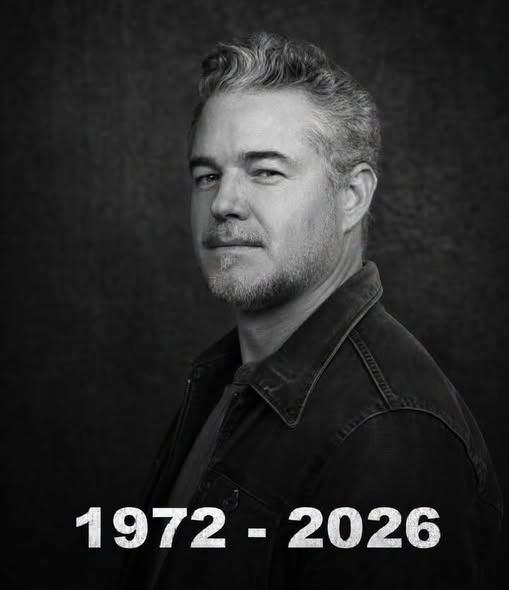
  • A Television Icon Has Passed Away… See more…

    A Television Icon Has Passed Away… See more…

    Eric Dane’s Career Became More Meaningful When Life Took An Unexpected Turn

    Long before becoming one of television’s most recognizable faces, Eric Dane was simply a young actor from California hoping for an opportunity. During the 1990s, he worked toward his dream through smaller roles, slowly building experience and proving that he had the determination to remain in a difficult industry.

    Then came 2006.

    His arrival on Grey’s Anatomy as Dr. Mark Sloan changed the course of his career. Known to viewers as “McSteamy,” Dane created a character who was confident, charismatic, and often playful, while also revealing a more sensitive side beneath the surface. The role quickly made him a familiar name and opened the door to many new opportunities.

    Over the years, audiences watched him take on very different characters. He starred in The Last Ship and later delivered a darker, more complicated performance as Cal Jacobs in Euphoria. His career also included appearances in films such as X-Men: The Last Stand, Marley & Me, and Bad Boys: Ride or Die.

    But in 2025, Eric Dane shared news that changed how many people viewed his journey. After revealing his ALS diagnosis, he chose not to completely step away from public life or his work.

    Instead, he continued showing courage through honesty. He spoke openly about the difficult realities he was facing and remained connected to the people who had followed his career.

    His story eventually became about more than Hollywood success.

    It became a reminder that strength is not always about avoiding fear. Sometimes, real courage means continuing forward while facing circumstances you never expected.

    Eric Dane’s legacy is shaped not only by the unforgettable characters he brought to the screen, but also by the resilience he has shown when life presented him with his most difficult role.

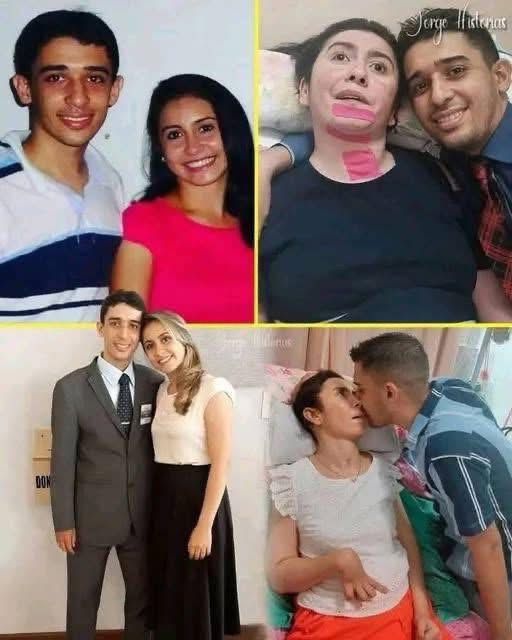
  • He gave up everything to take care of the love of his life in a vegetative state… See more

    He gave up everything to take care of the love of his life in a vegetative state… See more

    He Gave Up Everything… And What Happened Next Will Leave You Speechless

    They said he was wasting his life.

    They said no man in his right mind would stay

    They said love like that doesn’t exist anymore.

    But every single morning, before the sun even rose, he proved them wrong.

    At first, their story looked like something out of a movie.

    They met young. Fell in love fast. The kind of love that doesn’t ask for permission—it just happens. She had that smile people remember for years. The kind that made strangers feel like they mattered. And him? He wasn’t flashy. Not the loudest guy in the room. But when he looked at her, you could tell… she was his whole world.

    They built dreams the way most couples do—late-night talks, small plans that slowly became big ones. A home. A future. Maybe children. Nothing extraordinary.

    Just a simple, happy life.

    And for a while… that’s exactly what they had.

    ⸻

    Until the day everything shattered.

    It wasn’t supposed to be a life-changing moment.

    Just another normal day.

    But tragedy doesn’t send warnings.

    A sudden medical emergency. A collapse. A rush to the hospital. Machines. Doctors. Words that didn’t fully make sense at first—but slowly sank in like ice in his veins.

    “Vegetative state.”

    She was alive.

    But not really there.

    No responses. No recognition. No certainty she would ever wake up again.

    ⸻

    Most people don’t talk about what comes next.

    Because this is where real life begins to test you.

    Not in the romantic moments.

    Not in the easy days.

    But in the long, silent, unbearable ones.

    ⸻

    At first, he did what anyone would do—he hoped.

    Hope is powerful in the beginning.

    Doctors gave cautious explanations. Family members whispered prayers. Friends said, “She’s strong. She’ll fight.”

    He held her hand.

    Talked to her.

    Played her favorite songs.

    Believed she could hear him.

    Believed she would come back.

    ⸻

    But days turned into weeks.

    Weeks turned into months.

    And hope… slowly started changing shape.

    Not disappearing.

    Just becoming heavier.

    ⸻

    The visitors stopped coming as often.

    That’s how it usually goes.

    At the start, everyone shows up.

    Support. Flowers. Messages.

    But life moves on for others.

    It doesn’t stop.

    Only his did.

    ⸻

    People started asking questions they thought he couldn’t hear.

    “Why is he still doing this?”

    “He’s still young… he could start over.”

    “Isn’t this too much?”

    “Would she even want this?”

    ⸻

    But here’s what they didn’t understand:

    To him, she wasn’t “a case.”

    She wasn’t “a situation.”

    She wasn’t “a burden.”

    She was still her.

    The woman he loved.

    The woman who laughed at his bad jokes.

    The woman who held his hand when he doubted himself.

    The woman who chose him.

    ⸻

    So he made a decision.

    One that would change the course of his entire life.

    He stayed.

    ⸻

    He learned things no one prepares you for.

    How to care for someone who cannot respond.

    How to feed her.

    How to keep her comfortable.

    How to notice the smallest changes.

    He became more than a partner.

    He became her caregiver.

    Her protector.

    Her voice.

    ⸻

    And it wasn’t easy.

    Not even close.

    There were nights he sat alone, staring at her, wondering if she knew he was there.

    Days when exhaustion hit so hard he could barely stand.

    Moments when silence felt louder than anything he’d ever heard.

    And yes…

    Moments when he broke down.

    Because love doesn’t make you immune to pain.

    It just gives you a reason to keep going despite it.

    ⸻

    Financially, things got worse.

    Medical care isn’t cheap.

    He gave up opportunities.

    Stepped away from career growth.

    Watched others move ahead in life while he stayed in the same place—physically, emotionally, mentally.

    People called it sacrifice.

    But he never used that word.

    To him, it wasn’t sacrifice.

    It was love.

    ⸻

    Years passed.

    Let that sink in.

    Years.

    Not weeks.

    Not months.

    Years of the same routine.

    The same uncertainty.

    The same unanswered question:

    Would she ever come back?

    ⸻

    And still…

    He stayed.

    ⸻

    There’s something uncomfortable about stories like this.

    Because they force us to confront something we often avoid:

    What does real love actually look like?

    Is it just the good times?

    The easy smiles?

    The social media photos?

    Or is it this?

    Staying when there’s no guarantee.

    Giving when there’s nothing coming back.

    Holding on… even when the world tells you to let go.

    ⸻

    People started noticing him.

    Not at first.

    But slowly.

    Stories spread.

    Photos surfaced.

    The man who refused to leave.

    The man who showed up every single day.

    The man who kissed her forehead like she could feel it.

    The man who never stopped talking to her—like she might answer at any moment.

    ⸻

    Some called him strong.

    Some called him foolish.

    Some said they could never do what he did.

    And maybe they’re right.

    Because not everyone can carry that kind of weight.

    ⸻

    But here’s the part that truly shakes people:

    He never saw himself as a hero.

    ⸻

    When asked why he stayed, his answer was simple.

    No speeches.

    No dramatic words.

    Just truth.

    “Because she would have done the same for me.”

    ⸻

    Think about that.

    In a world where relationships often break over small things…

    He stayed through something most people can’t even imagine.

    ⸻

    And then…

    Something happened.

    ⸻

    Not a miracle.

    Not a sudden movie-like awakening.

    Life doesn’t always give you those endings.

    But there were moments.

    Tiny ones.

    A flicker.

    A slight movement.

    A reaction so small most people would miss it.

    But he didn’t.

    Because when you love someone like that…

    You notice everything.

    ⸻

    Those moments became his fuel.

    Proof—however small—that somewhere, somehow… she was still there.

    ⸻

    Did she fully recover?

    No one can say for sure.

    Stories like this don’t always have neat endings.

    And maybe that’s what makes them real.

    ⸻

    Because the truth is—

    This story isn’t about what she regained.

    It’s about what he refused to lose.

    ⸻

    His loyalty.

    His commitment.

    His belief that love is more than convenience.

    ⸻

    And whether people understand it or not…

    That kind of love leaves a mark.

    ⸻

    It challenges us.

    Makes us question how we define devotion.

    How easily we walk away.

    How quickly we give up.

    ⸻

    Because deep down, everyone knows:

    What he did…

    Was rare.

    ⸻

    So the next time you hear someone say real love doesn’t exist anymore…

    Remember this story.

    A man who stayed when it was easier to leave.

    Who gave when there was nothing promised in return.

    Who chose love—not for what it gave him…

    But for what it meant.

    ⸻

    And maybe the most powerful part of all?

    He didn’t do it for recognition.

    He didn’t do it for praise.

    He didn’t do it because it was easy.

    ⸻

    He did it because…

    For him, love was never meant to be temporary.

    ⸻

    If this story made you feel something… don’t just scroll past.

    Because stories like this aren’t meant to be forgotten.

    They’re meant to remind us—

    What love can be…

    When someone chooses to mean it.

  • They find this young woman dead simply for being…See more

    They find this young woman dead simply for being…See more

    Face down. Barefoot. Phone still clutched in her hand.

    No signs of struggle.
    No broken glass.
    No forced entry.

    Neighbors in the quiet suburban street said they heard nothing. No scream. No crash. No argument. Just the usual hum of early morning—coffee machines, sprinklers, distant traffic.

    And yet, there she was.

    Gone.

    At just 24.

    —

    Police reports initially called it “unexplained.” But the details that followed didn’t make it any less disturbing.

    Her phone?
    Unlocked.

    Her last search?
    “Why do I feel like someone is watching me at night?”

    —

    Now here’s where it gets strange.

    Friends say she had mentioned something days before.
    Not once. Not twice. Multiple times.

    “She felt like someone knew her routine.”

    Not in a paranoid way.
    Not dramatic.

    Just… uneasy.

    —

    Every night around the same time—2:17 AM—she would wake up.

    No reason.

    No noise.

    Just that feeling.

    You know the one.

    —

    At first, she brushed it off. Stress. Anxiety. Maybe too much screen time.

    But then came the messages.

    Not from a stranger.

    From her own account.

    —

    Yes.

    Messages sent…
    While she was asleep.

    —

    Short. Cryptic.

    “I see you.”

    “Not yet.”

    “Soon.”

    —

    She showed one friend.
    They laughed it off.

    “Maybe you’re sleep texting.”

    But she knew better.

    Because she had started doing something new.

    Every night before bed, she placed her phone across the room.

    Far from reach.

    —

    And still…

    The messages continued.

    —

    The night before she died, she called her sister.

    Not crying. Not panicking.

    Just… quiet.

    She said one thing that now refuses to leave people’s minds:

    “If something happens to me… it’s not random.”

    —

    Police checked everything.

    No fingerprints.
    No break-in.
    No known enemies.

    Nothing.

    —

    But there was one detail they didn’t release publicly at first.

    The security camera.

    —

    A neighbor’s camera caught movement outside her house at 2:16 AM.

    One minute before she woke up… again.

    The footage?

    Blurry.

    But clear enough to show a figure standing completely still.

    Facing her window.

    —

    Not moving.

    Not leaving.

    Just… watching.

    —

    And here’s the part that doesn’t make sense.

    When officers reviewed the footage timeline…

    That same figure had been appearing for four nights in a row.

    Same time. Same spot.

    —

    No one reported it.

    No one noticed.

    Until it was too late.

    —

    The case is still open.

    No arrests.

    No answers.

    —

    But people online are asking one chilling question:

    Was she targeted…

    or was she chosen simply for being there?

    —

    Sometimes the scariest stories aren’t about what we see.

    They’re about what’s been there all along…

    quietly waiting.

    —

    Lock your doors tonight.

  • My husband received this photo from me, then immediately wants a divorce😱 – Can you recognise what is wrong with the picture she sent? The answer is in the link in the first comment.

    My husband received this photo from me, then immediately wants a divorce😱 – Can you recognise what is wrong with the picture she sent? The answer is in the link in the first comment.

    It was a quiet afternoon in the countryside. The kind of afternoon that feels like a deep breath—golden grass stretching endlessly, pine trees swaying gently in the distance, and the soft, steady presence of a horse beside her.

    She had asked a stranger nearby to take the picture.

    “Can you make sure you get the mountains in the back?” she said with a smile.

    The stranger nodded, snapped a few shots, and handed the phone back.

    She looked at the screen.

    Perfect.

    Her long blonde hair rested naturally over her shoulders. The horse stood calmly beside her. The rustic wooden fence, the saddle, the earthy tones—it all looked like something straight out of a peaceful life she had always wanted.

    Without overthinking it, she sent it to her husband.

    Just a simple message:

    “Thinking of you ❤️”

    ⸻

    At first, there was silence.

    She didn’t expect anything unusual. He was probably busy. Maybe at work. Maybe driving. Maybe just caught up in something.

    But then…

    Three dots appeared.

    Then disappeared.

    Then appeared again.

    Her phone buzzed.

    Not a loving reply.

    Not a compliment.

    Not even a question.

    Just one sentence:

    “Who took this photo?”

    ⸻

    She blinked.

    What?

    She smiled slightly, thinking he was joking.

    “A kind stranger. Why?”

    No reply.

    Minutes passed.

    Then another message:

    “Don’t lie to me.”

    ⸻

    Her stomach tightened.

    “What are you talking about?” she typed quickly.

    Still nothing.

    Then her phone rang.

    She answered immediately.

    His voice was different.

    Cold.

    Controlled.

    The kind of voice that doesn’t shout… but cuts deeper than anger ever could.

    “Tell me the truth,” he said. “Who were you with?”

    “I just told you,” she said, confused. “I was alone. Someone nearby helped me take the photo.”

    Silence.

    Then he said something that made her chest drop.

    “You expect me to believe that?”

    ⸻

    She opened the photo again.

    Zoomed in.

    Looked carefully.

    At first, everything seemed normal.

    The horse.

    The saddle.

    The fence.

    Her jeans.

    Her hair.

    Nothing strange.

    But then…

    Her eyes caught something.

    Something small.

    Something she hadn’t noticed before.

    And suddenly…

    Her breath stopped.

    ⸻

    There, in the polished metal of the saddle.

    A reflection.

    Faint, but clear enough.

    Not just her.

    Not just the horse.

    But a shape.

    A person.

    Standing closer than they should have been.

    ⸻

    Her heart began to race.

    She zoomed in further.

    The reflection was distorted, curved by the metal surface—but unmistakable.

    Someone had been right behind her.

    Close.

    Too close.

    Closer than a stranger taking a casual photo should be.

    ⸻

    Her mind scrambled.

    Was it the person who took the picture?

    No… the angle didn’t match.

    This reflection wasn’t from the front.

    It was from behind her.

    ⸻

    Her fingers went cold.

    “Wait…” she whispered into the phone.

    “I… I didn’t see anyone behind me.”

    ⸻

    On the other end, her husband didn’t speak.

    Because he had already seen it.

    Immediately.

    The moment he opened the image.

    ⸻

    “I know you didn’t,” he said quietly.

    “That’s the problem.”

    ⸻

    She turned around in real life, as if the person might still be there.

    But the field was empty.

    Only the horse shifted slightly, calm as ever.

    ⸻

    “What are you saying?” she asked, her voice trembling now.

    “I’m saying,” he replied slowly, “that either you’re lying…”

    “…or you weren’t alone—and didn’t even know it.”

    ⸻

    Her chest tightened.

    The world around her suddenly felt… different.

    The quiet countryside.

    The stillness.

    The isolation.

    What had felt peaceful minutes ago now felt exposed.

    ⸻

    “I swear to you,” she said. “I was alone.”

    ⸻

    Another pause.

    Longer this time.

    Then he said something she would never forget.

    “If you were alone…”

    “…then who is that in the reflection?”

    ⸻

    The call ended.

    ⸻

    That night, she couldn’t sleep.

    She kept looking at the image.

    Over.

    And over.

    And over again.

    Every time noticing something new.

    The angle.

    The distance.

    The position.

    The fact that whoever it was…

    Was watching her.

    Standing just out of her awareness.

    ⸻

    The next morning, she went back.

    Same place.

    Same fence.

    Same quiet stretch of land.

    But something felt off.

    ⸻

    She spoke to a nearby ranch worker.

    Showed him the photo.

    Asked if anyone had been around that day.

    ⸻

    He looked at the picture.

    His expression changed.

    Not confusion.

    Recognition.

    ⸻

    “You shouldn’t have been standing there,” he said.

    ⸻

    Her heart skipped.

    “Why?”

    ⸻

    He hesitated.

    Then finally said:

    “That fence line… people avoid it.”

    ⸻

    “Why?” she repeated, more urgently.

    ⸻

    He pointed beyond the trees.

    “There used to be an old trail back there. Years ago, someone went missing.”

    ⸻

    Her throat tightened.

    “What does that have to do with this?”

    ⸻

    He looked at the reflection again.

    Then back at her.

    And said quietly:

    “Sometimes… people say they’re not as alone out here as they think.”

    ⸻

    She left immediately.

    Hands shaking.

    Heart pounding.

    ⸻

    When she got home, her husband was waiting.

    No anger this time.

    No accusations.

    Just a distance in his eyes she had never seen before.

    ⸻

    “I believe you,” he said.

    “But that doesn’t make it better.”

    ⸻

    She nodded slowly.

    Because she understood.

    ⸻

    It wasn’t about cheating.

    It wasn’t about trust.

    It wasn’t even about the stranger who took the photo.

    ⸻

    It was about something else entirely.

    Something far more unsettling.

    ⸻

    The idea…

    That someone—or something—

    Had been standing right behind her.

    Watching.

    Close enough to appear in the reflection…

    But never close enough to be noticed.

    ⸻

    And that single image—

    A peaceful countryside photo—

    Had captured something she was never supposed to see.

    ⸻

    She never went back.

    Never took another photo there.

    Never stood alone in open fields again.

    ⸻

    And her husband?

    He never looked at her pictures the same way again.

    ⸻

    Because sometimes…

    It’s not what you see in a photo that changes everything.

    ⸻

    It’s what you almost didn’t.

    ⸻

    👉 Now look again carefully at the image… did YOU notice it the first time?

  • Elderly woman d!es in motel after denying c… see more

    Elderly woman d!es in motel after denying c… see more

    An elderly woman, soft wrinkles mapping a life that had clearly seen both joy and quiet suffering, stared calmly into the camera. Her expression wasn’t fearful, not desperate, not even particularly sad. Just… still. Almost as if she had accepted something long before anyone else realized there was anything to fear.

    Below her image were three younger faces—men, each with hardened expressions, each carrying a different kind of silence. The kind of silence that isn’t empty… but loaded.

    And somewhere between those four faces, a story began that no one in that small American town would ever forget.

    It started on a rainy Thursday evening at a roadside motel just outside Millbrook. The kind of place people only stopped at when they had no better options. Flickering neon lights, a tired receptionist, and rooms that smelled faintly of old carpet and forgotten stories.

    Margaret Hale checked in just after 7:40 PM.

    She was traveling alone. Seventy-four years old. Paid in cash. No luggage except a small handbag. The receptionist later said something about her stood out—not in a loud way, but in the way she hesitated before signing her name. As if writing it carried weight.

    “Just one night,” she had said softly.

    That should have been the end of it.

    But it wasn’t.

    At 9:12 PM, security cameras captured three men entering the motel. They weren’t staying there. No bags. No conversation. Just a quiet, purposeful walk down the corridor toward Margaret’s room.

    Room 17.

    What happened next wasn’t heard—at least not clearly. A muffled thud. Something falling. A chair scraping against tile. Then silence again.

    Too much silence.

    It wasn’t until the next morning that housekeeping found her.

    Margaret was lying near the edge of the bed, one hand stretched out toward the nightstand. The room showed signs of struggle, but not chaos. It was controlled. Intentional. Like whatever had happened was quick—and calculated.

    But the strangest part wasn’t the scene.

    It was what wasn’t taken.

    Her purse was still there. Money untouched. Jewelry still on her fingers. Nothing missing.

    Except something no one could immediately identify.

    When police began investigating, they first assumed it was a robbery gone wrong. That theory collapsed within hours. Surveillance footage clearly showed the three men entering—and leaving—with nothing in their hands.

    So if it wasn’t theft…

    Why were they there?

    Margaret’s background didn’t make things any clearer. She lived alone. No recent conflicts. No known enemies. Her family described her as quiet, kind, and routine-driven. The kind of person who avoided trouble, not attracted it.

    But then one detail surfaced.

    Margaret had refused something.

    Two days before her death, she had been approached—according to a witness at a nearby diner—by a man offering her “help.” No one knew exactly what kind of help, but Margaret’s reaction was firm.

    “No. I’m not getting involved.”

    Those were the words the waitress remembered.

    At the time, it meant nothing.

    After her death, it meant everything.

    The investigation shifted.

    Detectives began tracing the three men. It didn’t take long to identify them. Petty criminal records. Small-time offenses. Nothing violent enough to suggest murder. At least not before that night.

    But what tied them together was more unsettling.

    They weren’t acting alone.

    Phone records revealed they had been contacted repeatedly by a single number in the days leading up to the incident. A number that didn’t belong to any registered name.

    A burner.

    And that burner had also contacted Margaret.

    Multiple times.

    She had never answered.

    That’s when the theory changed.

    This wasn’t random.

    Margaret had been targeted.

    But for what?

    The answer came from something so small it almost got overlooked.

    Inside her handbag, tucked behind a folded photograph, was a slip of paper. Not a note. Not a message. Just a number written in shaky handwriting.

    A locker number.

    At a bus station nearly 200 miles away.

    When authorities opened it, they found something that turned the entire case upside down.

    Documents.

    Old ones. Decades old. Names. Dates. Transactions. And hidden within them—connections to people who had spent years making sure their past stayed buried.

    Margaret hadn’t just been an elderly woman passing through a motel.

    She had been carrying something.

    Something someone desperately wanted back.

    The three men? They weren’t masterminds. They were hired. Sent to retrieve what she refused to hand over.

    And when she resisted…

    Things went too far.

    But here’s where it gets darker.

    Forensic analysis suggested something chilling—Margaret knew they were coming.

    There were no signs of panic in the room before the struggle. No attempt to flee. No call for help.

    It was as if she had made a decision.

    To face them.

    Why?

    Because whatever was in that locker… mattered more than her own safety.

    As the investigation deepened, whispers began to spread. Names that shouldn’t be connected started appearing together. Old cases reopened. Quiet settlements reexamined.

    Margaret Hale, a woman no one thought twice about, had unknowingly—or perhaps knowingly—become the center of something much bigger.

    And her death?

    It wasn’t the end.

    It was the beginning.

    The three men were eventually caught. But even during interrogation, they claimed they didn’t know the full story. Only that they were told to “get it back” and “leave no loose ends.”

    They never even saw what they were supposed to retrieve.

    Which means someone else did.

    Someone who is still out there.

    Watching.

    Waiting.

    Because the documents in that locker weren’t the only copies.

    Margaret had been careful.

    Painfully careful.

    And somewhere, in a place no one has found yet, there’s another piece of the truth.

    One that could destroy lives.

    Or finally explain why a quiet elderly woman checked into a motel… and never walked out.

    And that’s the part that keeps investigators awake at night.

    Not how she died.

    But what she died protecting.