Blog

  • 50-year-old man k!lls his wife after finding out she was M… ⤵

    50-year-old man k!lls his wife after finding out she was M… ⤵

    50 year old man his own wife after discovering!

    What unfolded inside that modest suburban home has become a chilling study in how ordinary lives can fracture in an instant. Behind the polite greetings and trimmed hedges, a marriage was slowly collapsing under the weight of unspoken resentments, mounting pressures, and one devastating revelation. That “shocking secret,” still undisclosed by investigators, did not appear out of nowhere; it landed in a relationship already frayed by mistrust, distance, and unresolved conflict. When it surfaced, it didn’t just start a fight—it shattered the fragile illusion that everything was under control.


  • The policeman was taken away and forgot that there was a camera

    The policeman was taken away and forgot that there was a camera when he … See more

    A police officer, escorted out of the station in handcuffs.
    Reporters shouted questions. Onlookers pulled out their phones.
    But what no one realized… was that one of the security camera  inside was still recording.

    And what it captured has left viewers shocked — and demanding answers.

    He Thought No One Was Watching…

    Moments before he was taken into custody, the officer—still in uniform—was left alone in the holding area.

    He looked around, pacing. He sat down.
    Then, thinking no one could see him, he did something unexpected:

    He pulled a small photo from his pocket.
    Kissed it.
    And whispered something under his breath.

    “Tell them I was trying to protect her.”

    That’s what the security footage showed him saying, eyes wet, voice barely audible.

    The photo?
    It was of a young girl—later confirmed to be his daughter.

    And suddenly, the narrative shifted.

    What Really Happened That Day?

    Initial reports claimed the officer had interfered with an ongoing investigation.
    But now, some are questioning his motives.

    Was he really covering up a crime?
    Or protecting someone from something worse?

    The footage went viral within hours.
    Millions of views. Thousands of comments.
    And a new question hanging in the air:

    Was he a bad cop… or a desperate father?

    The Internet Is Divided

    Some say he broke the law and should be held accountable—no matter the reason.
    Others believe he made a split-second choice any parent might make.

    What’s clear is this:
    He didn’t know the camera  was still on.
    But now, the world is watching.

  • These are the consequences of sleeping with the…See more

    These are the consequences of sleeping with the…See more

    These are the consequences of sleeping with th

    The black areas on the toes and feet may represent dead tissue (gangrene), and the open sores with yellow material could indicate infection

    The widespread red-purple rash also suggests significant inflammation or bleeding under the skin

  • Man hospitalized after allowing himself to be penetrated… See more.

    Man hospitalized after allowing himself to be penetrated… See more.

    Man hospitalized after allowing himself to be penetrated… See more

    It often begins with something easy to overlook. A slight discomfort, a subtle change in daily routine, or a feeling that something is not quite right. Many people continue with their lives, assuming these signs will pass. In some cases, they do. In others, they quietly build into something more complex.


    Stories of unusual medical findings, such as the discovery of a large accumulation of kidney stones during a routine procedure, tend to capture attention. Not because they are typical, but because they reveal how the human body can adapt, compensate, and sometimes remain silent longer than expected.

    These moments are not just medical curiosities. They are reminders of how important awareness, prevention, and understanding truly are. To fully appreciate their meaning, we must explore both the cultural perceptions and the scientific realities behind kidney stones.

    What Are Kidney Stones and Why Do They Form

    The Scientific Explanation

    Kidney Stones are solid deposits formed from minerals and salts that crystallize within the urinary system. According to Mayo Clinic, this process often occurs when urine becomes concentrated, allowing minerals such as calcium, oxalate, and uric acid to bind together.

    In many cases, these stones are small and may pass without significant symptoms. However, when they grow larger or accumulate over time, they can lead to more noticeable health concerns.

    Scientific research shows that several factors contribute to their formation. Dehydration is one of the most common, as insufficient water intake reduces the body’s ability to dilute minerals. Diet also plays a role, particularly when high salt or protein intake is involved

    A Condition That Develops Gradually

    One of the most important aspects of kidney stones is how gradually they can develop. Unlike sudden illnesses, this condition often evolves over time. The body may adapt to small changes, making early stages difficult to detect.

    This gradual progression explains why some individuals are surprised by the extent of the condition when it is finally diagnosed.

    Cultural Beliefs and Misconceptions

    Traditional Interpretations of Internal Health

    Across cultures, internal discomfort has often been interpreted in symbolic ways. In some traditions, kidney-related issues were believed to reflect imbalance in the body’s internal energy or lifestyle habits.

    For example, certain Eastern health philosophies associate kidney function with overall vitality and long-term well-being. While these interpretations are not scientific diagnoses, they highlight an early awareness that internal health is closely tied to daily habits.

    Có thể là hình ảnh về bệnh viện và văn bản

    Common Myths About Kidney Stones

    Several myths continue to circulate about kidney stones. One common belief is that they only affect certain age groups or lifestyles. In reality, they can occur in a wide range of individuals.

    Another misconception is that symptoms are always obvious. In truth, early stages may present minimal or unclear signs, which is why awareness is so important.

    By comparing these beliefs with scientific findings, we gain a clearer and more balanced understanding of the condition.

    Why Kidney Stones Often Go Unnoticed

    Subtle Early Signs

    In the early stages, kidney stones may not produce strong or specific symptoms. Some individuals experience mild discomfort, while others notice slight changes in urination patterns.

    Because these signs can be easily attributed to other causes, they are often overlooked. This delay in recognition allows the condition to progress quietly.

    The Body’s Ability to Adapt

    The human body is remarkably adaptive. It can adjust to gradual changes, sometimes masking underlying issues. While this resilience is beneficial, it can also make certain conditions harder to detect early.

    Health experts from the World Health Organization emphasize that many internal conditions develop silently before becoming more noticeable.

    Recognizing When to Pay Attention

    Common Indicators to Watch For

    Although symptoms vary, there are several signs that may suggest kidney-related concerns. These include persistent discomfort in the lower back or sides, changes in urine appearance, or unexplained fatigue.

    These indicators are not definitive proof of kidney stones, but they are signals worth paying attention to, especially if they persist over time.

  • The World Has Lost A True Hollywood Icon… See more

    The World Has Lost A True Hollywood Icon… See more

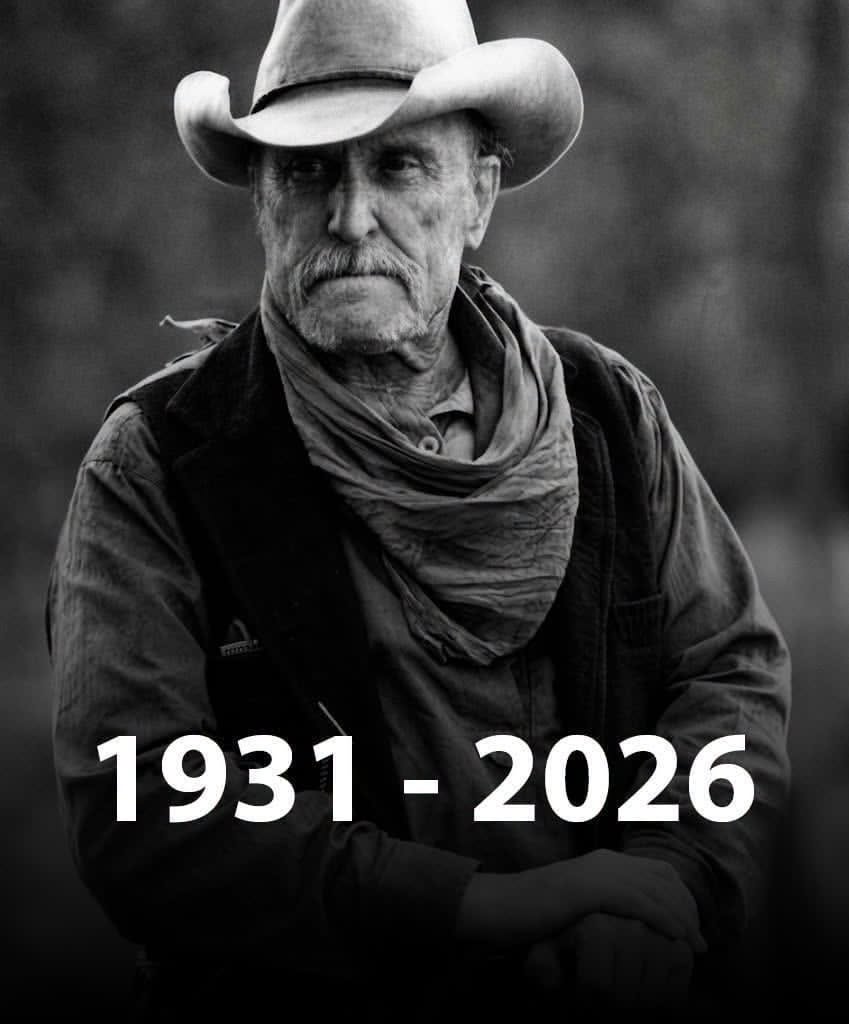
    Hollywood Remembers Robert Duvall: A Legendary Career That Spanned Decades

    Robert Duvall built a remarkable career that stretched across generations, becoming one of the most recognizable and versatile actors in American cinema. Known for his quiet intensity, natural delivery, and ability to bring depth to even the smallest role, Duvall became a familiar presence on screen while maintaining a reputation for letting his performances speak for themselves.

    Over the course of his career, Duvall appeared in many celebrated films, including The Godfather, Apocalypse Now, Tender Mercies, and The Great Santini. Each project showcased a different side of his talent. Whether portraying a complicated family  figure, a determined professional, or an emotionally reserved character, he brought a sense of realism that helped audiences connect with the stories.

    His role as Tom Hagen in The Godfather remains one of his best-known performances. As the calm and thoughtful family adviser, Duvall gave the character an understated presence that contrasted with the more dramatic personalities around him. The performance became an important part of the film’s enduring legacy and helped establish Duvall as an actor capable of making memorable impressions without relying on exaggerated performances.

    Duvall continued to take on challenging roles throughout the following decades. His work in Apocalypse Now further demonstrated his ability to create distinctive characters, while Tender Mercies gave him an opportunity to deliver one of his most emotionally nuanced performances. His portrayal in that film earned him the Academy Award for Best Actor, recognizing the strength and sensitivity he brought to the role.

    Beyond individual awards and famous movie  moments, Duvall’s career is notable for its consistency. He worked with some of the most respected directors and performers in the industry and appeared in stories spanning drama, crime, history, family relationships, and American life. His approach was often grounded and natural, allowing his characters to feel like believable people rather than simply fictional creations.

    According to reports from his publicist and wife, Robert Duvall died peacefully at his home in Middleburg, Virginia, at the age of 95. His passing marked the end of an extraordinary chapter in American film history. While generations of moviegoers knew him primarily through his work, his influence can also be seen in the continued appreciation for character-driven acting  and thoughtful storytelling.

    For many viewers, remembering Robert Duvall means returning to the films that introduced them to his work. His performances remain part of a larger cinematic history, and his ability to disappear into very different characters helped define what great character acting couple accomplish

    Robert Duvall leaves behind a body of work that spans decades and continues to attract new audiences. His career serves as a reminder that powerful performances do not always need to be loud or dramatic. Sometimes, a measured voice, a thoughtful expression, and a carefully developed character can leave the strongest impression.

    As audiences revisit his films, Duvall’s contribution to American cinema will continue to be appreciated through the stories and characters he helped bring to life. His work remains an enduring part of Hollywood history and a lasting example of the craft of acting.


  • This morning we lost a beloved singer, someone we deeply admired…

    This morning, we lost a beloved singer, someone we deeply admired and whose voice became a meaningful part of so many lives. The news has left fans, friends, and loved ones heartbroken, as we remember not only the incredible talent they shared with the world but also the emotions and memories their music created for us.

    Throughout their career, their songs touched people in ways that words sometimes cannot explain. Whether through a powerful performance, a familiar melody, or a song that helped someone through a difficult moment, their music will continue to live on in the hearts of those who listened. Their legacy is much greater than the records they made—it is the memories they helped create.

    Today, we mourn the loss of a truly special voice and celebrate the life and music they gave us. While they may no longer be here to sing for us, their songs will continue to remind us of who they were and how deeply they were loved. **May they rest in peace, and may their music live forever.**

  • With broken hearts, we share the sad news about this talented actress and groundbreaking woman – the way she was taken from us is so sad 💔… See more

    With broken hearts, we share the sad news about this talented actress and groundbreaking woman – the way she was taken from us is so sad 💔… See more

    ‘Beverly Hills, 90210’ actress Kimmarie Johnson dies at 50

    For fans of Beverly Hills, 90210, even the smallest familiar face can bring back memories of a show that defined an entire generation.

    Now, sad news has emerged about one of the actresses who appeared in the beloved series.

    Kimmarie Johnson, who also made a name for herself in the world of beauty pageants and modeling, has died at just 50.

    Starring as Judy in Beverly Hills, 90210

    Her life took her from the Miss USA stage to Hollywood, where she landed a role in the hit teen drama. And behind her career was a woman whose warmth and positive energy left a lasting impression on those who knew her.


    Johnson died Wednesday after experiencing a “heart event” at her Los Angeles home on October 27, her niece Rhonda Scott told MEDIA

    She was taken to Cedars-Sinai Medical Center, where she was diagnosed with a “heart aneurysm condition.

    She radiated a light so strong and bright,” Scott said. “People who came in contact with her felt nothing but positive energy. We will miss her tremendously and will continue to honor her life forever.”

    Johnson appeared in a 1998 episode of Beverly Hills, 90210, playing a character named Judy. For viewers who remember the series, her appearance remains part of the show’s long Hollywood legacy.

    But her journey to television had started several years earlier.

    Historic victory

    In 1992, Johnson entered the Miss Pennsylvania USA pageant and, despite having no previous experience as a beauty queen and competing against 92 other women, walked away with the crown.

    Having entered just one day before the deadline, Johnson never imagined she would actually be selected for the competition, let alone walk away with the crown. Her victory also made history, as she became the first African American woman to win the prestigious title.

    “I didn’t think I was ever going to win. Even right now, it’s hard for me to believe I won. I just entered because I thought it would be something nice to do,” Kimmarie told the New Pittsburgh Courier.

    Model Kimmarie Johnson attends the Red Carpet Celebration of “Magic Mike XXL” at Hutchinson Cocktails & Grill on July 9, 2015 in West Hollywood, California. (Photo by Paul Redmond/Getty Images)

    The victory earned her a place in the 1993 Miss USA competition, where she finished among the top six.

    She moved to Los Angeles in 1996, continuing to model while pursuing opportunities in acting. Her first acting credit came in 1998 in Troy Byer’s drama Let’s Talk About Sex.

    She later appeared in films and television projects including Dude, Where’s My Car?, Shadow Fury, Wanda at Large, Break a Leg and Tucker War’s.

    In 2003, Johnson welcomed her son, Cameron Nino, and stepped away from acting for a time to focus on motherhood. She also took classes at The Groundlings during that period

  • Police find girl missing since 2022: ‘She was n… See more

    Police find girl missing since 2022: ‘She was n… See more

    Police locate girl missing since 2022: ‘She was n… See more

    When a missing child is found alive, the story the world thinks it wants—pure triumph, neat closure—simply does not exist. A town that once stapled flyers and searched ditches now has to learn how to step back, to let trained advocates, therapists, and investigators move carefully where grief and survival intersect.


    The same neighbors who once begged for any detail must now learn to live without knowing everything, to accept that the most important chapters will be written in private, behind closed doors, at a pace set by a child who has already endured too much.


  • 💔 The Hollywood Icon Everyone Adored Just Passed Away… See more ­

    💔 The Hollywood Icon Everyone Adored Just Passed Away… See more ­

    💔 The Hollywood Legend Everyone Loved Just Passed Away… See more

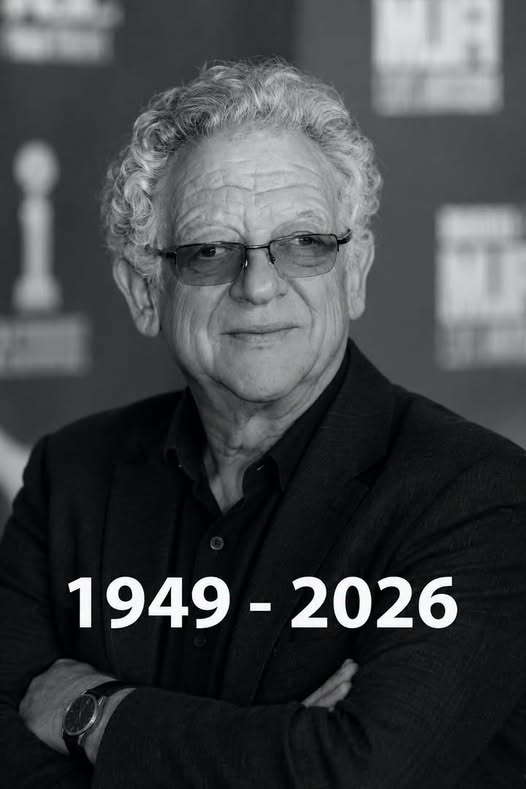
    For fifty years, Jeremy Thomas moved through world cinema like a quiet storm, pushing through films that polite industry logic insisted should never exist. He stood behind directors when money men fled, betting his reputation on dangerous scripts, taboo subjects, and fragile visions that could easily have collapsed. That stubborn faith birthed works like *Crash*, *Merry Christmas, Mr. Lawrence*, and *The Last Emperor*, films that bent the medium instead of bowing to it.


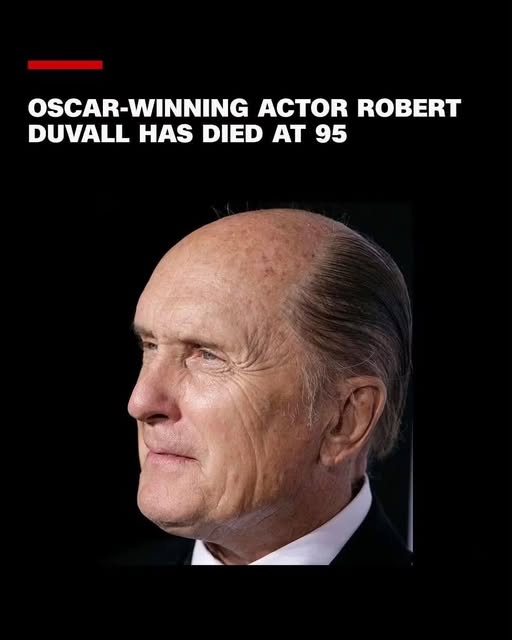
  • Oscar-winning actor Robert Duvall, best known for roles in “The Godfather” and “Apocalypse Now,” has died at 95.

    Oscar-winning actor Robert Duvall, best known for roles in “The Godfather” and “Apocalypse Now,” has died at 95.

    Oscar-winning actor Robert Duvall, best known for roles in “The Godfather” and “Apocalypse Now,” has died at 95.


    Robert Duvall: Remembering an Oscar-Winning Giant of American Cinema
    Robert Duvall, one of the most respected and enduring actors in American cinema, has died at the age of 95. Over a career spanning more than six decades, Duvall built a reputation for extraordinary versatility, understated intensity, and an ability to give even supporting characters remarkable emotional depth. From his unforgettable portrayal of Tom Hagen in The Godfather to his haunting performance as Lieutenant Colonel Bill Kilgore in Apocalypse Now, Duvall became a defining presence in generations of American filmmaking.

    His death marks the passing of an actor whose career was far larger than any single role. Duvall worked across crime dramas, westerns, war films, courtroom stories, family dramas, television productions, and independent cinema. He earned an Academy Award for his performance in Tender Mercies and received multiple additional Oscar nominations throughout his career. Yet awards and famous characters tell only part of the story. Duvall’s greatest achievement was perhaps his ability to make audiences believe that the people he portrayed existed before the camera arrived and would continue to exist after the scene ended.

    Born in San Diego, California, in 1931, Duvall developed an interest in acting at a time when American cinema was undergoing major changes. He studied at Principia College and later trained at the Neighborhood Playhouse School of the Theatre in New York, where he studied under influential acting teacher Sanford Meisner. That training helped shape an approach centered on natural behavior, emotional truth, and careful observation.

    Duvall’s early career was rooted in theater and television. Like many actors of his generation, he gradually built his reputation through smaller roles before becoming a major film star. His screen career began with appearances in the late 1950s, and one of his early breakthrough performances came in the 1962 classic To Kill a Mockingbird. As Arthur “Boo” Radley, Duvall had relatively little dialogue, yet his performance became one of the film’s most memorable elements. The role demonstrated something that would become a defining characteristic of his career: he understood that acting did not always require speaking.

    Duvall could communicate enormous amounts through posture, expression, silence, and small gestures. This quality made him particularly effective in roles involving emotionally restrained or complicated men. Rather than announcing what a character was feeling, he often allowed audiences to discover those feelings gradually.

    His career changed dramatically when he appeared in Francis Ford Coppola’s The Godfather in 1972. The film, adapted from Mario Puzo’s novel, became one of the most influential works in American cinema. Duvall played Tom Hagen, the adopted son of Don Vito Corleone and the family’s trusted lawyer and consigliere.

    Tom Hagen was not a conventional action character. His power came from intelligence, loyalty, diplomacy, and his understanding of the Corleone family’s internal world. Duvall approached the character with restraint. While Marlon Brando’s Don Corleone and Al Pacino’s Michael Corleone commanded enormous attention, Duvall’s Hagen served as a stabilizing presence within the family.

    The performance earned Duvall an Academy Award nomination for Best Supporting Actor. More importantly, it established him as one of the leading character actors of his generation. Tom Hagen became inseparable from the mythology of The Godfather, and Duvall returned to the role in The Godfather Part II in 1974.

    The success of The Godfather did not lead Duvall to pursue only glamorous leading roles. Instead, he continued to build a career around complex characters. His filmography became notable for its variety. He could play lawyers, soldiers, criminals, fathers, preachers, ranchers, police officers, and deeply troubled men without allowing one performance to simply repeat another.

    His collaboration with Francis Ford Coppola continued with Apocalypse Now, released in 1979. The film, inspired partly by Joseph Conrad’s Heart of Darkness, portrayed the Vietnam War through a surreal and psychologically disturbing journey. Duvall played Lieutenant Colonel Bill Kilgore, an eccentric and charismatic military officer.

    Kilgore is one of the most memorable characters in American war cinema. He is simultaneously terrifying, absurd, confident, and strangely charismatic. Duvall’s performance captured the contradictions of a military culture in which destruction could coexist with an almost casual appreciation of beauty.

    The film’s famous surfing sequence became particularly iconic, and Duvall’s performance helped turn Kilgore into a cultural reference point. His delivery of the character’s memorable observations about combat and surfing demonstrated his ability to combine humor with menace.

    The role earned Duvall another Academy Award nomination. It also reinforced his reputation for creating characters who could dominate a scene without behaving like traditional movie heroes.

    Perhaps the most important performance of Duvall’s career came a few years later with Tender Mercies. Released in 1983, the film offered a very different kind of role. Duvall played Mac Sledge, an alcoholic former country music singer attempting to rebuild his life.

    Unlike the larger-than-life energy of Kilgore, Mac Sledge was quiet, wounded, and introspective. The film depended heavily on Duvall’s ability to communicate regret and vulnerability without excessive melodrama. His performance earned him the Academy Award for Best Actor.

    His Oscar-winning portrayal remains one of the strongest examples of his acting philosophy. Mac Sledge does not transform through a series of dramatic speeches. Instead, his redemption emerges through ordinary choices and small moments. Duvall made the character’s struggle feel intimate and believable.

    The film also reflected a recurring theme in Duvall’s career: damaged people attempting to find dignity. His characters were frequently flawed, but he rarely treated them as simple villains or heroes. He looked for the human being underneath the role.

    Duvall continued to receive major recognition throughout his career. He earned Oscar nominations for The Great Santini, Apocalypse Now, The Apostle, and The Judge, among others. His television work was equally impressive. He received Emmy Awards for his performances and became particularly associated with prestige television projects.

    One of his most celebrated television performances came in Lonesome Dove, the acclaimed 1989 Western miniseries. Duvall played Augustus “Gus” McCrae, a charismatic former Texas Ranger. The role allowed him to demonstrate a different side of his abilities, combining humor, warmth, toughness, and melancholy.

    For many viewers, Gus McCrae became one of the definitive television Western characters. Duvall’s performance showed why he remained valuable to filmmakers even after decades in the industry. He could make a character feel larger than life while keeping the performance grounded.

    Duvall also remained active in later decades, appearing in films such as A Civil Action, The Road, Get Low, and The Judge. His work in The Judge earned him another Academy Award nomination, demonstrating that his abilities remained highly regarded even late in his career.

    One reason for Duvall’s longevity was his refusal to rely entirely on celebrity. He did not need to be the central figure in every film. In many productions, his presence strengthened the entire cast. Directors could give him a relatively limited amount of screen time and still expect him to create a character audiences would remember.

    This is the hallmark of a great character actor: the ability to make a role feel essential even when the story technically belongs to someone else. Duvall possessed that quality in abundance.

    His influence extended beyond individual performances. Younger actors and filmmakers frequently cited him as an example of serious, disciplined screen acting. Duvall represented a generation in which actors were increasingly interested in realism and psychological complexity. He helped demonstrate that an actor did not need to perform loudly to make a powerful impression.

    His private approach to fame also contributed to his image. Unlike many Hollywood stars, Duvall generally maintained a relatively low-key public persona. He was respected more for his work than for celebrity spectacle. Interviews often revealed an actor deeply interested in the craft itself.

    That dedication was visible in the diversity of his roles. He could move from the criminal world of The Godfather to the battlefield of Apocalypse Now, from the wounded musician of Tender Mercies to the American West of Lonesome Dove. Each role demanded a different emotional vocabulary.

    His career also demonstrated the importance of  aging in Hollywood. Many actors struggle to find meaningful roles as they grow older, but Duvall continued to work well into his later years. He did not depend on youthful glamour. Instead, filmmakers increasingly valued the authority and life experience he brought to characters.

    There is a broader lesson in his career. Cinema is often remembered through its stars, but great films depend on performers capable of making fictional worlds convincing. Duvall belonged to that group of actors whose contributions can be felt even when audiences are not consciously analyzing the performance.

    When viewers revisit The Godfather, they see Tom Hagen as an essential part of the Corleone family. When they watch Apocalypse Now, Kilgore remains unforgettable. When they watch Tender Mercies, Mac Sledge’s quiet struggle remains deeply affecting. These characters survive because Duvall gave them something beyond dialogue and appearance: he gave them interior lives.

    His death therefore represents more than the loss of an Oscar-winning actor. It marks the end of an era in American acting. Duvall worked alongside some of the most important directors and performers of modern cinema and helped define the style of serious American screen acting.

    For audiences who grew up with his films, his death may feel like the closing of another chapter in Hollywood history. For younger viewers discovering his work for the first time, however, his performances will remain available as a lasting education in the possibilities of acting.

    Robert Duvall’s legacy is ultimately not defined by the number of awards he received or the length of his filmography. It is defined by the characters he made unforgettable and by the emotional honesty he brought to them.

    He understood that a great performance does not always demand attention. Sometimes it is a glance, a pause, a gesture, or a quiet sentence delivered with absolute conviction. That ability allowed him to disappear into characters while leaving an unmistakable mark on the films themselves.

    From Tom Hagen’s calculated loyalty to Kilgore’s unsettling confidence, from Mac Sledge’s search for redemption to Gus McCrae’s adventurous spirit, Duvall created a gallery of characters that will continue to speak to audiences long after his passing.

    American cinema has lost one of its most distinguished performers. But the films remain, and so does the evidence of a remarkable career. Robert Duvall’s work reminds us why acting remains one of cinema’s most powerful art forms: a talented performer can take words written on a page and turn them into people audiences feel they have truly known.

    At 95, Duvall leaves behind a body of work that stretches across generations. His characters will continue to appear on screens, in classrooms, in conversations among film lovers, and in the memories of audiences who encountered his performances at different moments of their lives.

    His career was long, varied, and extraordinarily accomplished. Above all, it was authentic. Robert Duvall did not simply play characters. He inhabited them. And that is why, even after his final curtain, so many of those characters will continue to live.