Blog

  • It wasn’t something she ever looked forward to 😬 Full story below:

    It wasn’t something she ever looked forward to 😬 Full story below:

    Hugh Hefner’s Ex Finally Says What Life Behind Closed Doors Was Really Like

    For years, the Playboy Mansion was portrayed as a fantasy world — endless parties, luxury, and glamour built around Hugh Hefner. But according to his former girlfriend Holly Madison, the reality was far more uncomfortable than the image sold to the public.

    In recent interviews and reflections on her time at the mansion, Madison has spoken openly about experiences she says she never enjoyed but felt pressured to accept. She described certain expectations as emotionally draining and something she dreaded rather than desired. While she has avoided graphic detail, her message has been clear: the power imbalance made it difficult to say no, and consent did not always feel like a real choice.

    Madison explained that the environment revolved entirely around Hefner’s rules. Schedules, behavior, and even personal boundaries were tightly controlled. She has said that what outsiders viewed as privilege often felt like confinement, where going along with expectations was the price of staying. Over time, that dynamic took a serious toll on her mental health and self-worth.

    What has shocked many fans is not just what she disliked, but how normalized it was inside the mansion. Madison has said she later realized how unhealthy the situation was only after leaving. At the time, she felt isolated, surrounded by people yet unable to speak honestly about how unhappy she was.

    Her decision to speak now is not about scandal for attention, but about reclaiming her own story. She has emphasized that sharing her experience is meant to highlight how easily glamour can hide control, especially when fame and power are involved. Many readers see her honesty as part of a broader reckoning with how young women were treated in certain entertainment circles.

    Today, Madison says distance gave her clarity. What once felt unavoidable is now something she recognizes as deeply wrong for her. Her story has resonated with many who say it challenges the long-held myth of the Playboy lifestyle and forces people to reconsider what was happening behind the scenes.


  • She Died at 64—The Beloved Actress and Singer’s Passing Has Fans Heartbroken… Full Story Below 👇

    She Died at 64—The Beloved Actress and Singer’s Passing Has Fans Heartbroken… Full Story Below 👇

    She Died at 64—The Beloved Actress and Singer’s Passing Has Fans Heartbroken

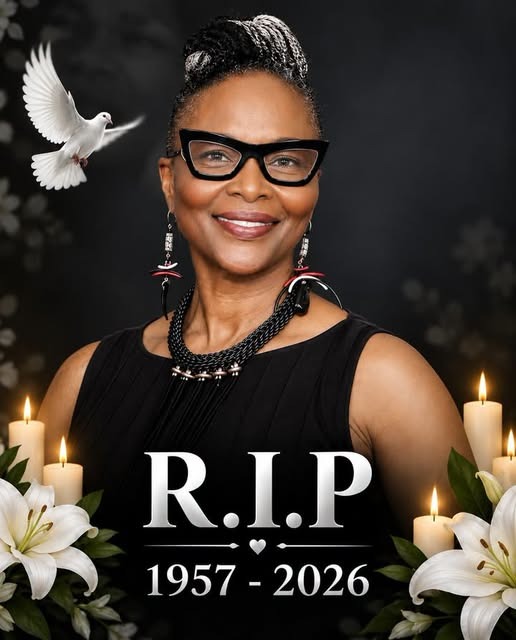
    RIP: Actress and Jazz Singer Suzzanne Douglas Dies at 64, Leaving Behind a Lasting Entertainment Legacy


    The entertainment world was shocked by the death of Suzzanne Douglas, an accomplished actress, jazz singer, and composer whose career stretched across film, television, and music. Douglas died on Tuesday, July 6, at the age of 64, according to a Facebook post shared by her cousin, Angie Tee.

    A cause of death was not disclosed in the account announcing her passing. Tee remembered Douglas as a gifted performer whose work had touched audiences through memorable appearances on movie screens and television programs.

  • How Long Can You Keep Ham in the Refrigerator

    How Long Can You Keep Ham in the Refrigerator

    How Long Can You Keep Ham in the Refrigerator

    That innocent-looking ham in your fridge could be hiding a risk you cannot smell. Yesterday’s leftovers can become today’s uneasy decision when nobody remembers when the package was opened or how long dinner sat out. Before you make another sandwich for someone you love, one overlooked storage rule could change what you serve next and spare your family dan…

    Home-cooked ham leftovers generally keep for 3 to 4 days, while opened deli ham generally keeps for 3 to 5 days in a refrigerator kept at or below 40°F. Unopened packaged ham and dry-cured varieties have different storage limits, so check the product’s instructions rather than assuming every ham follows the same clock. Refrigerate leftovers within two hours, or one hour when temperatures exceed 90°F. Store them in shallow, tightly covered containers, and mark the date clearly so tomorrow’s lunch never depends on a fading memory.

    The unsettling part is that harmful bacteria may leave no obvious warning. A normal smell or appearance cannot prove ham is safe, while slime, sour odors, or unexpected mold mean it should be discarded. Never taste it to check. Freeze portions early if you cannot finish them within the recommended window; freezing cannot rescue mishandled food. When storage time or temperature is uncertain, throwing ham away is safer than gambling with someone’s health.Start with the kind of ham you have. The USDA’s storage chart distinguishes fresh ham that has been cooked, factory-sealed products, sliced deli ham and opened packages. For home-cooked leftovers, the agency’s general recommendation is to use them within three to four days or freeze them. Opened luncheon meat, including deli ham, can generally be refrigerated for three to five days at 40°F or colder. A sealed package can have different instructions, so read the label before applying the rule you use for last night’s dinner.

    For example, the remaining slices from a ham served on Sunday go into the refrigerator on Sunday. The clock runs from when the ham was cooked or served and chilled, even if nobody opens the leftover container until Tuesday. A date on the lid helps the next person see that. For commercially packaged deli ham, note when you broke the seal. For meat sliced to order, mark when you brought it home. In both cases, the date is useful only if the ham was kept cold.


  • Body Of Missing 10-Year-Old Girl Has Been Found…See more

    Body Of Missing 10-Year-Old Girl Has Been Found…See more

    Body Of Missing 10 Year Old Girl Has Been Found

    Kodie’s disappearance began like a nightmare that every parent secretly fears. Just hours after she was last seen near the 1100 block of 12th Street in Baraboo, her mother told officers about threats of self-harm and missing pills. The details were chilling: Kodie was believed to be on foot, and she had left behind her cell phone and even her shoes, as if she never planned on coming back.

    Police, firefighters, and a K-9 unit swept the surrounding area through the night, but the search ended in unbearable sorrow. The next morning, authorities located her body near 11th Street and County Highway T, not far from her home. A community that had shared her photo and prayed for a safe return was left to mourn instead. Kodie’s story now lingers as a stark reminder of how fragile, and how easily overlooked, a child’s silent suffering can be.

    The distance between the streets where Kodie was last seen and the place where she was found was painfully small. Yet the hours separating her disappearance from that discovery changed everything for the people hoping she would return. Familiar roads became the setting for a search whose purpose was simple: to bring a child home safely. When that hope ended, those same surroundings carried a different weight.

    During the search, the details her mother shared gave the disappearance an urgency that went beyond an unexplained absence. Kodie was only ten. She had gone without the ordinary things that might have helped others reach her or understand where she was going. Her missing phone and shoes stood out because they made an already frightening situation even harder to comprehend. Each detail belonged to a child whose family wanted answers and whose community wanted a different ending.

    The search brought together people with different responsibilities but the same immediate purpose. Officers, firefighters, and the K-9 unit worked through the uncertainty, looking for a sign of where she might be. Until the discovery the following morning, the possibility of finding her alive remained the reason to keep looking. The change from searching to grieving was abrupt, leaving the effort itself inseparable from the sorrow that followed.

    For those who had shared Kodie’s photograph, the news meant confronting the difference between the child they hoped to help and the loss they could no longer prevent. A photograph circulated in hope had become a reminder of a young life. The streets, the messages, and the hours spent waiting were no longer steps toward a reunion. They were part of the story of a community trying to reach her.


  • Young girl who gave birth to triplets next day she di… See more

    Young girl who gave birth to triplets next day she di… See more

    A 19 Year Old Mother Three Newborn Babies and a Heartbreaking Warning About the Dangers After Childbirth

    The birth of a child is supposed to mark the beginning of a beautiful new chapter. For months, families imagine the moment they will finally hold their newborn, hear that first cry, and discover the tiny face they have been waiting to meet.

    For a mother expecting triplets, that anticipation can feel three times as extraordinary.

    Three babies. Three new lives. Three little hearts entering the world together.

    But behind the happiness of childbirth lies a reality that is too often overlooked: giving birth does not mean that a mother’s medical risks have ended.

    Sometimes, the most dangerous hours begin after the delivery is over.

    An emotional story circulating online describes a 19-year-old mother named Aaliyah who reportedly died after giving birth to triplets. According to the account, she experienced breathing difficulties following delivery, and her condition deteriorated.

    The story portrays a young woman who had every reason to believe that the hardest part of pregnancy was behind her.

    Instead, it describes a family facing a devastating loss at the very moment they expected to celebrate three new lives.

    The specific circumstances of Aaliyah’s reported death have not been independently verified. There is no confirmed medical record, official investigation, or independently authenticated family statement available from the material provided.

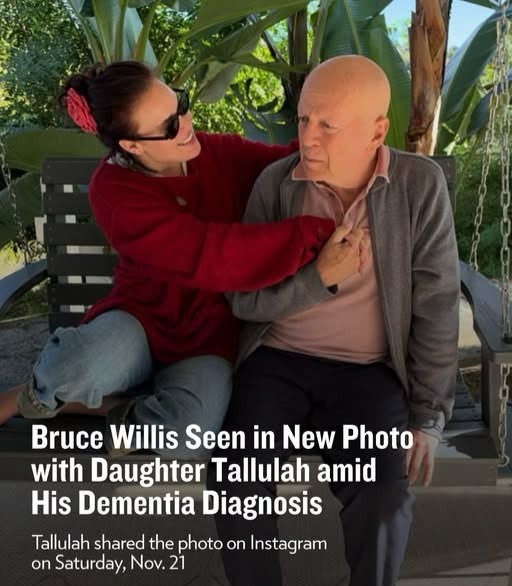
  • Tallulah Willis is enjoying quality time with her dad, Bruce Willis. The father-daughter duo held hands on an outdoor porch swing surrounded by lush greenery in a photo shared to Instagram as Bruce continues to navigate his frontotemporal dementia diagnosis. Click the link in the first comment for the full story. ⬇️

    Tallulah Willis is enjoying quality time with her dad, Bruce Willis. The father-daughter duo held hands on an outdoor porch swing surrounded by lush greenery in a photo shared to Instagram as Bruce continues to navigate his frontotemporal dementia diagnosis. Click the link in the first comment for the full story. ⬇️

    Bruce Willis Seen in New Photo with Daughter Tallulah amid His Dementia Diagnosis

    • Tallulah Willis, 32, shared a sweet new photo with her father, Bruce Willis, 71, on Instagram on Nov. 21
    • The duo posed together on a porch swing, with Tallulah wrapping her arm around her dad
    • The photo comes as Bruce continues to live with frontotemporal dementia, a diagnosis his family publicly revealed in 2023
    • TALLULAH is enjoying quality time with her dad,BRUCE WILLS

      Tallulah, 32, shared a sweet new photo of herself and the Die Hard star, 71, on INSTAGRAM on Saturday, Nov. 21.

      In the snap, the father-daughter duo hold hands on an outdoor porch swing surrounded by lush greenery.

      Tallulah, wearing a red sweater, jeans and sunglasses, has her arm wrapped around Bruce, who is dressed casually in a gray cardigan and a salmon-colored shirt.

      She kept the caption simple, sharing just two emojis:

    • Followers were quick to express their affection for the actor in the comments.

      “Give him a hug from us!!!” one person wrote, while another commented, “ABSOLUTELY LOVE ❤️❤️❤️.”

      The new photo comes just months after TALLULAH TIED ALOT with musician Justin Acee in an intimate wedding ceremony in Sun Valley, Idaho, on Aug. 8.

      Bruce was among those in attendance at the celebration, and in photos shared by VOGUE , the actor could be seen smiling with his arm wrapped around Tallulah as her new husband held his other hand.

      The touching family moments come as Bruce continues to live with FTD, a progressive neurological disease that can affect language, behavior and movement.

      The actor’s family first announced in March 2022 that he had been diagnosed with aphasia — a condition that affects a person’s ability to communicate — and would be stepping away from acting.

      Nearly a year later, in February 2023, they revealed that the actor had received the more specific diagnosis of FTD.

      “While this is painful, it is a relief to finally have a clear diagnosis,” his family said in a statement at the time.

      Tallulah, the youngest of Bruce’s three daughters with ex-wife demi moore , along with rumor 38, and scout , 35, has previously opened up about how she approaches spending time with her father amid his diagnosis

  • At 55 years old, Jennifer Lopez confirms to everyone that she is… See more

    At 55 years old, Jennifer Lopez confirms to everyone that she is… See more

    At 55, Jennifer Lopez Leaves Everyone Speechless

    At 55 years old, Jennifer Lopez once again proved why she remains one of the most talked-about stars in the world. While many celebrities gradually step away from the spotlight, she continues doing the exact opposite. Every public appearance seems to create another wave of attention, leaving fans and critics debating how she manages to remain at the center of conversations decade after decade.

    For years, people predicted that her biggest moments were behind her. Instead, she continued reinventing herself, taking on new projects, and refusing to slow down. Her determination became one of the defining parts of her career. Whenever expectations were lowered, she found a way to exceed them once again.

    What surprises people most is not simply her success but her confidence. While others worry about public opinion, she appears focused on living life on her own terms. That attitude has helped her remain relevant through changing trends, changing audiences, and an entertainment industry known for constantly moving on to the next big thing.

    Fans often point to her work ethic as the secret behind her longevity. Long hours, discipline, and an unwillingness to accept limitations have helped her maintain a career that spans generations. Younger performers admire her consistency, while longtime supporters continue following every new chapter of her journey.

    At 55, Jennifer Lopez is confirming something many people already suspected: true star power is not about age. It is about confidence, resilience, and the ability to keep surprising the world long after everyone expects you to fade away. That is exactly why she continues capturing attention wherever she goes.


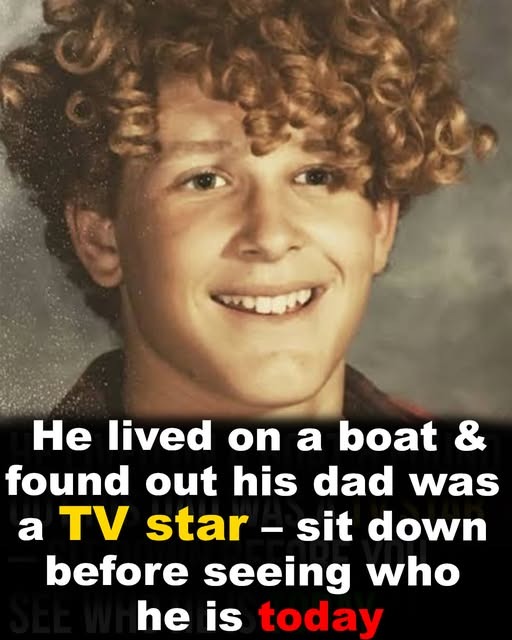
  • He lived on a boat and found his dad was a TV star! Today, he’s a FAMOUS Hollywood star! 😳😳 His name and story in the comments 👇👇

    He lived on a boat and found his dad was a TV star! Today, he’s a FAMOUS Hollywood star! 😳😳 His name and story in the comments 👇👇

    From a boat to a ranch: The untold story of Cole Hauser

    Before he ever met his father, he saw him on TV. Their eventual reunion didn’t lead to a picture-perfect bond – instead, it left him living alone on a docked boat, chasing a dream few believed in. Decades later, he’s the face of one of television’s most iconic cowboys.

    Today, he’s known as a devoted family man and the no-nonsense enforcer of Yellowstone. With his quiet intensity and commanding presence, he’s become a fan favorite on one of TV’s biggest shows.

    But behind the fame lies a far more complicated story. Long before he stepped onto a Hollywood set, he was a kid without a father, moving from town to town, determined to break into an industry that gave him nothing for free.

    This is the real story of Cole Hauser.

    A Childhood Spent Between Ranches and Restlessness

    Born on a ranch just north of Santa Barbara, Cole’s earliest memories were straight out of a Western—riding horses, roaming open pastures, and growing up surrounded by the grit and freedom of the land, per Men’s journal

    At age four, he and his mother moved to a 1,500-acre ranch outside Eugene, Oregon. Armed with a BB gun and an adventurous spirit, he later described this as the happiest time of his life.

    His mother, a self-proclaimed vagabond and hippie, lived a nomadic lifestyle, uprooting their lives again when Cole was still young. This time, the move took them to Clearwater, Florida—a transition he once admitted he “wouldn’t wish on anyone.”

    Eventually, they returned to California, where, at twelve, he stumbled into an acting class—not out of a passion for the craft, but because, as he candidly admitted, “There were good-looking girls, and you do a few plays.”

    But then something unexpected happened: he caught the bug.

    Hollywood Was in His Blood—But Not His Path

    When Cole told his mother he wanted to pursue acting seriously, she revealed a bombshell—her maiden name was Warner. As in Warner Bros. He was descended from Hollywood royalty.

    Yet that name didn’t open any doors. If anything, his mother made things even harder, determined that if he wanted this life, he had to earn it.

    She sent him on a grueling five-hour bus ride from their town to Los Angeles for auditions. He’d arrive, walk to the casting studio, spend a few minutes in the room, and then turn around for the five-hour ride home.

    After enduring this routine multiple times, she revealed another family secret—his father was an actor too. His dad was none other than Wings Hauser.

    Cole had never met him. In fact, he didn’t even know who he was until, at nine or ten years old, he saw him on TV.

    “I waited for the finish of the film, and I saw Wings Hauser [in the credits]. So, I went into my mom’s room, and I said, ‘Hey, Mom. I just saw a guy on TV, his name’s Wings Hauser.’ And she looked at me and went, ‘Wow!’ And I said, ‘Yeah, I saw this guy.’ And she goes, ‘Yeah, well, let’s talk about that.’”

    At fifteen, Cole finally met his father and moved to Los Angeles to live with him, hoping to be closer to the industry.

    The reunion was complicated. His father was battling serious substance abuse issues and couldn’t provide stability. Cole quickly realized he was on his own.

    A Teenager Living on a Boat, Chasing a Dream

    Instead of a Hollywood apartment or a family home, Cole ended up living alone on a docked PT boat in Marina del Rey.

    Most teenagers would’ve struggled. He thrived. “That was an awesome time because it meant freedom,” he later recalled.

    While juggling auditions and odd jobs, he landed his first big break in the 1992 film School Ties, sharing the screen with future stars like Matt Damon and Ben Affleck. He was so new to the business that legendary cinematographer Freddie Francis personally mentored him on set, teaching him how to hit his marks and block scenes.

    From there, his career slowly gained traction.

    To embody the hard-edged but fiercely loyal ranch foreman, he didn’t just rely on childhood memories of riding horses in Oregon. He threw himself into training, learning to rope and ride like a man who had spent a lifetime on the land.

    His performance won over critics and audiences alike—including his father.

    “Absolutely,” Cole said when asked if his dad was proud of him. “Yeah, he’s a huge fan of the show and is obviously very proud of what I’ve done in it.”

    As it turned out, his family’s connection to the West ran even deeper than he had imagined.

    A Family Legacy in Montana

    Years after Yellowstone premiered, Cole and his eldest son traveled to Montana to trace their roots.

    What they discovered was a legacy that stretched back to the earliest days of American history. His great-great-grandfather, Samuel T. Hauser, had not only helped fund the Lewis and Clark Expedition but also served as Montana’s first governor.

    “I’ve always had this love for the state but didn’t really know why,” Cole reflected. “It makes so much sense now. I mean, my family has been there since the beginning of time.”

    Now, as a father himself, Cole understands the importance of legacy. He built his career on grit, persistence, and self-reliance—the same qualities he now instills in his own children.

    And while Rip Wheeler may be his most famous role, his greatest achievement is the life he built against all odds.

  • It’s official—Beyoncé has officially entered billionaire territory, according to Forbes….

    It’s official—Beyoncé has officially entered billionaire territory, according to Forbes….

    It’s official—Beyoncé has officially entered billionaire territory, according to Forbes! 💎


    ✨ While we’ve always known she was royalty, Queen Bey has spent years building an empire rooted in total ownership and creative control through her company, Parkwood Entertainment. By reaching this milestone, Beyoncé becomes the 5th musician in history to hit 10 figures and joins an elite group of only 14 Black billionaires in the United States. Even more impressively, she is now one of only 4 Black female billionaires in the country, standing alongside the legendary Oprah Winfrey, Rihanna, and Sheila Johnson! 👑🏾

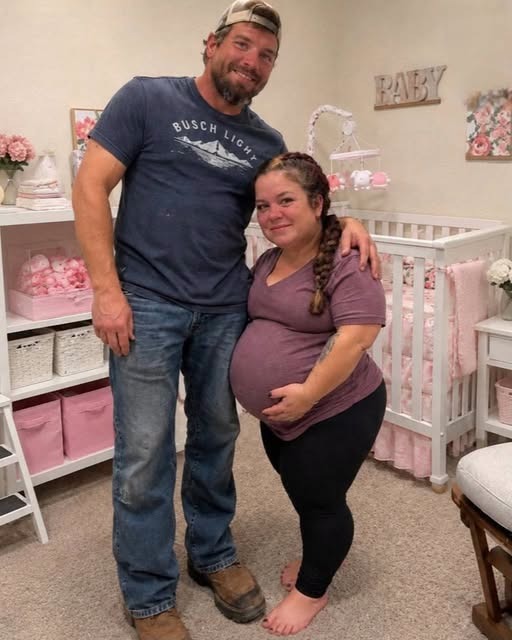
  • Men mocked my height for 30 years — when I finally found love and got pregnant, my MIL offered me $100,000 to leave my baby at the hospital. I was born with dwarfism. At 3 feet 8 inches tall, I spent most of my life being treated like a joke. In elementary school, children called me “doll” and “little freak.” By high school, boys were daring each other to ask me to prom. One actually did. When I said yes, his friends burst out laughing. As an adult, dating was even worse. Men either rejected me outright or treated me like some strange curiosity. By 35, I’d stopped believing anyone could genuinely love me. Then I met Michael. He was tall, handsome, and seven years older. On our first date, he pulled out my chair, listened to every word I said, and never once mentioned my height. Two years later, we married. When I discovered I was pregnant at 38, I cried so hard that Michael thought something was wrong. For the first time, I felt like I had everything I’d ever wanted. But his mother, Patricia, wasn’t happy. She’d always been polite, though strangely distant. When we announced the pregnancy, she stared at my stomach. “Are you sure this is a good idea?” I assumed she was worried about my health. My doctors were monitoring me closely, and everything was progressing well. Then, at seven months pregnant, Patricia invited me over while Michael was at work. She placed a check on the kitchen table. $100,000. “Take it.” I stared at her. “What’s this for?” She folded her hands. “When the baby is born, leave it at the hospital. I’ll arrange everything.” I couldn’t speak. “You want me to abandon my child?” “Think of it as giving the baby a better life.” I pushed the check back. “Get out of my life.” Patricia didn’t argue. She simply took back the check. “Then don’t say I didn’t warn you.” I told Michael everything that evening. He was furious. “She’s never coming near our baby.” For the rest of my pregnancy, we didn’t speak to Patricia. At 38 weeks, I went into labor. Because of my particular medical needs, my doctors had scheduled a C-section, but Charlotte decided to arrive three days early. When I heard her first cry, I burst into tears. “She’s perfect,” Michael whispered. Our daughter weighed six pounds, had a tiny button nose, and a full head of dark hair. The nurses placed her against my chest, and for the first time in my life, I forgot every cruel thing anyone had ever said about my body. But our happiness lasted less than an hour. A nurse entered my room. “There’s a woman downstairs claiming to be the baby’s grandmother.” My heart sank. “Tell her she’s not welcome.” The nurse hesitated. “She says there’s been a mistake.” Before I could respond, another nurse hurried into the room. She walked straight to Charlotte’s bassinet and checked the identification band around her ankle. “Who brought this baby into the room?” Michael stood up. “What do you mean?” The nurse looked toward the door. “Please, nobody touch the bassinet.” I tried to sit up, but pain shot through my abdomen. “What’s happening? That’s my daughter!” Suddenly, we heard shouting from the hallway.

    Men mocked my height for 30 years — when I finally found love and got pregnant, my MIL offered me $100,000 to leave my baby at the hospital. I was born with dwarfism. At 3 feet 8 inches tall, I spent most of my life being treated like a joke. In elementary school, children called me “doll” and “little freak.” By high school, boys were daring each other to ask me to prom. One actually did. When I said yes, his friends burst out laughing. As an adult, dating was even worse. Men either rejected me outright or treated me like some strange curiosity. By 35, I’d stopped believing anyone could genuinely love me. Then I met Michael. He was tall, handsome, and seven years older. On our first date, he pulled out my chair, listened to every word I said, and never once mentioned my height. Two years later, we married. When I discovered I was pregnant at 38, I cried so hard that Michael thought something was wrong. For the first time, I felt like I had everything I’d ever wanted. But his mother, Patricia, wasn’t happy. She’d always been polite, though strangely distant. When we announced the pregnancy, she stared at my stomach. “Are you sure this is a good idea?” I assumed she was worried about my health. My doctors were monitoring me closely, and everything was progressing well. Then, at seven months pregnant, Patricia invited me over while Michael was at work. She placed a check on the kitchen table. $100,000. “Take it.” I stared at her. “What’s this for?” She folded her hands. “When the baby is born, leave it at the hospital. I’ll arrange everything.” I couldn’t speak. “You want me to abandon my child?” “Think of it as giving the baby a better life.” I pushed the check back. “Get out of my life.” Patricia didn’t argue. She simply took back the check. “Then don’t say I didn’t warn you.” I told Michael everything that evening. He was furious. “She’s never coming near our baby.” For the rest of my pregnancy, we didn’t speak to Patricia. At 38 weeks, I went into labor. Because of my particular medical needs, my doctors had scheduled a C-section, but Charlotte decided to arrive three days early. When I heard her first cry, I burst into tears. “She’s perfect,” Michael whispered. Our daughter weighed six pounds, had a tiny button nose, and a full head of dark hair. The nurses placed her against my chest, and for the first time in my life, I forgot every cruel thing anyone had ever said about my body. But our happiness lasted less than an hour. A nurse entered my room. “There’s a woman downstairs claiming to be the baby’s grandmother.” My heart sank. “Tell her she’s not welcome.” The nurse hesitated. “She says there’s been a mistake.” Before I could respond, another nurse hurried into the room. She walked straight to Charlotte’s bassinet and checked the identification band around her ankle. “Who brought this baby into the room?” Michael stood up. “What do you mean?” The nurse looked toward the door. “Please, nobody touch the bassinet.” I tried to sit up, but pain shot through my abdomen. “What’s happening? That’s my daughter!” Suddenly, we heard shouting from the hallway.

    Men Tease Her Height for 30 Years When She Gets Pregnant Her MIL Offers

    100000 to Leave the Baby at the Hospital

    “Do you think someone like you should be having children?”

    My mother-in-law, Patricia, asked me that while I was helping set the table for Sunday dinner. I was three months pregnant.

    “What do you mean?”She glanced at my stomach.
    “With your condition, Sarah.”
    “Michael and I have discussed everything with our doctors.”

    Patricia frowned.
    “Doctors don’t know everything.”

    Before I could respond, Michael entered the kitchen.Patricia immediately smiled.
    “Of course, sweetheart. Just asking how Sarah’s feeling.”

    I wondered why she’d changed her tone so quickly. I didn’t know then how far she would go to keep me from raising my child.

    I was born with dwarfism. At 3 feet 8 inches tall, I’d spent most of my life being treated like a joke. In elementary school, children called me “doll” and “little freak.” By high school, boys dared each other to ask me to prom. One actually did. I spent an afternoon choosing a dress before discovering it was a prank. When I said yes, his friends burst out laughing. I never went to prom.

    Adulthood wasn’t much kinder. Some men rejected me immediately. Others treated my height as a curiosity. By 35, I’d stopped believing anyone could genuinely love me.