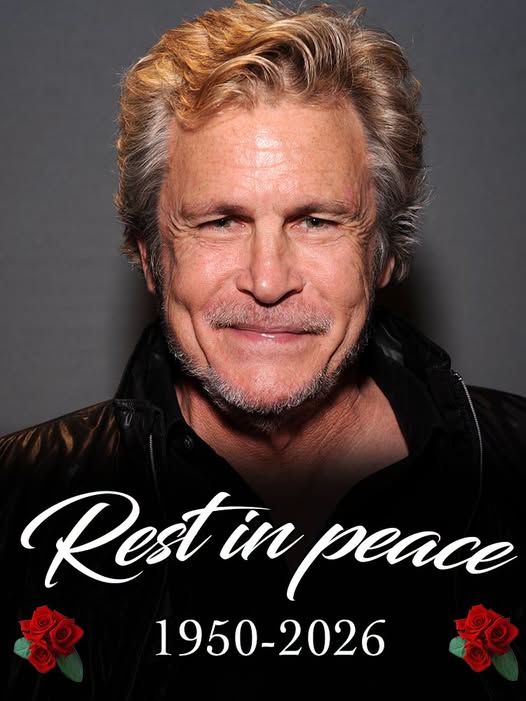
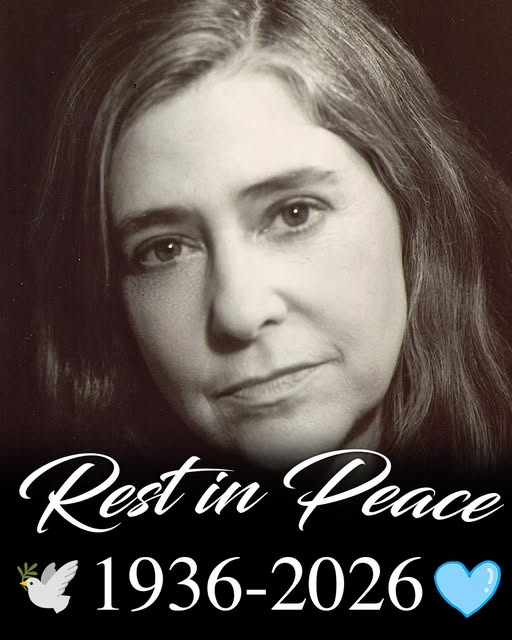
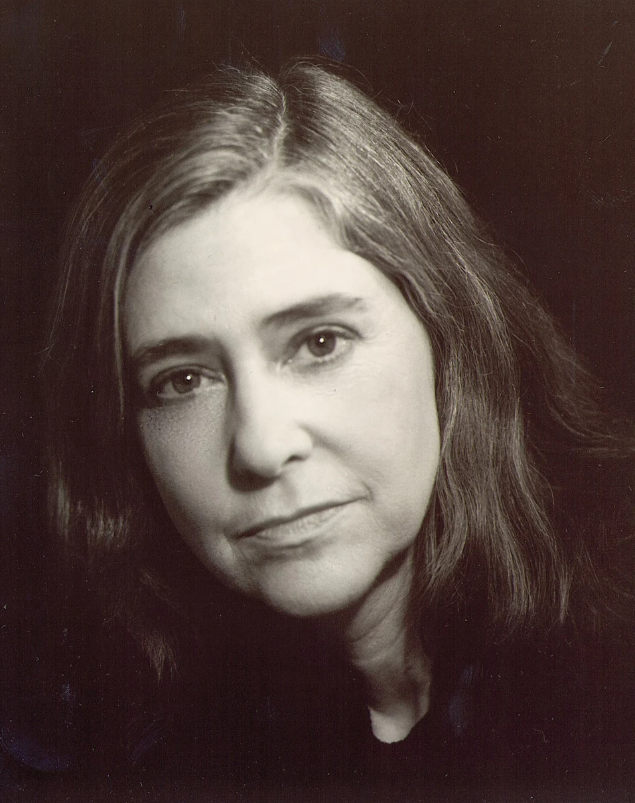
Michael Kearns, pioneering gay ‘Cheers’ and ‘Bevery Hills 90210’ actor, dies at 76
Actor and activist Michael Kearns, known for his roles in Cheers and Beverly Hills, 90210, has died at age 76. The actor was an advocate for people living with HIV and AIDS and broke barriers by announcing his HI
Actor and activist Michael Kearns, known for his roles in Cheers and Beverly Hills, 90210, has died at age 76. The actor was an advocate for people living with HIV and AIDS and broke barriers by announcing his HIV status in 1991
MIcahel Kearns died on October 5, according to reports. Filmmaker and longtime friend Roland Palencia confirmed his death, saying that the actor had been “in and out of emergency rooms over five times within a three-month period,” per Entertainment Weekly.
Palencia didn’t specify more about his friend’s health problems. He added that Michael Kearns was “a friend, mentor, neighbor, and my movie buddy.”
A cause of death has not yet been announced. However, what we do know is that Michael Kearns shared he was HIV-positive and revealed his diagnosis on television in 1991.
The actor was a pioneer who helped change Hollywood, fighting for people living with HIV and AIDS at a time when the stigma surrounding the disease was massive.
Born in St. Louis, Missouri, in 1950, Kearns discovered his love of acting as a child. He later studied drama in Chicago before beginning his professional career
Michael Kearns, pioneering gay ‘Cheers’ and ‘Bevery Hills 90210’ actor, dies at 76
He also appeared in the 1984 film Body Double and HBO’s drama And the Band Played On, which told the story of the early AIDS crisis.
Kearns was among the early openly gay actors in Hollywood, at a time when many performers feared that being open about their sexuality could damage their careers. In 1991, he publicly revealed that he was HIV-positive, wanting to challenge the shame and discrimination surrounding the disease.
He also played HIV-positive characters on television, helping bring the experiences of people living with the virus to a wider audience.
LOS ANGELES, CA – MARCH 08: Actor Michael Kearns poses before participating in “Male Call – Actors Read the Words of Great Women” at The Coast Playhouse on March 8, 2010 in Los Angeles, California. (Photo by Amanda Edwards/WireImage)
Away from the screen, Kearns worked as a director and activist. He co-founded Artists Confronting AIDS, an organization that used art and personal stories to raise awareness of the crisis.
On a personal level, Michael. Kearns also went through a lot. He married Philip Juwig in 1992, but his husband died that same year.
Broke stigma surrounding HIV
In 1995, Kearns adopted a daughter, Katherine, and became a single adoptive father. At the time, it was even far less common than being openly gay, living with HIV.
Kearns had been scheduled to take part in a special event celebrating LGBTQ+ theater history at Celebration Theatre in Los Angeles just days after his death.
Rest in peace, Michael Kearns. Please share this article to honor him and his fight to make the world a better place.
14-year-old teenager passed away after putting silicone on us… See more
A shocking and heartbreaking case has come to light after a 14-year-old teenager tragically passed away in circumstances that have left both family and doctors in disbelief. What was supposed to be a harmless attempt at something new quickly turned into a nightmare that ended her young life far too soon. At just 14 years old, her dreams, her laughter, and her future were all cut short in a way that has devastated everyone who knew her. The loss of such a young soul has sent waves of grief through her community.
According to reports, the teenager made a decision that many thought would not be dangerous, but her body reacted in the most tragic way. In an attempt to experiment and imitate something she had seen or heard, she applied silicone on herself — an act that, unknown to her, carried serious and life-threatening consequences. What seemed like a simple action at the time turned into an irreversible tragedy that no one could have predicted.
Her family watched helplessly as her condition worsened, unable to understand how quickly the situation spiraled out of control. Paramedics and doctors tried to save her, but her body could not withstand the damage that had already been done. The image of a young girl fighting for her life has left her loved ones shattered, haunted by the memory of her final moments. For her parents, the pain of losing a child in such a way is beyond what words can express.
This heartbreaking story is now a warning for others about the dangers of experimenting with unknown substances or imitating harmful trends. At just 14 years old, her life was full of potential, yet it was stolen by a choice that she never realized could be fatal. Now, her community mourns the loss of a beautiful teenager whose innocence was met with tragedy. Her story will not be forgotten, and it stands as a painful reminder that even the smallest decisions can carry unimaginable consequences. READ MORE BELOW
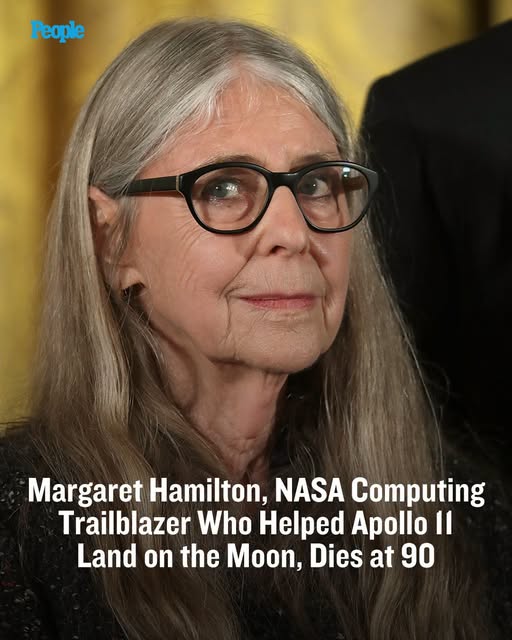
Margaret Hamilton, NASA Computing Trailblazer Who Helped Apollo 11 Land on the Moon, Dies at 90
The scientist led the software engineering team at MIT during the Apollo program and was awarded the Presidential Medal of Freedom by Barack Obama in 2016
Margaret Hamilton died on Wednesday, Sept. 30, at the age of 90
The pioneering computer scientist led the software engineering team at MIT during the Apollo program that landed humans on the moon
She authored more than 130 publications, became a CEO and entrepreneur and was awarded the Presidential Medal of Freedom by Barack Obama in 2016
Margaret Hamilton, the pioneering computer scientist whose software helped NASA launch Apollo 11 to the moon, has died. She was 90.
She died on Wednesday, Sept. 30, the Massachusetts Institute of Technology announced in a news release. No cause of death has been shared.
Hugely influential in establishing software engineering as a dedicated field, Hamilton led the team at MIT’s Instrumentation Lab during the Apollo program that landed 12 people on the moon between 1969 and 1972, the university wrote.
“I was attracted both by the sheer idea and the fact that it had never been done before. I was the first programmer to join and the first woman they hired,” she told The Guardian in 2019.
Hamilton was born in Paoli, Ind., in 1936, and began studying math at the University of Michigan in 1955 before moving to Earlham College, where she majored in math with a minor in philosophy, per the MIT release.
In 1959, she moved to Boston with her then-husband, James Cox Hamilton, and began working at MIT, originally on a temporary basis.
Six years later, she applied to develop software to “send man to the moon” at MIT’s Instrumentation Lab after her husband saw an advertisement in the newspaper.
She was hired as the first programmer for the Apollo project, and by 1968, the year before Neil Armstrong and Buzz Aldrin made history by becoming the first people to set foot on the moon, she was assistant director in charge of the Command and Service Module team.
“From my own perspective, the software experience itself (designing it, developing it, evolving it, watching it perform and learning from it for future systems) was at least as exciting as the events surrounding the mission,” she told MIT News in 2009. “Looking back, we were the luckiest people in the world; there was no choice but to be pioneers.”
Hamilton left MIT in the mid-1970s and authored 130 publications across her career, later becoming a computing entrepreneur and CEO — she founded Higher Order Software and Hamilton Technologies — working to promote software engineering as its own discipline, per the university.
I fought to bring the software legitimacy so that it — and those building it — would be given its due respect, and thus I began to use the term ‘software engineering’ to distinguish it from hardware and other kinds of engineering,” she told Spanish newspaper El País in 2018.
“When I first started using this phrase, it was considered to be quite amusing. It was an ongoing joke for a long time. They liked to kid me about my radical ideas,” she said. “Software eventually and necessarily gained the same respect as any other discipline.”
In 2016, she was awarded the Presidential Medal of Freedom by then-President Barack Obama.
“Luckily for us, Margaret never stopped pioneering,” Obama said at the presentation. “She symbolizes the generation of unsung women who helped send humankind into space. Her software architecture echoes in countless technologies today.”
“Her example speaks of the American spirit of discovery that exists in every little girl and little boy who know that somehow, to look beyond the heavens is to look deep within ourselves, and to figure out just what is possible,” he continued.
Over the years, Hamilton also earned the NASA Exceptional Space Act Award, the Computer History Museum Fellow Award and the Intrepid Lifetime Achievement Award. In addition, she was a member of the National Aviation Hall of Fame, MIT said.
Hamilton is survived by her daughter, Lauren Hamilton; her son-in-law, Richard Selesnick; two grandsons; four great-grandchildren; and her siblings John, David and Kathryn.
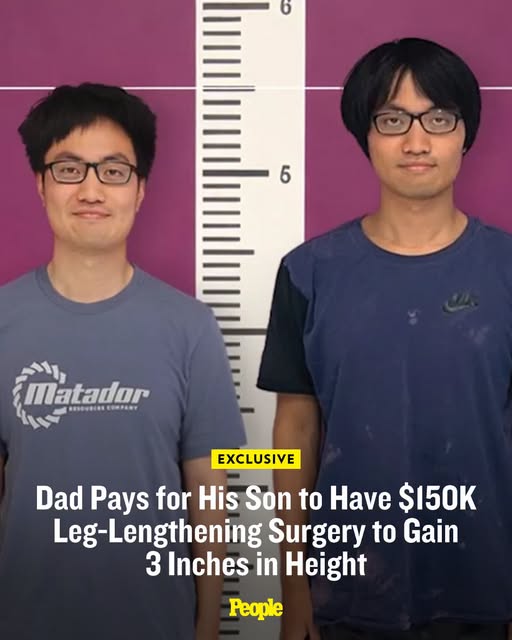
Dad Pays for His Son to Have $150K Leg-Lengthening Surgery to Gain 3 Inches in Height (Exclusive)
Aaron Trinh says he feels “much more at peace” since having the surgery
Ultramarathon runner Aaron Trinh says height discrimination shaped his decision to undergo a leg-lengthening procedure
His father, who is 5’2”, supported the surgery after experiencing lifelong insecurity about his own height, and paid the $150,000 cost
Trinh says recovery involved severe nerve pain but believes the surgery was worth it
A man who underwent a painful, pricy leg-lengthening procedure sai
His height was something Trinh’s father monitored as he grew up, and as he shares, “He’d done a lot of things to proactively make sure I was tall,” like “make me drink a glass of milk in the mornings.”
His father, who asked to remain anonymous, says that at 5’2”, he had long felt “rejected” and “dejected.”
“Because of my height. I just feel bad. I feel humiliated,” he says, sharing that he avoided socializing because it made him self-conscious. ”Can you imagine when you speak to people, you have to look up to them?” he asks. “And when they talk to you, they have to look down and you feel like you’re being talked down to all the time.
It was after Trinh was scrolling on TikTok that he saw a video about leg-lengthening surgery. A Google search led him to the Paley Orthopedic & Spine Institute in West Palm Beach.
“My dad offered full financial support for the surgery. It was a really deep father and son connection moment,” Trinh says about his father, who says if the technology had been around when he was younger, he also would have undergone the procedure.
They kept it a secret from Trinh’s mother until the day before the surgery, where Trinh had his bones broken so metal inserts could be inserted. Using magnets applied externally, the metal stretches the bone to add height, one millimeter a day, over up to four months, as muscles and nerves and other tissue have to gradually grow. After that comes recovery, and learning to walk again.
Trinh says he was “extremely nervous” on the day of the surgery — which he called the “easiest part” of the whole process. The “lowest” part, he tells PEOPLE, was the nerve pain, which left him crying out in pain at times. Still, he called it “manageable.”
About eight months after the surgery, Trinh says he became aware of his new height. “Things were shrinking,” he says. He would have to reach out his arm to grab something that had previously been closer. That’s when he realized, “This is actually becoming a reality.”
Trinh’s first surgery was a year ago; he needed a second surgery to remove the hardware from his leg. Now 5’9”, he’s focused on moving forward.
“Now that my height dysphoria is gone, I can mentally focus on a lot of other things” like graduation, his career, and a social life — what he calls “things that any normal human being would love to just focus on.”
“I am absolutely much more at peace with my mind and my body, and I think that’s gonna stick around for a very long time,” he says. “This surgery was purely just for my self-fulfillment, just so that I could be able to mentally focus on other things.”
The surgery, he says, was a “necessity” — and not a punchline. “I don’t think anyone has the right to judge,” Trinh says. “It’s no different from wanting to work hard to improve yourself just as much as if you were wanting to go to the gym.”
Charming Sunrise Estates Ranch Combines Comfort, Space, and Opportunity
Located in the peaceful Sunrise Estates neighborhood of Columbia, this classic brick ranch home offers comfort, space, and exciting potential for future updates. Its timeless exterior design creates a warm first impression, while the quiet residential setting provides a sense of stability and convenience. Surrounded by mature landscaping and established homes, the property delivers a welcoming atmosphere ideal for a variety of lifestyles.
Inside, the home features a spacious layout filled with natural light and practical living areas. The main living room offers plenty of room for everyday relaxation, while the cozy family room centers around a charming fireplace that adds warmth and character. These inviting spaces make it easy to imagine hosting gatherings, enjoying quiet evenings, or creating lasting memories with loved ones.
One of the home’s standout features is the enclosed sun porch, which extends the living space and offers a bright, flexible area for multiple uses. Whether transformed into a reading nook, hobby room, indoor garden, or casual sitting area, the sun porch creates a peaceful retreat that can be enjoyed throughout the year.
The primary suite is designed for convenience and comfort, providing a private space to unwind after a long day. Additional bedrooms offer flexibility for family members, overnight guests, or a dedicated home office. With a thoughtful floor plan and generous room sizes, the home can easily adapt to changing needs over time.
Downstairs, the finished walkout basement adds valuable extra space with endless possibilities. It can serve as an entertainment room, home gym, creative studio, or additional storage area. The flexible lower level allows homeowners to personalize the property while increasing everyday functionality and long-term appeal.
An attached garage provides convenient parking and workspace for hobbies, tools, or seasonal storage. The outdoor area offers manageable space for gardening, relaxing, or enjoying fresh air. Practical features throughout the property support both comfort and efficiency for daily living.
Whether purchased as a primary residence, rental investment, or renovation opportunity, this Columbia home presents excellent potential for future value. With strong structural character, flexible living spaces, and a desirable neighborhood location, it offers buyers the chance to create a home that reflects their vision while enjoying the benefits of an established community.
A Dusty Drawer in My Grandfather’s Home Held a Fascinating Surprise
After my grandfather passed away, our family spent several days sorting through the belongings he had collected throughout his life. Most of what we found was familiar: old photographs, handwritten notes, receipts, small tools, and the everyday items he had kept for years. But inside one of his drawers, beneath a stack of faded papers and a neatly folded handkerchief, I discovered something I could not immediately identify.
It was a small, heavy brass object with a rounded shape and a narrow opening. The metal had become dull with age, and several tiny marks covered its surface. It looked as though it had been handled many times over the years. I turned it over repeatedly, trying to understand what it had been used for and why my grandfather had decided to keep it.
At first, I thought it might have been an old tool or perhaps a piece of equipment from another time. Its unusual shape made it difficult to identify. There were no labels, instructions, or markings that could provide an obvious answer. Rather than putting it back in the drawer, I decided to investigate.
I searched through photographs of vintage household objects, old accessories, and small brass tools. I compared the shape, size, opening, and construction with dozens of similar items. Several possibilities seemed close, but none completely matched what I had found.
Eventually, I came across photographs of vintage pocket pipes. The resemblance was unmistakable. The object in my hand was a small brass pocket pipe, designed to be compact and durable. Its simple construction explained why it had survived for so many years, while its size made it practical to carry.
he discovery caught me off guard. I had known my grandfather for most of my life, but I had never seen this particular object before. I knew his favorite stories, his routines, his sense of humor, and the little habits that made him familiar to everyone around him. Yet this small brass item revealed another detail about his life that I had never known.
Of course, finding the pipe did not answer every question. I had no way of knowing exactly when he purchased it, where he found it, or how frequently he carried it. Those details were part of a period of his life that belonged to him. By the time I discovered the object, those stories could no longer be told directly.
Still, I found myself holding onto the pipe for a while. Its monetary value was probably modest, and it was certainly not the most important item among my grandfather’s belongings. Yet somehow, it became one of the objects I remembered most clearly.
Perhaps that is because family possessions are rarely valuable only for what they are. A photograph can bring back a familiar face. An old watch can remind us of a person’s daily routine. A handwritten note can preserve a voice long after the person is gone.
For me, that little brass pipe became another piece of my grandfather’s story. It reminded me that every person has experiences, interests, and memories that may remain unknown to those around them.
Sometimes, the smallest objects left behind can tell us something meaningful about the people we loved—and give us one more reason to remember them.
In 2020, Pamela Anderson Returned to Her Family’s Canadian Estate and Built a Massive Garden. Today, the Harvest Feeds Her Local Community
In August, the actress joined TikTok, where she posts regular updates from her Vancouver Island home
Pamela Anderson moved back to Canada in 2020 to her family’s long-held plot on Vancouver Island
In the years since, she’s built a massive garden that grows everything from wildflowers and herbs to fruits and vegetables
Today, her harvest baskets support neighbors, churches, schools, soup kitchens and food banks
Pamela Anderson is growing deep roots back home in British Columbia.
In 2020, the Baywatch star, 59, returned to her family’s longtime estate on Vancouver Island around the start of the pandemic. In a September 2024 cover story of Better Homes & Gardens, the actress explained that she purchased a motel once owned by her grandmother, which is where she was brought home from the hospital when she was born. It’s also the same place where her grandfather instilled in her a love of gardening.
“I came to a point where I decided to move home and disappear and get into my garden,” she told the outlet. She added that expanding the patch was “really like a metaphor of putting my life back together,” where “the smallest things became really profound.”
But The Last Showgirl star had her work cut out for her when she arrived.
“I mean, you should see the before pictures,” Anderson said. “It was decayed and rotten to the ground. I lived in another little house on the beach that I had that was livable.”
Over the years, the property, known as Arcady, has helped her move through an often complicated life. “[It’s] where everything came back together for me. This whole new chapter? It started in the garden,” she told Architectural Digest in June 2025.
Today, the garden grows everything from wildflowers and herbs to fruits and vegetables.
“I love my Yves Piaget roses. I also harvest rose hips and make face oils and all sorts of beauty treatments out of them,” Anderson told AD. “And I love my heirloom tomatoes — I have that vegan cookbook I put out last year. A great heirloom tomato salad—that’s the perfect food.”
In August, Anderson joined TikTok and has already posted six videos from Arcady. Her most recent, from Oct. 3, showed her arranging a basket of produce including pumpkins, corn and various other gourds.
“It’s grounding for me,” Anderson says of returning to her garden after leaving Canada for work. “I get home with my dogs and I get in the garden and I start throwing them vegetables through the fence. And just slowly I come back down to earth. It takes me a couple days.”
Never miss a story — sign up for PEOPLE’s free daily newsletter to stay up-to-date on the best of what PEOPLE has to offer, from celebrity news to compelling human interest stories.
She adds: “I feel like a little kid in the garden because the things I planted from little seeds are huge… You get a few nicks here and there from my clippers, but you can’t walk away from the garden without feeling inspired.
Legendary woman whose code helped save the moon landing dies
We all know the names Neil Armstrong and Buzz Aldrin.
Their faces are permanently tied to one of the most extraordinary moments in human history — the first time people walked on the moon.
But behind that historic achievement were countless people whose names never became household words.
One of them was Margaret Hamilton.
Hamilton, the pioneering computer scientist who led the team responsible for the software that guided NASA’s Apollo missions, died Sept. 30 in Cambridge, Massachusetts. She was 90, according to MIT News.
Her work may not have put her in the astronaut seat or made her a celebrity, but when the Apollo 11 mission was in danger, the software Hamilton and her team had built helped make sure the astronauts could continue toward the lunar surface.
And that is exactly why her story deserves to be remembered.
The woman behind the code
Hamilton was born in Paoli, Indiana, and joined MIT’s Instrumentation Laboratory in 1965 after learning that the team was developing the software that would help send humans to the moon
She became the first programmer hired for MIT’s Apollo project and eventually rose to lead the team developing the onboard flight software for the crewed missions.
At the time, software engineering was still a relatively new field.
Hamilton helped change that.
According to MIT News, she would go on to author more than 130 publications and play a major role in establishing software engineering as a discipline in its own right.
Hamilton built her career at NASA during a time when the women’s liberation movement was gaining momentum. Yet she said she personally did not feel that she was discriminated against while working there.
In an interview, she explained:
“I suppose I was fortunate that my superiors were liberal enough not to let it bother them.”
Despite her demanding schedule, Hamilton made time for her daughter, Lauren, from her first marriage, which ended in 1967.
We all know the names Neil Armstrong and Buzz Aldrin.
Their faces are permanently tied to one of the most extraordinary moments in human history — the first time people walked on the moon.
But behind that historic achievement were countless people whose names never became household words.
Hamilton, the pioneering computer scientist who led the team responsible for the software that guided NASA’s Apollo missions, died Sept. 30 in Cambridge, Massachusetts. She was 90, according to MIT News.
Her work may not have put her in the astronaut seat or made her a celebrity, but when the Apollo 11 mission was in danger, the software Hamilton and her team had built helped make sure the astronauts could continue toward the lunar surface.
And that is exactly why her story deserves to be remembered.
The woman behind the code
Hamilton was born in Paoli, Indiana, and joined MIT’s Instrumentation Laboratory in 1965 after learning that the team was developing the software that would help send humans to the moon.
She became the first programmer hired for MIT’s Apollo project and eventually rose to lead the team developing the onboard flight software for the crewed missions.
At the time, software engineering was still a relatively new field.
Hamilton helped change that.
According to MIT News, she would go on to author more than 130 publications and play a major role in establishing software engineering as a discipline in its own right.
Hamilton built her career at NASA during a time when the women’s liberation movement was gaining momentum. Yet she said she personally did not feel that she was discriminated against while working there.
“I suppose I was fortunate that my superiors were liberal enough not to let it bother them.”
Despite her demanding schedule, Hamilton made time for her daughter, Lauren, from her first marriage, which ended in 1967.
Balancing her career with motherhood was something Hamilton spoke about openly. She once said:
“My daughter is more of a female liberationist than I am. She believes that a woman should work and fulfill herself.”
When everything almost went wrong
Hamilton and her colleagues were developing technology for something that had never been done before. There was no blueprint, no previous Apollo mission to learn from — they were figuring it out as they went.
”Looking back, we were the luckiest people in the world,” Hamilton later said of her time working on Apollo. ”There was no choice but to be pioneers.”
And they truly were.
Hamilton’s approach to software was built around something that sounds obvious today but was revolutionary at the time: expect things to go wrong.
She believed software should be designed to anticipate mistakes and respond to problems rather than simply assuming everything would work perfectly.
That philosophy would become crucial during Apollo.
Years before the famous moon landing, Hamilton’s young daughter Lauren accidentally triggered a program while playing with a simulator at MIT.
The simulator crashed.
Hamilton realized that something similar could potentially happen during an actual mission and proposed a software change to prevent it.
She was initially overruled because officials believed trained astronauts would never make the same mistake.
Then, during Apollo 8, command module pilot Jim Lovell accidentally did exactly what Hamilton had warned about.
The resulting problem caused critical navigational data to disappear.
Hamilton and her team were called in to solve it.
Afterward, the changes she had proposed were incorporated into the program.
It was an early example of what became known as defensive programming — designing systems to anticipate human error and protect against it.
That philosophy would soon face its biggest test.
Saving Apollo 11
On July 20, 1969, Neil Armstrong and Buzz Aldrin were preparing to land on the moon.
Then the Apollo Guidance Computer began sending alarms.
The computer was being overloaded by a problem involving the system’s hardware.
For a moment, the mission was facing a potentially catastrophic situation.
But Hamilton’s team had designed the software with a crucial feature: it could prioritize the most important tasks while pushing less critical work aside.
Instead of simply collapsing under the overload, the computer continued handling the information needed for the landing
Mission Control trusted the system.
The landing continued.
And Armstrong and Aldrin became the first humans to walk on the moon.
Hamilton later reflected on just how much was riding on their work.
“There was no second chance. We knew that. We took our work seriously, many of us beginning this journey while still in our 20s. Coming up with solutions and new ideas was an adventure. Dedication and commitment were a given. Mutual respect was across the board. Because software was a mystery, a black box, upper management gave us total freedom and trust. We had to find a way, and we did.”
Photograph made her famous
For much of her career, Hamilton was hardly a household name.
Then a photograph began circulating online.
It showed the 5-foot-4 computer scientist standing beside an enormous stack of printed Apollo code — a physical representation of the work that helped carry humans to the moon.
And suddenly, a woman whose work had been hidden behind computers, equations and thousands of lines of code was becoming recognizable to a new generation.
Hamilton received numerous honors over the years, including NASA’s Exceptional Space Act Award, the Computer History Museum Fellow Award and induction into the National Aviation Hall of Fame.
In 2016, President Barack Obama awarded her the Presidential Medal of Freedom.
The citation recognized the enormous significance of her work, noting that “Hamilton defined new forms of software engineering and helped launch an industry that would forever change human history.”
She later became a symbol of what women could accomplish in science and technology. She was also honored as an official LEGO minifigure and saw the Apollo software she helped develop made publicly available through GitHub.
Their names are written into history books. Their photographs have been seen by billions of people. Their stories have been turned into movies, documentaries and monument
But great achievements rarely belong to one person.
They are built by teams of people working late nights, solving problems nobody has solved before and quietly making sure everything works when the moment finally arrives.
President Barack Obama awarded the Presidential Medal of Freedom to Margaret H. Hamilton, a pioneering computer scientist and former head of the Software Engineering Division of MIT’s Instrumentation Laboratory who led the development of on-board flight software for NASA’s Apollo moon missions. (Photo by Cheriss May/NurPhoto via Getty Images)
Margaret Hamilton was one of those people.
She was a pioneer, a scientist, an engineer, a leader and a woman who helped write the code that carried humanity to another world.
She may not have taken the famous first step onto the moon.
But without women like Margaret Hamilton working behind the scenes, that step might never have happened.
Hamilton is survived by her daughter, Lauren Hamilton; son-in-law Richard Selesnick; two grandsons; four great-grandchildren; and her siblings, John, David, and Kathryn.
A quiet afternoon in a suburban backyard turns into a terrifying emergency when a neighbor’s powerful Doberman suddenly breaks through a damaged fence and rushes toward a mother’s two toddler twins playing in a sandbox. In a moment of panic, the dog grabs both children by their jackets and begins dragging them across the yard toward the street, causing immediate chaos and fear. The mother rushes outside and manages to fight the dog off, pulling her children to safety despite its intense strength and resistance. While she believes the attack is over, the dog behaves strangely, repeatedly returning to the sandbox and digging frantically instead of fleeing or continuing aggression. As authorities arrive and the situation escalates, it becomes clear that the dog’s behavior may not have been a simple attack. His actions suggest he was focused on something hidden underground, hinting at a deeper and more dangerous threat beneath the family’s yard. (Check first in all comments👇)