Author: Leotrim

  • Which Egg Is From The Healthiest Chicken? Choose 1, 2, Or 3 Before Seeing The Answer! 🥚👇 ᅠ͏­

    That rich, orange yolk you proudly pay extra for might not mean what you think. For years, we’ve been taught to believe that a darker yolk automatically means a healthier, higher-quality egg. But the truth is more complicated.

    Yolk color is influenced mainly by what the hen eats. Foods naturally rich in carotenoids, such as grass, alfalfa, and marigold petals, can create a deeper orange color. However, certain feed additives can also produce a similar effect.

    So while a bright orange yolk may look impressive, color alone cannot tell you how nutritious or healthy an egg is. A pale-yellow yolk isn’t automatically inferior, and a deep-orange yolk isn’t automatically better.

    Eggs can provide important nutrients such as protein, vitamin B12, vitamin D, selenium, and choline regardless of whether the yolk is pale yellow or vibrant orange.

    What matters more is what you can’t necessarily see on your plate: the hen’s overall diet, farming conditions, hygiene, storage, and the freshness of the egg.

    So next time you’re standing in the grocery aisle comparing cartons, remember this: don’t let yolk color make the entire decision for you. It can tell you something about the hen’s diet, but it doesn’t tell the whole story.

    The most attractive yolk may simply be the one designed to catch your eye.

  • If you drool while you sleep its a sign that See more

    If you drool while you sleep its a sign that See more

    Drooling during sleep is a common biological process that happens when normal saliva control decreases while your body rests.

    Your mouth produces saliva continuously throughout the day to support digestion, protect teeth, and keep oral tissues healthy.

    While awake, swallowing happens automatically and frequently without conscious effort.

    During sleep, especially in deeper stages of rest, swallowing slows significantly as the body shifts into recovery mode.

    Muscles in the jaw, tongue, and face relax during sleep as part of natural restoration processes.

    This relaxation can allow the mouth to open slightly without you noticing.

    When the mouth is open, saliva can escape instead of being swallowed.

    Sleeping position plays a major role in how noticeable drooling becomes.

    People who sleep on their side or stomach are more likely to experience saliva leakage due to gravity.

    Back sleeping often reduces drooling because saliva is more likely to stay inside the mouth.

    Deep sleep stages can also increase drooling because muscle control is at its lowest point during these phases.

    This is usually a harmless sign that the body is entering restorative sleep cycles.

    In many cases, drooling simply reflects normal physiology rather than a medical problem.

    However, frequent or sudden changes in drooling patterns can sometimes indicate underlying health factors.

    One of the most common contributors is nasal congestion caused by conditions such as allergies or sinus inflammation.

    Allergic Rhinitis can block nasal airflow and force breathing through the mouth during sleep.

    Mouth breathing increases the likelihood of saliva escaping from the mouth throughout the night.

    Colds and respiratory infections can temporarily worsen this effect by narrowing nasal passages.

    Another important factor is sleep posture combined with relaxed airway muscles during deep sleep stages.

    Alcohol consumption before bed can further relax muscles and reduce swallowing reflexes during the night.

    Heavy meals close to bedtime can also increase saliva production and contribute to nighttime discomfort.

    In some cases, digestive issues may play a role in increased drooling while lying down.

    Gastroesophageal Reflux Disease can irritate the throat and stimulate extra saliva production as a protective response.

    When stomach acid moves upward during sleep, the body may produce more saliva to neutralize irritation.

    This can lead to increased drooling along with symptoms such as throat discomfort or nighttime coughing.

    Sleep disorders are another important category to consider when drooling becomes frequent or severe.

    One of the most significant conditions linked to nighttime mouth breathing and drooling is Sleep Apnea.

    Sleep apnea occurs when breathing repeatedly stops and starts during sleep due to airway obstruction or neurological signaling issues.

    This condition often forces the mouth to remain open to maintain airflow, increasing saliva leakage.

    Common signs of sleep apnea include loud snoring, morning headaches, and excessive daytime fatigue.

    In some cases, neurological conditions can also affect swallowing coordination during sleep.

    Certain medications that relax muscles or increase saliva production may also contribute to drooling at night.

    While these causes are less common, they become more relevant when drooling appears suddenly or becomes severe.

    Most people who experience occasional drooling do not have any serious medical condition.

    It is often simply a reflection of sleep position, deep rest, or temporary nasal blockage.

    However, the pattern of drooling can still provide useful clues about sleep quality and breathing efficiency.

    Understanding why it happens can help identify whether it is harmless or worth further attention.
    When drooling is frequent or newly developed, it is often helpful to observe accompanying symptoms rather than focusing on it alone.

    Changes in breathing patterns during sleep are one of the most important indicators to consider.

    If drooling is paired with loud snoring or gasping during sleep, it may suggest disrupted airflow.

    Morning dry mouth can also indicate prolonged mouth breathing during the night.

    Difficulty staying asleep or waking up frequently may signal poor sleep quality.

    Daytime fatigue despite long sleep duration can also point to underlying sleep disturbances.

    Lifestyle factors are often the easiest to adjust when addressing nighttime drooling.

    Sleeping on the back can reduce saliva leakage by minimizing gravitational flow from the mouth.

    Improving nasal breathing through allergy management or humidification may also reduce symptoms.

    Avoiding alcohol before bedtime can help maintain normal muscle tone and swallowing reflexes.

    Eating earlier in the evening can reduce digestive stimulation that may increase saliva production.

    In some cases, medical evaluation may be necessary if drooling is persistent or severe.

    Doctors may assess for airway obstruction, sinus issues, or neurological function depending on symptoms.

    Sleep studies are sometimes recommended when Sleep Apnea is suspected due to snoring and breathing interruptions.

    Treatment options can range from nasal sprays and oral devices to continuous airway pressure therapy in more serious cases.

    For digestive-related causes such as Gastroesophageal Reflux Disease, dietary changes and medication may help reduce nighttime irritation.

    Allergy-related drooling linked to Allergic Rhinitis can often improve with antihistamines or nasal treatments.

    In rare cases involving neurological causes, specialized medical care is required to address swallowing control issues.

    Despite these possibilities, most cases of drooling remain harmless and temporary.

    The key is identifying whether it is an isolated sleep habit or part of a broader pattern of symptoms.

    Monitoring changes over time can provide valuable insight into overall sleep health.

    Ultimately, drooling during sleep is not just a random occurrence but a small reflection of how the body manages rest, breathing, and digestion.

    When understood properly, it can serve as an early signal to improve sleep habits and overall wellness before more serious issues develop.

  • What a tragedy! The whole country is mourning the passing… See more

    They looked like any other young couple.

    That’s what everyone said later.

    The kind of couple you’d pass by in a grocery store aisle, maybe smiling at each other over something small—like which cereal to pick—or standing quietly, comfortable in silence. The kind of couple that didn’t demand attention but somehow held it anyway.

    In the photograph, they stood close together on a quiet spring afternoon. The trees behind them had just begun to bloom, stretching their branches like old arms welcoming a new season. The gravel beneath their feet was freshly laid, the kind that crunches gently under every step—a soft reminder that life is always moving, always shifting.

    He had his arm around her, easy and natural, like it had always belonged there.

    She leaned into him just slightly, her smile open, warm, the kind of smile that made people feel like they knew her even if they didn’t.

    No one could have known that this picture would become the last one

    Their names were Ethan and Lily.

    Ethan was twenty-one. Lily had just turned twenty.

    They had grown up just ten miles apart, in neighboring towns that shared the same Friday night lights, the same diners, the same slow rhythm of life that older generations often say is disappearing.

    But for them, it hadn’t disappeared.

    It had simply become the backdrop of everything that mattered.

    ⸻

    They met in high school, though not in the way most people would expect.

    It wasn’t love at first sight. It wasn’t even particularly memorable.

    Lily remembered him as “that quiet guy who always wore baseball caps.”

    Ethan remembered her as “the girl who laughed too loud in English class.”

    For two years, they existed in the same spaces without ever really crossing paths.

    Until one afternoon changed everything.

    ⸻

    It was late October.

    The air had that sharp, crisp edge that only autumn brings—the kind that makes you pull your jacket a little tighter and breathe a little deeper.

    Their school had organized a volunteer day at a local farm owned by an elderly couple who could no longer manage it alone.

    Students were sent in groups.

    By chance—or maybe something more—Ethan and Lily were placed together.

    At first, it was awkward.

    They didn’t know what to say.

    They worked side by side, picking apples in silence, occasionally brushing past each other as they reached for the same branch.

    Then Lily dropped an entire basket.

    Apples rolled everywhere, bouncing across the dirt, disappearing into tall grass.

    She groaned.

    Ethan laughed.

    And just like that, something shifted.

    ⸻

    They spent the rest of the day talking.

    About nothing important.

    And everything important.

    Music. Family. Dreams. Fears.

    The kind of conversations that feel easy, like you’ve known the person your whole life, even though you’ve only just begun.

    By the time the sun dipped low and painted the sky in gold and orange, neither of them wanted the day to end.

    But it did.

    And yet, somehow, it didn’t.

    ⸻

    They started texting.

    At first, casually.

    Then constantly.

    Good morning messages turned into late-night conversations that stretched past midnight.

    Ethan, who had always been reserved, found himself opening up in ways he never had before.

    Lily, who had always been fearless on the outside, found comfort in someone who saw beyond her laughter.

    They balanced each other.

    In ways neither of them understood yet.

    ⸻

    By winter, they were inseparable.

    By spring, they were in love.

    ⸻

    Their families noticed it before they said it out loud.

    The way Ethan smiled more.

    The way Lily seemed calmer, steadier.

    The way they looked at each other—not with intensity, but with quiet certainty.

    It wasn’t dramatic.

    It wasn’t complicated.

    It was simple.

    And that made it rare.

    ⸻

    After graduation, life began to pull in different directions.

    Ethan stayed close to home, working with his father in construction.

    Lily enrolled in a community college nearby, studying nursing.

    They made a promise early on.

    No matter what changed, they wouldn’t let “busy” become “distant.”

    And for a while, they kept that promise.

    ⸻

    There were small challenges.

    Long days.

    Missed calls.

    Moments of frustration.

    But they worked through them.

    Not perfectly.

    But honestly.

    They talked.

    They listened.

    They stayed.

    ⸻

    On the morning that photo was taken, nothing seemed unusual.

    It was a Saturday.

    Warm, but not too warm.

    The kind of day that makes you believe everything will be okay.

    They had gone to visit Lily’s aunt, who lived just outside town.

    There had been coffee.

    Laughter.

    Stories told for the hundredth time.

    At some point, someone suggested taking a picture.

    “Stand over there,” her aunt said, pointing toward the garden.

    “By the trees.”

    They walked out together.

    Ethan slipped his arm around her without thinking.

    Lily leaned in, smiling.

    Click.

    That was it.

    A single moment.

    Captured forever.

    ⸻

    They stayed for another hour.

    Then they left.

    They had plans.

    Simple ones.

    Lunch in town.

    A quick stop at the hardware store.

    Then back home.

    Nothing extraordinary.

    Just a normal day.

    ⸻

    But normal days can change in an instant.

    ⸻

    It happened on a quiet stretch of road.

    The kind that winds gently through open land, where traffic is light and time feels slower.

    Ethan was driving.

    Lily was beside him, scrolling through her phone, occasionally glancing up to point out something in the distance.

    They were talking about something small.

    Dinner, maybe.

    Or a movie.

    No one knows for sure.

    ⸻

    At the same time, miles away, another driver had made a decision.

    A small one.

    Seemingly insignificant.

    He checked his phone.

    Just for a second.

    That’s all it takes.

    ⸻

    By the time he looked back up, it was too late.

    ⸻

    The collision was sudden.

    Violent.

    Unforgiving.

    Metal twisted.

    Glass shattered.

    Silence followed.

    ⸻

    Emergency services arrived quickly.

    Too quickly, some would later say, as if speed could somehow undo what had already been done.

    They worked tirelessly.

    Carefully.

    Desperately.

    But some things cannot be fixed.

    ⸻

    Ethan was gone at the scene.

    Lily was rushed to the hospital.

    For hours, doctors fought to save her.

    Her family waited.

    Hoping.

    Praying.

    Refusing to accept what felt impossible.

    ⸻

    By nightfall, the news came.

    She was gone too.

    ⸻

    In a single day, two lives ended.

    Two families shattered.

    A future erased.

    ⸻

    The town felt it immediately.

    News travels fast in places like that.

    By evening, everyone knew.

    By morning, no one could believe it.

    ⸻

    Flowers began appearing at the roadside.

    Then candles.

    Then notes.

    Messages written in shaky handwriting.

    “I’m so sorry.”

    “You were loved.”

    “You won’t be forgotten.”

    ⸻

    At the high school, counselors were brought in.

    Teachers struggled to hold it together.

    Students sat in silence, some crying, some simply staring ahead, unable to process the loss.

    ⸻

    Ethan’s father didn’t speak for two days.

    He just sat on the porch, staring out at the road.

    Waiting.

    As if somehow, his son would come driving back.

    ⸻

    Lily’s mother held her daughter’s sweater.

    The one she had worn just days before.

    She refused to wash it.

    Said it still smelled like her.

    ⸻

    The funeral was held three days later.

    It was standing room only.

    People came from neighboring towns.

    Old friends.

    Distant relatives.

    Strangers who had only heard the story and felt compelled to be there.

    ⸻

    Two caskets stood side by side.

    Just as they had stood in that photo.

    Together.

    ⸻

    There were speeches.

    Stories.

    Laughter mixed with tears.

    Because that’s what grief does—it blurs the lines between pain and memory.

    ⸻

    One of Ethan’s friends stood up.

    He wasn’t prepared.

    Didn’t have notes.

    He just spoke.

    “He was the kind of person who didn’t need to say much,” he said. “But when he did, it mattered.”

    ⸻

    Lily’s cousin followed.

    “She made everyone feel like they belonged,” she said. “Even when they didn’t think they did.”

    ⸻

    And then there was silence.

    Long.

    Heavy.

    Unavoidable.

    ⸻

    Outside, the world continued.

    Cars passed.

    Birds sang.

    The sun rose and set, just as it always had.

    But for those who loved them, everything had changed.

    ⸻

    Weeks went by.

    Then months.

    The shock faded, but the ache remained.

    ⸻

    The photo began to circulate online.

    At first, just among friends.

    Then beyond.

    People shared it.

    Commented.

    Mourned.

    Even those who had never met them felt something.

    Because the image was universal.

    Two young people.

    In love.

    Full of life.

    Gone too soon.

    ⸻

    It became more than just a picture.

    It became a reminder.

    Of how fragile life is.

    Of how quickly everything can change.

    Of how important it is to hold on to the moments that matter.

    ⸻

    The driver survived.

    He faced charges.

    Legal consequences.

    But no sentence could undo what had happened.

    No punishment could restore what was lost.

    And he knew that.

    He carried it every day.

    ⸻

    A year later, the town held a memorial.

    At the same spot where the photo had been taken.

    The trees were fuller now.

    Stronger.

    As if time had given them more life, even as it had taken some away.

    ⸻

    Ethan’s father spoke.

    For the first time since the accident.

    “Don’t wait,” he said.

    “Don’t wait to say what you feel. Don’t wait to call. Don’t wait to love.”

    ⸻

    Lily’s mother stood beside him.

    Holding that same sweater.

    “Because you never know,” she added softly. “You never know when it’s the last time.”

    ⸻

    The crowd stood in silence.

    Some holding hands.

    Some wiping tears.

    All understanding, in that moment, something deeper than words.

    ⸻

    The photo still exists.

    It always will.

    A frozen moment in time.

    A reminder of what was.

    And what can never be again.

    ⸻

    But maybe, in a quiet way, it also reminds us of something else.

    That love, even when brief, leaves a mark.

    That ordinary days are not ordinary at all.

    And that sometimes, the most powerful stories are the ones that end too soon.

    ⸻

    Because they make us stop.

    And feel.

    And remember what truly matters.

    ⸻

    And somewhere, beyond the noise of the world, beyond the grief and the loss…

    Ethan still has his arm around Lily.

    And she’s still smiling.

    Just like in that picture.

  • Heartbreaking Update: In Utah, Charlie Kirk’s wife was confirmed as…See more

    Heartbreaking Update: In Utah, Charlie Kirk’s wife was confirmed as…See more

    In the days that followed, grief settled over the campus like a low, unshakable fog. Flowers piled against brick walls; candles burned down to stubs in trembling hands. Students walked in clusters now, speaking in hushed voices, flinching at every sudden noise. Parents called more often. Security lines grew longer. The podium where Charlie Kirk once stood became less a symbol of debate and more a reminder of how fragile a life — and a moment — can be.

  • A Community in Mourning: Remembering Her, Seekin

    A Community in Mourning: Remembering Her, Seekin

    People gathered at her doorstep long after the sirens stopped screaming.

    The air smelled like fear, flowers, and something no one wanted to name.

    Strangers wept as if they’d known her forever. Neighbors clung to each other, ashamed they were meeting like this, asking the same raw question: Why her?

    They kept coming—days, then weeks after the funeral—drawn not to the crime, but to the echo of the life it stole.

    Her name moved from hushed doorways to city council meetings, from handwritten notes on posterboard to official agendas and policy drafts.

    What began as a single doorstep vigil became a map of quiet transformations: a hospital entrance softened by candlelight, a coffee shop turned sanctuary, a neighborhood group chat evolving into a rapid-response network for anyone walking home alone.

    Her family never stopped breaking a little each day, but they watched something unexpected rise from the fracture. Young nurses applied for the scholarship that bore her name.

    Children learned to plant sunflowers in a corner lot once known for sirens. Men who had never cried in public now spoke openly about fear and responsibility.

    They could not rewrite that night, but they could insist, again and again, that her story would be measured not only by how she died, but by how fiercely they chose to live in her name.

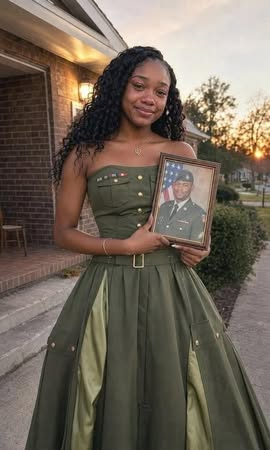
  • They Laughed at My Prom Dress—Then a Man in Uniform Knocked on the Door

    They Laughed at My Prom Dress—Then a Man in Uniform Knocked on the Door

    I walked into prom wearing a dress made from my dead father’s army uniform—and they laughed. My stepmother’s eyes narrowed. My stepsisters smirked, whispering like I was a joke stitched together wrong. Then came the knock. A man in uniform. An envelope. And suddenly, everything they thought they knew about me shatt… Continues…

    I stepped past my stepmother to take the envelope, feeling every pair of eyes on me. The officer’s voice was steady, respectful in a way I hadn’t felt in years. He called me by my full name, the way my father used to when he was proud of me. As I unfolded the papers, the room seemed to shrink around their silence. My father’s signature was everywhere—on the scholarship forms, the housing documents, the letter explaining what he’d arranged so I would never be trapped in that house if anything happened to him. He had planned my escape long before I ever realized I needed one.

    I folded the documents carefully, like they were as fragile as the seams of my dress. When I looked up, their faces were different—confused, cautious, almost afraid. I didn’t gloat. I didn’t explain. I just thanked the officer, picked up my small purse, and walked out the door. The night air felt wider than any room I’d ever been in. My dress brushed against my legs, rough and familiar, smelling faintly of starch and old memories. For the first time, I wasn’t just the quiet girl in the corner of someone else’s story. I was my father’s daughter, carrying his courage on my skin, stepping into a future he’d carved out of his own absence. And as I walked toward the waiting car, I realized: they could laugh at the fabric, but they would never touch what it had made of me.

  • BREAKING NEWS : Serious INCIDENT between bus and… See more

    BREAKING NEWS : Serious INCIDENT between bus and… See more

    Long before the tow trucks arrive and the glass is swept from the asphalt, the real weight of a crash like this settles on everyone who stands and stares, realizing how thin the line is between an ordinary drive and disaster. Investigators will measure skid marks, interview shaken witnesses, and search for a single moment—a distraction, a failure, a wrong decision—that turned a routine trip into a catastrophe.

    Yet beyond the diagrams and reports, there are quieter truths. A bus driver who will never see the road the same way again. Families waiting in hospital corridors. Neighbors who now slow down on that same rural curve, remembering the crushed sedan under the towering bus. Out of twisted metal and sirens comes a fragile resolve: maintain the machines, respect the speed, leave more space, look twice. Because on highways like these, every small act of caution can be the one that keeps a story from ending in wreckage.

  • This image knows your personality—what did you see first?

    🦁 The Psychology of “What You See First” Images: A 2000-Word Exploration

    Introduction

    Art and psychology often intersect in fascinating ways. One of the most popular examples is the genre of optical illusion personality tests, where a single image contains multiple hidden figures, and the first thing you notice is said to reveal something about your inner self. The image you provided — a sculptural face composed of animals like lions, birds, fish, and snakes — is a striking example. It invites viewers to reflect on their subconscious priorities, flaws, and tendencies.

    This article will explore the history, psychology, symbolism, and cultural impact of such images, while also analyzing the specific animals in this artwork and what they might represent

    🖼️ The Origins of Projective Personality Tests

    • Rorschach inkblots: In the early 20th century, Hermann Rorschach developed inkblot tests to analyze unconscious thought patterns.
    • Ambiguous stimuli: The principle is that when faced with unclear images, people project their own emotions and traits onto them.
    • Modern adaptations: Today, viral social media tests use animals, faces, or objects hidden in art to spark curiosity and self-reflection.

    🧠 The Psychology of First Impressions

    Why does the first animal you see matter?

    • Selective attention: Your brain filters overwhelming visual data, prioritizing what feels most relevant.
    • Emotional state: Anxiety, optimism, or fatigue can influence what stands out.
    • Personality traits: Some psychologists argue that consistent choices across tests reveal stable traits, like introversion or dominance.

    🐾 Symbolism of Animals in Personality Tests

    Each animal in the sculpture carries symbolic weight. Let’s break them down:

    🦁 Lion

    • Traits: Courage, leadership, dominance.
    • Flaw revealed: Pride or arrogance. Seeing the lion first may suggest overconfidence or a tendency to control others.

    🐍 Snake

    • Traits: Transformation, cunning, adaptability.
    • Flaw revealed: Manipulation or hidden resentment. Spotting the snake first may indicate suspicion or difficulty trusting.

    🐦 Birds

    • Traits: Freedom, communication, spirituality.
    • Flaw revealed: Restlessness or avoidance. Seeing birds first may suggest difficulty staying grounded or committing.

    🐟 Fish

    • Traits: Intuition, flow, adaptability.
    • Flaw revealed: Escapism. Fish-first viewers may struggle with confronting problems directly.

    🦁🐾 Lion cubs

    • Traits: Innocence, potential, vulnerability.
    • Flaw revealed: Naivety or dependence. Spotting cubs first may suggest immaturity or fear of responsibility.

    🎨 The Artistic Dimension

    This sculpture is more than psychology — it’s art.

    • Composite imagery: The blending of animals into a human face reflects the idea that humans embody multiple instincts.
    • Lighting and texture: Shadows emphasize different animals depending on where you focus, reinforcing the illusion.
    • Interactive art: Unlike static paintings, this piece demands active participation from the viewer.
    • 🌍 Cultural Interpretations

      Different cultures interpret animals differently:

      • Western traditions: Lions symbolize bravery; snakes often represent deceit.
      • Eastern traditions: In Hinduism, snakes (Nāgas) symbolize protection and wisdom; fish symbolize fertility and abundance.
      • Indigenous traditions: Birds often represent messengers between worlds.

      Thus, the same image may reveal different “flaws” depending on cultural background.

      📱 The Rise of Viral Personality Tests

      • Social media appeal: Quick, shareable, and fun.
      • Community engagement: People compare results, sparking conversations.
      • Gamification of psychology: Turning introspection into entertainment.

      🧩 Criticisms and Limitations

      • Not scientific: These tests lack empirical validation.
      • Mood-dependent: What you see today may differ tomorrow.
      • Confirmation bias: People interpret results to fit their self-image.

      Yet, their popularity shows a deep human desire for self-understanding.

      🔍 Deep Dive: Worst Flaws Revealed

      The text on the image says: “The first animal you see will reveal your worst flaw.” Let’s analyze:

      • Lion first → Flaw: Pride, dominance.
      • Snake first → Flaw: Distrust, manipulation.
      • Bird first → Flaw: Flightiness, lack of focus.
      • Fish first → Flaw: Escapism, avoidance.
      • Cubs first → Flaw: Immaturity, dependence.

      This framework encourages viewers to confront uncomfortable truths rather than flattering traits.

      🧭 Why We’re Drawn to Flaws

      • Self-improvement: Identifying flaws is the first step toward growth.
      • Curiosity: People enjoy discovering hidden aspects of themselves.
      • Social bonding: Sharing flaws makes conversations more authentic.

      📖 Case Studies

      • Example 1: A leader who sees the lion first may recognize their tendency to dominate meetings.
      • Example 2: An artist who sees fish first may realize they avoid practical responsibilities.
      • Example 3: A student who sees cubs first may confront their reliance on mentors.

      🧩 Integrating Psychology and Art

      This sculpture exemplifies how art can function as a psychological mirror. It blends:

      • Visual ambiguity → triggers projection.
      • Animal symbolism → provides interpretive depth.
      • Human face structure → reminds us flaws are part of identity.

      🌟 Conclusion

      The image you shared is more than a curiosity — it’s a fusion of art, psychology, and symbolism. Whether you see a lion, snake, bird, fish, or cubs first, the interpretation invites reflection on your flaws. While not scientific, these tests spark meaningful conversations about self-awareness and growth.

      Ultimately, the lesson is clear: our flaws are part of our humanity, and recognizing them is the first step toward balance.

  • The way I did NOT know this was a thing

    The LGBTQ+ community continues to expand with new labels that help people better understand and express their identities. One term that’s drawing attention, particularly among neurodivergent individuals, is nebulasexual – an identity that acknowledges the complicated intersection between attraction and neurological differences.

    Sexuality through neurodivergent lens

    As awareness of neurodiversity grows, more people are discovering that traditional orientation labels don’t always capture their lived reality. For some, neurological differences, including ADHD, autism, or intrusive thought patterns (OCD), make it difficult to distinguish between types of attraction – sexual, aesthetic, or emotional.

  • A New Parents’ Story Offers an Important Reminder About Family, Care, and Baby Safety

    Parenting is filled with everyday moments, and many of those moments provide opportunities to create a safer environment for young children. Babies and toddlers are naturally curious. They explore their surroundings by touching, grabbing, and sometimes putting objects in their mouths. Because of this, parents and caregivers can benefit from regularly looking at the home from a young child’s perspective.

    One simple habit is keeping small household objects out of reach. Coins, loose toy parts, buttons, small decorations, and other tiny items can be difficult for young children to recognize as unsuitable for play. Parents can regularly check floors, low tables, shelves, bags, and other accessible areas to make sure small objects are stored safely.

    Household products and medications should also be stored securely and kept away from areas children can access. Cleaning supplies, personal-care products, batteries, and similar household items are best kept in appropriate storage areas. Following the manufacturer’s storage instructions and using child-resistant packaging when available can provide an additional layer of protection.

    Parents do not need to create a completely perfect home to improve everyday safety. Instead, regular checks can make a meaningful difference. Getting down to a child’s eye level can sometimes reveal things that are easy for an adult to overlook. Looking underneath furniture, checking accessible drawers, and examining low shelves can help identify areas that may need attention.

    Supervision is another important part of a safe environment, but no caregiver can realistically watch a child every second. Adults may need to prepare a meal, answer a phone call, complete a household task, or take a short break. Physical safety measures can therefore work alongside supervision. Safety gates, secure storage, appropriate furniture arrangements, covered electrical outlets, and age-appropriate toys can help create additional protection.

    Caregiver wellbeing also matters. Looking after young children can be demanding, particularly when daily responsibilities leave adults feeling tired. When possible, parents can accept practical help from trusted  family members or friends. Taking reasonable opportunities to rest can help caregivers remain patient, attentive, and prepared for the normal challenges of parenting

    Learning basic first-aid and child-safety information can also be useful. Parents can speak with a pediatrician or consult established child-safety organizations for guidance that matches their child’s age and developmental stage. Reliable information can help  families make practical decisions without relying on frightening stories or unverified advice found online.

    It is also important to remember that household safety is not a test of whether someone is a good parent. Even attentive families can overlook an object or situation from time to time. The purpose of safety planning is not to create anxiety or demand perfection. It is simply to reduce avoidable risks through sensible preparation

    Small habits can become part of a family’s normal routine. Parents can check play areas, secure household products, put away small objects, and review safety arrangements as their child becomes more mobile and curious. As children grow, the potential hazards around them can change, so occasional safety checks remain useful.

    Ultimately, creating a safer home is about preparation rather than fear. A few minutes spent checking accessible areas and storing household items appropriately can help parents feel more confident about their child’s environment. With consistent routines, suitable safety measures, reliable information, and support when needed, families can create a comfortable space where children can safely learn, explore, and grow.