It started like so many moments online do—an image, a few comments, and then suddenly, a wave of criticism that no one could control. Rod Stewart’s wife, Penny, found herself at the center of attention, not for anything she said or did, but simply for how she looked. People began picking apart her appearance, questioning her style, even suggesting she should dress “more appropriately.” What should have been a normal public moment quickly turned into something much louder.
At first, the comments kept coming, growing more intense as more people joined in. Some tried to disguise it as opinion, others didn’t bother at all. It became the kind of situation where strangers felt comfortable judging someone they didn’t even know. And as it spread, it seemed like the focus had completely shifted away from anything meaningful to something shallow and unnecessary.
But then came the moment no one expected. Instead of ignoring it or responding with anger, Rod Stewart stepped in calmly, without raising his voice or turning it into a bigger conflict. His words weren’t dramatic—they were simple, direct, and impossible to twist. He didn’t defend her by attacking anyone else. He didn’t try to argue. He just made it clear, in his own way, that none of those opinions mattered.
That response changed everything. The tone shifted almost instantly. People who had been quick to criticize suddenly had nothing left to say. Others began to look at the situation differently, realizing how quickly things had escalated over something that should never have been an issue in the first place. What started as negativity turned into a reminder of how powerful a calm, confident response can be.
In the end, the moment wasn’t about criticism anymore—it was about perspective. Because sometimes, the strongest response isn’t loud or aggressive. Sometimes, it’s simply standing firm, knowing exactly what matters and refusing to let anything else define it.
A 1.9-acre property with three beds and three baths listed for just $75,000 is turning heads, sparking excitement over the space, potential, price, and possibilities—leaving buyers eager to see more details, features, photos, and what this surprising deal really offers.
Set on a generous 1.9-acre lot, this Tudor-style stone cottage offers timeless charm, privacy, and historic character. Mature trees surround the home, creating a secluded, estate-like setting. A circular driveway leads to the entrance, enhancing curb appeal and establishing a welcoming first impression. The classic stone façade and hipped roof reflect enduring craftsmanship and architectural elegance.
Inside, the two-story layout is centered around a striking central staircase that serves as both a functional feature and a visual focal point. The interior showcases thoughtful proportions and a sense of flow, with spaces designed for comfort and adaptability.
The upper level includes three spacious bedrooms and two full bathrooms. The primary suite stands out with a walk-in closet and private bath, offering a peaceful retreat with room for customization. Natural light and flexible layouts allow future owners to personalize each space.
On the main floor, hardwood flooring adds warmth and continuity throughout the living areas. A half bathroom provides convenience for guests, while a wood stove contributes rustic charm and a cozy atmosphere, ideal for cooler months.
The basement offers additional potential, currently used for storage but suitable for future expansion such as a home office, recreation area, or additional living space. An attached two-car garage adds everyday practicality and extra storage.
The home features electric heating, a hot-water system, and a septic tank, reflecting its semi-rural independence. These systems provide reliability while offering opportunities for modernization.
Located within the Penn-Trafford School District, the property benefits from access to a respected educational system, adding both family appeal and long-term value. Despite its private setting, the home remains close to essential amenities.
While the cottage requires renovation, it presents a rare opportunity for buyers with vision. With historic Tudor details, expansive land, and endless customization potential, this property offers the chance to create a distinctive residence that blends classic character with modern comfort.
A teacher’s actions toward students ignited controversy and raised serious questions about professional conduct in schools.
Schools are expected to be places where young people feel safe, respected, and encouraged to learn. Teachers hold a position of trust, serving not only as educators but also as role models who help shape students’ confidence and character. When that trust is broken, the impact can extend far beyond the classroom.
Recently, a school community was shaken by reports that a teacher had allegedly engaged in behavior that many considered inappropriate and provocative toward students. According to accounts that circulated among parents and staff members, the situation escalated after repeated complaints regarding the teacher’s interactions with students. What initially appeared to be disciplinary actions soon became the subject of a broader investigation.
Witnesses claimed that some students felt uncomfortable with the teacher’s approach, describing it as confrontational and unnecessarily provocative. Concerns grew when allegations surfaced that students had been pressured into participating in activities they did not wish to join. While details varied among reports, the accusations were serious enough to attract the attention of school administrators.
Educational institutions generally maintain strict policies regarding teacher conduct. Professional boundaries are considered essential for maintaining a healthy learning environment. Any behavior perceived as humiliating, coercive, or emotionally harmful can trigger disciplinary reviews. School officials are often required to investigate such claims thoroughly to ensure fairness for both students and staff.
As the investigation progressed, administrators reportedly interviewed students, parents, and faculty members. Such reviews are common when allegations involve student welfare. The goal is to establish facts, identify any policy violations, and determine appropriate consequences.
Parents expressed mixed emotions throughout the process. Some were shocked by the allegations, believing that educators should be held to the highest standards of professionalism. Others emphasized the importance of due process, arguing that all claims should be carefully examined before conclusions are reached.
Experts in education note that conflicts between teachers and students are not uncommon. However, situations become particularly concerning when authority is used in ways that may intimidate or pressure young people. Effective teaching relies on mutual respect rather than fear or embarrassment.
The case also highlighted the challenges schools face in balancing discipline with student well-being. Modern educational practices increasingly emphasize emotional safety, communication, and conflict resolution. Many schools now provide training designed to help teachers manage difficult classroom situations without escalating tensions.
Following the review, school officials reportedly concluded that the teacher’s conduct violated institutional standards. As a result, disciplinary action was taken, ultimately leading to the teacher’s removal from the position. Administrators stated that maintaining a safe and respectful environment for students remained their highest priority.
The incident has sparked broader conversations about accountability in education. Parents, educators, and community leaders have debated where the line should be drawn between maintaining classroom authority and respecting students’ rights. Many believe the situation serves as a reminder that professionalism must remain at the center of every educational relationship.
At the same time, experts caution against viewing any single case as representative of the teaching profession as a whole. The vast majority of educators work tirelessly to support their students and create positive learning experiences. Nevertheless, isolated incidents can provide valuable lessons about the importance of oversight, transparency, and ethical conduct.
For students, the outcome may offer reassurance that their concerns can be heard and taken seriously. For schools, it reinforces the need for clear policies and ongoing professional development. And for communities, it serves as a reminder that education is built on trust—a trust that must be protected at all times.
While the controversy may eventually fade from public attention, the discussion it generated about respect, responsibility, and accountability in schools is likely to continue for years to come.
COVID-19 vaccines in 2026 remain highly effective at reducing severe illness, hospitalization, and death, especially with updated Omicron-adapted boosters. While vaccinated individuals can still experience breakthrough infections, the overall risk of serious outcomes is significantly lower compared to the unvaccinated.
How COVID-19 Vaccines Work
Immune response: Vaccines train the immune system to recognize SARS-CoV-2 and mount a rapid defense.
Boosters: Updated formulations target newer variants like JN.1, improving protection against circulating strains.
Effectiveness in 2025–2026
Hospitalization Protection: Updated vaccines reduced hospitalizations by ~55% among adults with COVID-like illness.
Emergency Care Visits: Effectiveness against ED/urgent care visits was ~50%, showing strong real-world impact.
Variant Adaptation: Omicron-adapted boosters provide superior protection compared to older monovalent doses.
Safety Profile
Adverse Events: Serious side effects remain rare, with most reactions mild (fever, fatigue, injection-site pain).
Long-term Data: Evidence shows sustained safety, though more research is needed for children, cancer patients, and immunocompromised groups.
WHO Guidance (2026)
Routine Vaccination: Recommended for high-risk groups (elderly, immunocompromised, healthcare workers).
Coadministration: COVID-19 vaccines can be safely given alongside influenza and other routine immunizations.
Future Research: Focus on durability of protection, variant-specific boosters, and equity in global distribution.
Risks and Trade-offs
Breakthrough Infections: Vaccinated individuals may still contract COVID-19, especially with immune-evading variants.
Waning Immunity: Protection decreases over time, making boosters essential.
Global Inequity: Access to updated vaccines remains uneven, leaving vulnerable populations at risk.
Conclusion
COVID-19 vaccination continues to be one of the most effective public health tools. While not perfect, vaccines drastically reduce severe outcomes and remain safe across populations. The future lies in variant-adapted boosters, global equity, and ongoing research to refine strategies.
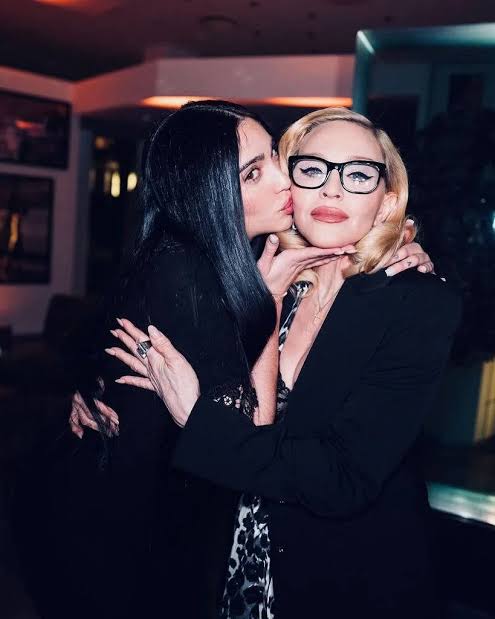
Madonna and her daughter Lourdes Leon are turning heads after appearing together in a striking recent photo that quickly began attracting attention. The mother and daughter posed side by side near the water, both wearing bold looks that immediately stood out and gave the image a glamorous, unforgettable feel.
Madonna appeared confident in a dark, sheer outfit layered with jewelry, while Lourdes wore a sparkling pink two-piece that made her stand out beside her mother. Their completely different fashion choices somehow worked perfectly together, making the photo even more eye-catching.
What really caught people’s attention was how relaxed and comfortable they looked together. Rather than appearing overly posed, the image showed a natural mother-daughter moment, with Madonna and Lourdes standing close while enjoying the evening and showing off their individual styles.
The photo quickly became a talking point because both women have always been known for ignoring traditional expectations when it comes to fashion and appearance. Madonna has built much of her public image around reinvention, while Lourdes has developed her own bold style and confidence away from her mother’s shadow.
Their latest appearance together proves that they remain one of the most recognizable mother-daughter pairs in entertainment. The photo may have started as a simple moment by the water, but their confidence, fashion, and close bond turned it into an image that people could not stop talking about.
What unfolded was less a scandal and more a mirror. The conversation around Michelle Obama’s update revealed how deeply people still feel connected to her, years after she left the White House. In a country exhausted by outrage and division, her voice remains one of the few that can pause the noise and pull attention toward something more human: vulnerability, pressure, and the cost of living in public.
Hollywood in the 1960s was full of stars whose careers seemed destined for greatness.
Anjanette Comer was one of them — a striking young actress who suddenly found herself being offered roles that could have changed her life forever.
But now, sad news has emerged that the actress, best known for her roles in The Loved One, The Appaloosa and The Baby, has died at 86.
For a brief moment in the 1960s, Anjanette Comer appeared to be on the fast track to becoming one of Hollywood’s biggest stars. Her Texas determination, natural acting talent, and striking looks — often compared to a young Elizabeth Taylor — were helping turn her dream into reality.
The striking, brunette beauty rose to fame after landing leading roles in The Appaloosa, Guns for San Sebastian and Lepke.
But then, Comer made a few unexpected choices that would shape the rest of her career.
At the height of her career, Comer had opportunities to star opposite Robert Redford in Barefoot in the Park and alongside Warren Beatty in Bonnie and Clyde, both released in 1967.
She declined both.
Hollywood in the 1960s was full of stars whose careers seemed destined for greatness.
Anjanette Comer was one of them — a striking young actress who suddenly found herself being offered roles that could have changed her life forever.
But now, sad news has emerged that the actress, best known for her roles in The Loved One, The Appaloosa and The Baby, has died at 86.
For a brief moment in the 1960s, Anjanette Comer appeared to be on the fast track to becoming one of Hollywood’s biggest stars. Her Texas determination, natural acting talent, and striking looks — often compared to a young Elizabeth Taylor — were helping turn her dream into reality.
At the height of her career, Comer had opportunities to star opposite Robert Redford in Barefoot in the Park and alongside Warren Beatty in Bonnie and Clyde, both released in 1967.
She declined both.
Jane Fonda ultimately took the role in Barefoot in the Park, while Faye Dunaway landed the part in Bonnie and Clyde. Both movies became major successes and helped cement their stars as Hollywood icons.
Looking back years later, Comer was remarkably candid about why she had made those decisions. In a 1981 interview with UPI, she explained that she had been involved in what she described as a “very important relationship” with an actor who did not want her working in movies.
She also admitted something that might surprise fans looking back at her promising early career:
“I hated my career.”
Different approach on Hollywood
Comer had arrived in Hollywood with remarkable speed. Born Aug. 7, 1939, in Dawson, Texas, she studied acting at the Pasadena Playhouse after growing up in the small Texas community.
While other young actresses were drawn to Hollywood’s glamour and nightlife, Anjanette took a very different approach. She focused on honing her craft and preparing for the right opportunity.
In fact, during her first two years in Hollywood, she never actively pursued a professional job or even visited a film studio. Instead, she simply practiced, studied and worked on becoming a better actress.
Her television career began in the early 1960s, with appearances on shows including My Three Sons and The Donna Reed Show. In 1963, she appeared on Gunsmoke, Ben Casey and Arrest and Trial.
Her performance on Arrest and Trial earned her an Emmy nomination for supporting actress.
Then came the movies.
Starring opposite Marlon Brando
Comer made her big-screen debut in the 1964 comedy Quick, Before It Melts, but it was her role in The Loved One the following year that really put her on the map.
In the dark comedy about the funeral industry, she played Aimee Thanatogenous, a young mortician who delivers one of the movie’s most memorable exchanges:
“What did you have in mind? Inhumement, entombment, inurnment, immurement? Some people just lately have preferred ensarcophagusment. It’s very individual.”
She followed that with a major role opposite Marlon Brando and John Saxon in The Appaloosa in 1966, playing a Mexican woman caught up in the film’s Western drama.
But around the same time, another decision would complicate her career.
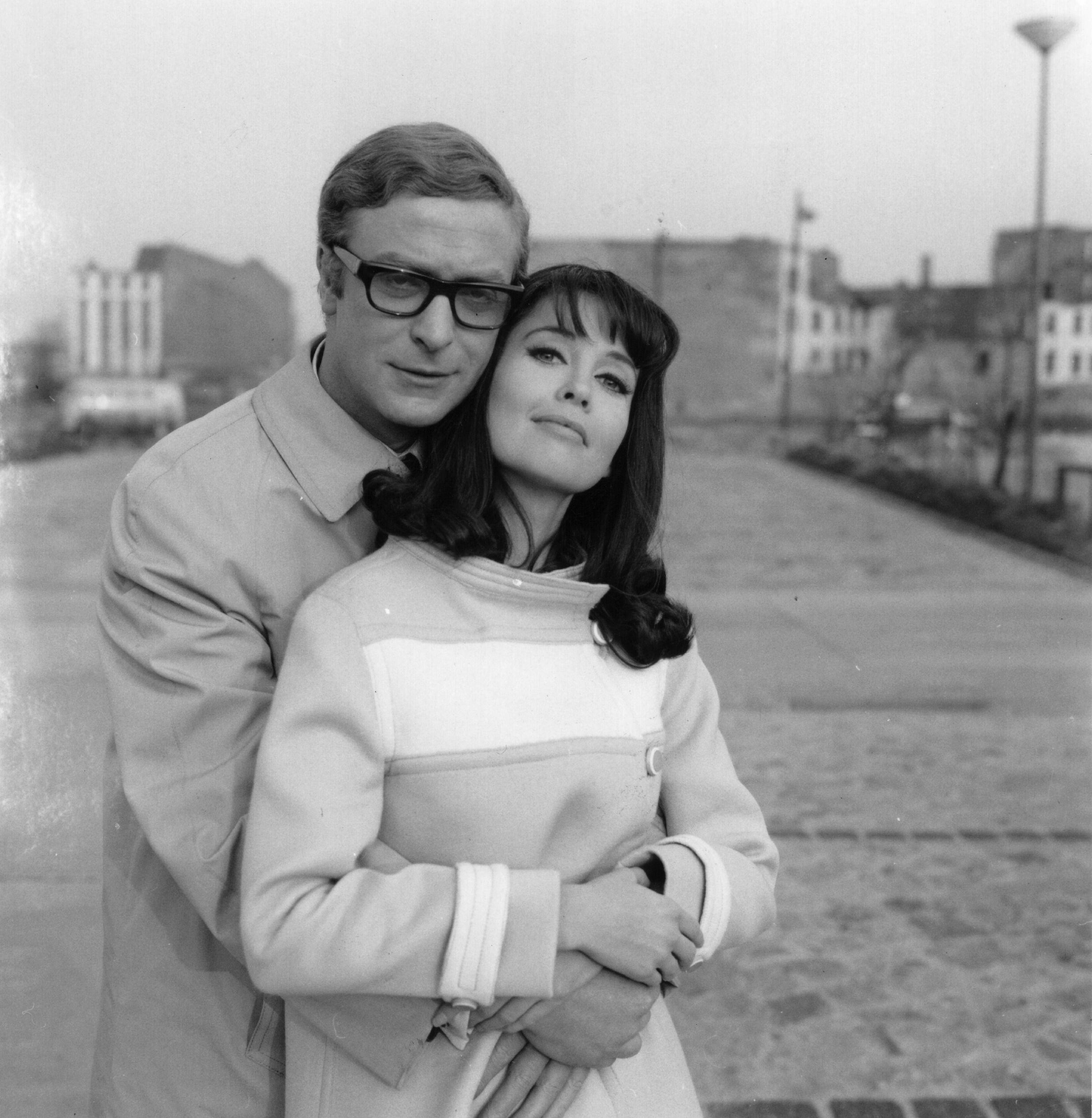
Comer had been cast opposite Michael Caine in Funeral in Berlin, the 1966 sequel to The Ipcress File. During production, however, she left Germany and was replaced by Eva Renzi.
Years later, Comer acknowledged that her behavior had earned her a reputation in Hollywood.
Michael Caine and Anjanette Comer in Berlin during the filming of ‘Funeral in Berlin’. (Photo by Reg Lancaster/Express/Getty Images)
“I had a reputation for being crazy because I’d walked out on Funeral in Berlin,” she said.
“And I guess I was crazy. You see, I didn’t build my career slowly like most successful actresses do. After a couple of TV appearances, I became an instant movie star. I didn’t know how to handle it all emotionally.”
Her career never completely disappeared, but it didn’t reach the heights many might have expected from those early years.
She continued appearing in movies and television, including Guns for San Sebastian, Rabbit, Run, The Firechasers, Fire Sale and Steven Soderbergh’s The Underneath. She also made guest appearances on familiar television favorites such as Bonanza, Mannix, Columbo, Hotel and The Practice.
One of her later memorable performances came in the bizarre 1973 horror film The Baby, where she played a social worker.
Leukemia battle
Actress Marianna Hill, who appeared alongside Comer in the film, remembered how seriously she approached her craft.
“She would tell me, ‘I’m going to create an inner life and this and that for my character,’” Hill recalled in a 2016 interview.
Comer’s personal life also took a different path than she may once have imagined.
The relationship that had influenced some of her career decisions ultimately did not last. She later married writer, screenwriter and director Robert Klane, best known for Where’s Poppa?, Fire Sale and Weekend at Bernie’s. They were married from 1976 until their divorce in 1983.
In that 1981 interview, Comer remained hopeful that she could once again reach the level of success she had experienced as a young actress.
“I’m absolutely certain I will get back to the high point of my career,” she said. “I’ve done it before and I can do it again. I have to believe that so other people will believe it, too.”
Comer died on May 28 at UCLA Santa Monica Medical Center, but news of her death was not made public until September 2026. According to a death certificate obtained by The Hollywood Reporter, she had been battling leukemia and also had heart problems.
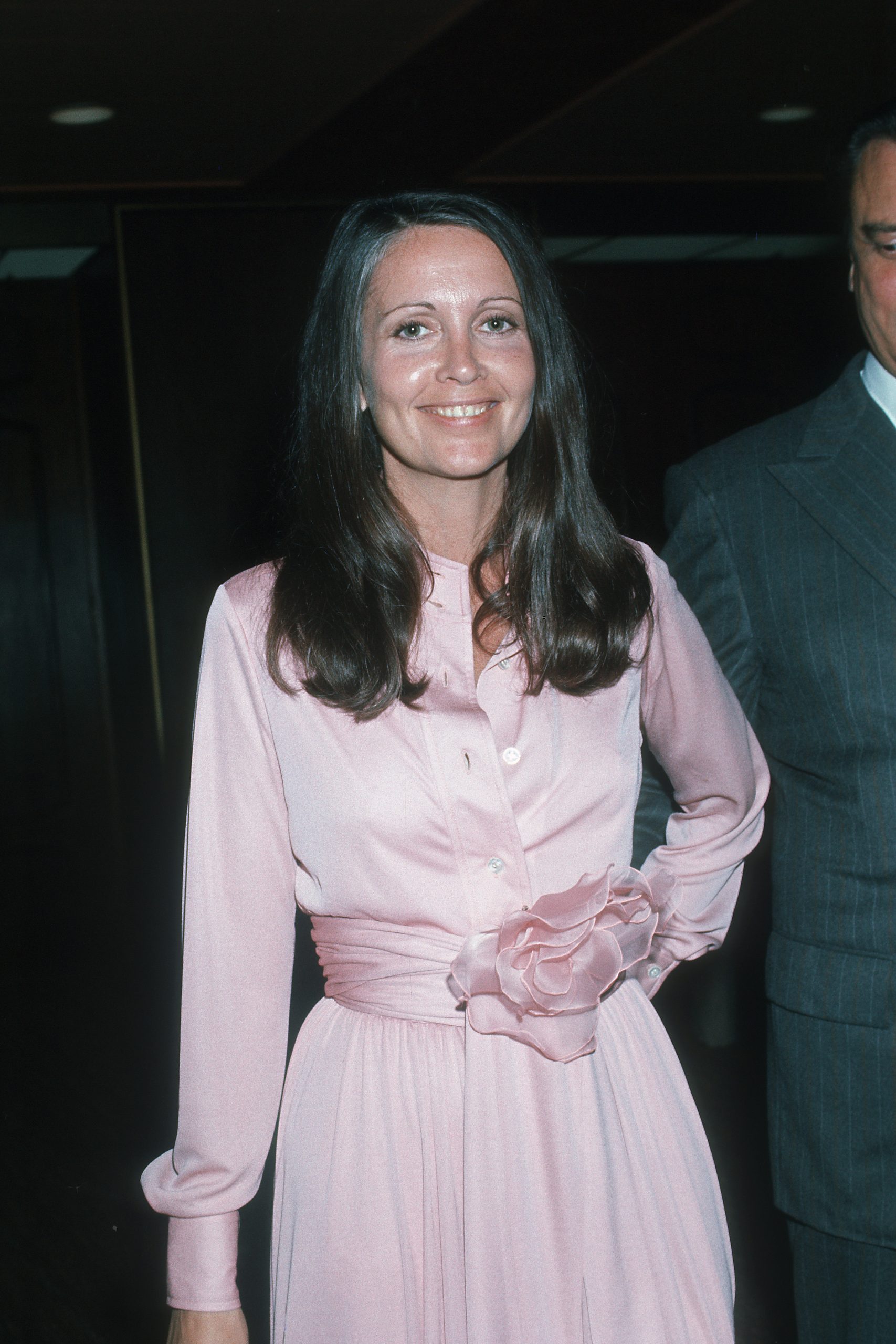
Anjanette Comer, ca.1970. (Photo by Michael Ochs Archives/Getty Images)
Anjanette Comer never became the household name that some of her contemporaries did, but for those who remember the movies and television of the 1960s, Anjanette Comer remains a fascinating reminder of just how unpredictable Hollywood can be.
She had the talent, the looks and the opportunities — including two roles that went on to become defining moments for Jane Fonda and Faye Dunaway.
And perhaps that’s what makes her story so unforgettable: sometimes a Hollywood career is shaped just as much by the roles an actor says no to as the ones they say yes to.
Lip Cancer Tongue Cancer Inner Cheek Cancer Gum Cancer Cancer of the lower part of the mouth You should see your dentist as soon as you see symptoms of oral cancer.
I was getting ready that morning, feeling good about myself for the first time in a while. My hair had turned out exactly the way I wanted, my outfit looked great, and the natural light coming through the bedroom window made everything seem just a little brighter. It wasn’t a special occasion or a major event—just one of those rare moments when I caught my reflection in the mirror and actually liked what I saw.
A widely shared video of veterinarian Dr. Ovidiu Roșu helping a restrained mare and being gently approached by another free-roaming horse in Romania’s Danube Delta brought public attention to a long-running, complex conservation project.
While the horses have a 700-year history in the region and expanded significantly after 1989, their growing numbers threatened-
the protected Letea Forest ecosystem, leading to a 2011 crisis and the implementation of a non-lethal immunocontraception program by FOUR PAWS and veterinary teams. Over more than a decade, this
initiative combined population management, medical care, and scientific monitoring until responsibility was handed over to national authorities in 2025.