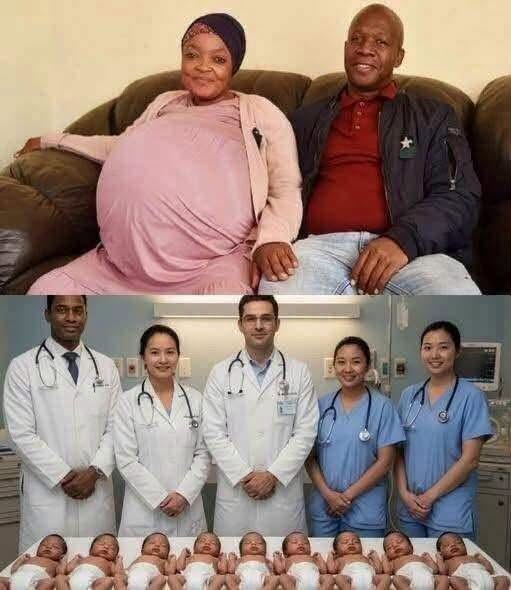
A mother recently made headlines around the world after reportedly giving birth to ten babies, an extraordinary event that immediately captured public attention. Multiple births are already rare, and a birth involving such a large number of infants naturally raises questions about how the pregnancy was managed, how the delivery was coordinated, and what happened when the babies arrived.
Author: Leotrim
-

Paul McCartney and Nancy Shevell are celebrating 15 years as husband and wife. Click the link in the first comment for the full story. ⬇️
Paul McCartney Celebrates 15th Wedding ‘Nanniversary’ With Wife Nancy Shevell
The couple wed on Oct. 9, 2011 after meeting in the Hamptons four years prior
- Paul McCartney and Nancy Shevell celebrated 15 years of marriage on Oct. 9
- “Happy Nanniversary to all of us!” the Beatles musician wrote in a post on Instagram
- The couple married in a small London ceremony in 2011 after meeting in the Hamptons in 2007
Paul McCartney and Nancy Shevell are celebrating 15 years as husband and wife.
The Beatles legend, 84, paid tribute to his wife, 66, in a heartfelt post on Instagram, sharing a photo of them out for a boat ride to commemorate the occasion. This marks 15 years of marriage for the couple, who wed in 2011.
“Happy Nanniversary to all of us! – Paul,” the musician wrote, of their yearly milestone.
In the photo, McCartney donned a blue-and-white striped button-up beneath a black zip-up hoodie and blue slacks, while Shevell opted for a yellow floral blouse, a matching silky shawl and cream-colored pants for the breezy outing.Last year, for their 14th anniversary, McCartney once again kept his affectionate message short and sweet: “Happy Anniversary to my lovely missus, Nancy – Paul,” he wrote in a post on Instagram.
McCartney and Shevell first met in the summer of 2007 while staying at their respective properties in the Hamptons, PEOPLE previously reported. At the time, a source told PEOPLE the couple was “clearly well-suited, well-matched,” as they both enjoyed quieter social lives.
Months later, the pair were spotted kissing on a walk along the beach in the Hamptons in November, and the following year, McCartney and Shevell took a series of trips together, including to a private island in the Caribbean, on a road trip down Route 66, to a Beatles show in Tel Aviv and to Paris for a fashion show.
By May 2011, McCartney had proposed to Shevell, who showed off the ring at the Met Gala that year, and that October they tied the knot in a simple town hall ceremony in Old Marylebone. Following the union, the couple headed to McCartney’s home for an intimate celebration with loved ones, and included a toast to McCartney’s Beatles bandmate John Lennon on what would have been his 71st birthday.
head of their 14th anniversary, McCartney opened up about his marriage to Shevell in a Q&A on his website, and described their relationship.
“We chat and catch up with each other. We eat lunch or dinner. Well, any meal really, as we love cooking,” he said. “Sometimes we will watch something on TV together, and I always read before bed, usually a biography, while Nancy finishes watching a series.”
“We’re pretty much like any other normal couple!” McCartney added
LEAVE A COMMENT
-

12-Year-Old Girl Died After Drinking Milkshake Made in an Unwashed Blender – Click the link in the first comment for the full story ⬇️
12-Year-Old Girl Died After Drinking Milkshake Made in an Unwashed Blender
Mia Shay St Hilaire suffered a severe allergic reaction after drinking a milkshake at a cafe in the London neighborhood of Bermondsey
- Mia Shay St Hilaire suffered a severe allergic reaction after drinking a milkshake containing hazelnut residue
- The cafe operator reportedly pleaded guilty to food safety offenses
- Mia’s parents are calling for separate allergy management ratings at restaurants and cafes
A 12-year-old girl died after drinking a milkshake made in an unwashed blender at a cafe in England.
On Thursday, Oct. 8, an investigation into the death of Mia Shay St Hilaire at Inner South London Coroner’s Court concluded that she suffered a severe allergic reaction after drinking a milkshake at the Pop Inn Cafe in the London neighborhood of Bermondsey, multiple outlets including the BBC, The Independent and Metro reported. She visited the eatery with her aunt and sister in London in August 2023.
CCTV evidence captured the moment cafe operator Baris Yucel made the drink in a blender that hadn’t been washed after its previous use, per the outlets.
Mia, who had a hazelnut allergy, died despite life-saving efforts, including being rushed her to an ICU at the Evelina London Children’s Hospital, the outlet reported.
Assistant coroner, Briony Ballard, concluded that the drink “had been cross-contaminated with hazelnut residue” from a “milkshake previously prepared in the same unwashed blender. She developed rapidly progressing anaphylaxis and later collapsed at her aunt’s home,” per the Metro.
Cafe operator Yucel pleaded guilty to six offences in January 2025 after Southwark Council brought a case against the cafe, the outlet added.
These included not making allergen advice available or visible to consumers, failing to manage allergen contamination during the food production process, and serving food that contained an allergenic ingredient that was not supposed to be present, Southwark Council said in a release.
What happened to Mia-Shay is a tragedy and my heart goes out to her family and the people who loved her,” said Cllr Natasha Ennin, Cabinet Member for Community Safety and Neighbourhoods in the release.
“This might have been avoided if the operator of the café had followed simple food safety rules, and our officers will continue to work with local businesses to help ensure these are followed by all food outlets in Southwark.”
Yucel was fined £18,000 ($24,000) and given a 100-hour community order.
In a statement to local newspaper the Southwark News, Yucel’s lawyer said, “Prior to sentencing Mr Yucel, District Judge Dean commented that the 47-year-old defendant was of previous good character and that throughout the 22 years in the food business, there have been no previous incidents reported against him.”
“Pop Inn Café had a good food safety record and the Judge accepted that Mr Yucel had shown genuine remorse,” the lawyer continued. “He took immediate steps to better educate himself in September and October 2023 and pleaded guilty at the first opportunity.”
“Mr Yucel has had to live with the consequences what happened and a day does not go by when he does not think about the child and her family,” the lawyer concluded.
Yucel no longer owns or operates the cafe, which currently has a perfect five-star food hygiene rating, Southwark News added.
Michelle Victor, a lawyer representing Mia’s parents, said in a release obtained by PEOPLE that the investigation highlighted “serious concerns” about the handling of food allergies across the service industry.
Alongside parents Adrian St Hilaire and Chanel Spence, she called for the U.K.s Food Standards Agency (FSA) to review the current system and consider reforms.
“We are convinced that significant changes are needed to protect people living with food allergies,” said Mia’s parents in the release.
“Consumers rely on food hygiene ratings when deciding where it is safe to eat, but they do not tell us anything about the way a food business runs allergy management systems.
“There should be a separate, clearly displayed rating dedicated to allergy management, like the food hygiene rating. This would mean that people with allergies could make informed choices about where they eat,” the parents continued.
“For families living with food allergies, eating out should not mean they are at risk. We hope that lessons will be learned from Mia’s death and that changes will be made to prevent other families [from] enduring the devastation that we now have to live with,” they added.
“No family should ever have to lose a child in these circumstances. If the local authority had ensured that the cafe’s allergy management responsibilities had been properly understood, and put into practice, we believe Mia would still be alive today,” the parents concluded.
“We want to make sure that change is Mia’s legacy so that we can help to save lives in the future. Mia was deeply loved and she will never be forgotten.”
In a statement to PEOPLE, Rebecca Sudworth, Director of Food Policy at the FSA, said: “Our deepest sympathies are with Mia’s family. Food businesses must take allergen risks seriously, every time. People have the right to know exactly what is in their food and drink, and it is a business’s legal duty to provide accurate allergen information.”
“We recently produced new guidance for businesses to make sure they understand their responsibilities to inform consumers about allergens, including the risk of cross-contact, and we are keeping this policy under review. We also have free allergy training and practical tools that businesses can use.”
Assistant coroner Briony Ballard did not immediately respond to PEOPLE’s request for further comment.
-
Dakota Johnson revealed what she did – or rather, didn’t do – while filming one of her most famous movies. The actress revealed a behind-the-scenes detail from the first Fifty Shades of Grey film, and it has sparked a conversation about something many people have strong opinions on. But beyond Hollywood’s beauty expectations, there are some interesting things to know about what happens when you actually stop shaving ‘down there’
Everything that happens when you stop shaving ‘down there’ as Dakota Johnson admits to doing it for role
Dakota Johnson’s preparation for Fifty Shades of Grey included a personal grooming decision many moviegoers probably never considered
The actress revealed that she chose not to wax while filming the 2015 erotic drama, in which she appeared fully nude as Anastasia Steele.
“I grew my pubic hair. For Fifty Shades, the first one, I was full frontal, and she was supposed to have never had a wax,” Johnson explained on an episode of First We Feast.
The revelation offers an opportunity to look beyond Hollywood’s behind-the-scenes preparations and address a question that often comes up in conversations about body hair: Is there any real health reason to remove it in the first place?
The short answer is that pubic hair removal is a personal choice, not a medical requirement. And for people who regularly shave or wax, changing their routine may affect their skin in several ways.
Pubic hair removal is optional, not a hygiene requirement
For years, hair removal has been treated as a routine part of personal grooming. But having pubic hair is a normal bodily feature, and removing it isn’t necessary to keep the external genital area clean.
Hair can act as a physical barrier and may reduce friction against the skin. Although it doesn’t prevent sexually transmitted infections, there is no general medical requirement to remove it for cleanliness.
What happens to your skin when you stop shaving?
One of the most noticeable differences may be less shaving-related irritation.
Credit: Shutterstock, Getty Images Dakota Johnson’s preparation for Fifty Shades of Grey included a personal grooming decision many moviegoers probably never considered.
The actress revealed that she chose not to wax while filming the 2015 erotic drama, in which she appeared fully nude as Anastasia Steele.
“I grew my pubic hair. For Fifty Shades, the first one, I was full frontal, and she was supposed to have never had a wax,” Johnson explained on an episode of First We Feast.
The revelation offers an opportunity to look beyond Hollywood’s behind-the-scenes preparations and address a question that often comes up in conversations about body hair: Is there any real health reason to remove it in the first place?
The short answer is that pubic hair removal is a personal choice, not a medical requirement. And for people who regularly shave or wax, changing their routine may affect their skin in several ways.
Pubic hair removal is optional, not a hygiene requirement
For years, hair removal has been treated as a routine part of personal grooming. But having pubic hair is a normal bodily feature, and removing it isn’t necessary to keep the external genital area clean.
Hair can act as a physical barrier and may reduce friction against the skin. Although it doesn’t prevent sexually transmitted infections, there is no general medical requirement to remove it for cleanliness.
What happens to your skin when you stop shaving?
One of the most noticeable differences may be less shaving-related irritation.
A razor cuts hair close to the skin, but the process can also cause friction and minor injuries, especially when the blade is dull, the skin isn’t adequately lubricated, or you shave the same area repeated
The result can be redness, razor burn and uncomfortable bumps. The sensitive skin around the bikini line may be especially prone to irritation.
Hair removal can also contribute to ingrown hairs. These develop when a hair grows back into the skin or sideways rather than emerging normally from its follicle. The resulting bumps may itch, become inflamed, or feel painful.
Allowing pubic hair to grow can reduce exposure to these particular shaving-related triggers. However, it isn’t a guaranteed solution for every skin problem, and ingrown hairs can have other contributing factors.
Could going natural affect skin discoloration?
Repeated irritation can sometimes leave its mark beyond temporary redness.
Post-inflammatory hyperpigmentation occurs when inflammation or injury makes an area of skin darker. For people who are susceptible to this condition, repeated irritation from shaving may contribute to discoloration around the bikini line.
Reducing that irritation could help limit one potential trigger. It does not mean, however, that stopping hair removal will necessarily lighten existing dark patches.
It’s also worth remembering that skin color naturally varies across the genital area. Differences in pigmentation are common and don’t automatically indicate a health problem.
Credit: Shutterstock, Getty Images Dakota Johnson’s preparation for Fifty Shades of Grey included a personal grooming decision many moviegoers probably never considered.
The actress revealed that she chose not to wax while filming the 2015 erotic drama, in which she appeared fully nude as Anastasia Steele.
“I grew my pubic hair. For Fifty Shades, the first one, I was full frontal, and she was supposed to have never had a wax,” Johnson explained on an episode of First We Feast.
The revelation offers an opportunity to look beyond Hollywood’s behind-the-scenes preparations and address a question that often comes up in conversations about body hair: Is there any real health reason to remove it in the first place?
The short answer is that pubic hair removal is a personal choice, not a medical requirement. And for people who regularly shave or wax, changing their routine may affect their skin in several ways.
Pubic hair removal is optional, not a hygiene requirement
For years, hair removal has been treated as a routine part of personal grooming. But having pubic hair is a normal bodily feature, and removing it isn’t necessary to keep the external genital area clean.
Hair can act as a physical barrier and may reduce friction against the skin. Although it doesn’t prevent sexually transmitted infections, there is no general medical requirement to remove it for cleanliness.
What happens to your skin when you stop shaving?
One of the most noticeable differences may be less shaving-related irritation.
A razor cuts hair close to the skin, but the process can also cause friction and minor injuries, especially when the blade is dull, the skin isn’t adequately lubricated, or you shave the same area repeatedly.
The result can be redness, razor burn and uncomfortable bumps. The sensitive skin around the bikini line may be especially prone to irritation.
Hair removal can also contribute to ingrown hairs. These develop when a hair grows back into the skin or sideways rather than emerging normally from its follicle. The resulting bumps may itch, become inflamed, or feel painful.
Allowing pubic hair to grow can reduce exposure to these particular shaving-related triggers. However, it isn’t a guaranteed solution for every skin problem, and ingrown hairs can have other contributing factors.
Could going natural affect skin discoloration?
Repeated irritation can sometimes leave its mark beyond temporary redness.
Post-inflammatory hyperpigmentation occurs when inflammation or injury makes an area of skin darker. For people who are susceptible to this condition, repeated irritation from shaving may contribute to discoloration around the bikini line.
Reducing that irritation could help limit one potential trigger. It does not mean, however, that stopping hair removal will necessarily lighten existing dark patches.
It’s also worth remembering that skin color naturally varies across the genital area. Differences in pigmentation are common and don’t automatically indicate a health problem.
The comfort factor
For some people, the biggest advantage of changing their grooming routine is simply avoiding the cycle of shaving and regrowth.
Short hairs can feel prickly as they emerge, sometimes causing itching when they rub against underwear or clothing. Skipping shaving avoids that stage of regrowth.
Does pubic hair affect body odor?
Another common misconception is that keeping pubic hair automatically makes someone less hygienic.
Pubic hair itself isn’t inherently dirty. Body odor can develop when sweat interacts with bacteria on the skin, regardless of whether you remove hair.
Regular washing remains important, but hair removal is not a substitute for hygiene. Nor is it required to maintain it.
A sudden or unusual change in genital odor, especially when accompanied by itching, pain, or unusual discharge, deserves attention rather than being automatically blamed on pubic hair.
There’s no single right way to groom
Johnson’s decision was made for a specific acting role, but her experience highlights how personal grooming can be shaped by the demands of a character.
Outside a film set, there is no need to follow a particular grooming style. Some people prefer smooth skin, others choose to trim, and many are comfortable leaving their pubic hair untouched.
-

16-year-old Persephone Berger was unconscious on the road when a police car struck her, turning an already tragic situation into an unimaginable loss. 💔 Her family and loved ones are now left grieving a life that ended far too soon, and new details surrounding her heartbreaking death have now emerged. 👇 What happened in the moments surrounding the tragedy is difficult to comprehend – and some of the latest details make this devastating story even harder to process. Our thoughts are with Persephone’s family, friends and everyone who loved her during this incredibly difficult time. Rest in peace. 🕊️❤️
16-year-old killed by police car while unconscious on the ground – heartbreaking new details emerge
-year-old Persephone Berger was lying unconscious in the road when a police officer arrived at the scene. But the officer failed to see her and accidentally drove over the teenager. The tragic incident is now under investigation as her family, friends and classmates mourn her death
It was early morning on Saturday, October 3, when police in St. Francois County, in Missouri, received a call about a person lying unconscious in the road.
An officer was dispatched to the scene on Davis Crossing Road. As the officer approached, he saw that the car that had made the call had its hazard lights on. But he did not see the person lying on the road and drove over her. The girl was later identified as 16-year-old Persephone Berger, according to People.
16-year-old Persephone died at the scene
After the accident, the officer contacted his supervisor and remained at the scene. A medical examiner later confirmed that Persephone had died. It remains unclear why the 16-year-old was lying unconscious on the road before the officer arrived.
An autopsy was performed on Monday, October 5. The initial results showed, according to authorities, no signs that Persephone had any prior physical injuries.
Instead, the injuries were consistent with those that could have occurred when she was struck by the police vehicle. Meanwhile, authorities are still awaiting the results of a toxicological analysis and the final autopsy report.
The investigation continues
The Missouri State Highway Patrol has been tasked with conducting an independent investigation of the accident. The circumstances that led to Persephone lying unconscious on the road are also being investigated.
Meanwhile, family, friends, and classmates have said their goodbyes to the 16-year-old. On Monday, a memorial was held at West County High School, where hundreds of people gathered to honor Persephon
Our hearts go out to the student’s family, friends, classmates, teachers, and everyone in the community who is affected by this heartbreaking loss,” the West County R-IV Schools district wrote in a statement.
The investigation into the tragic incident is still ongoing.
-
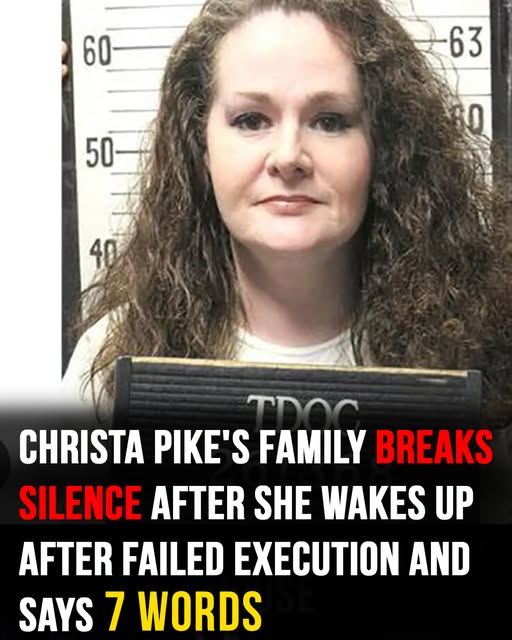
Christa Pike’s family have broken their silence after she woke up one week on from her failed execution and asked one damning question 😳👇
Christa Pike’s family breaks silence on failed exection after she wakes up and says 7 words
According to Christa Pike’s aunt the family was told she was brain dead and would be taken off life support, but instead she woke up and can even talk now.
Christa Pike’s aunt, Carrie Ross, says relatives were told 50-year-old Christa Pike was brain dead after the botched execution and that she had been taken off the ventilator.
“We got word that she was brain dead and they were taking her off the ventilator,” the sister of Pike’s late mother told the Daily Mail. “They were going to let her go – let her die – at 1 o’clock tomorrow. That was yesterday or a day before.”
Instead, Pike woke up on Tuesday, nearly a week after Tennessee tried to execute her by lethal injection on September 3
The family has been left waiting in the dark
Ross says no one in the family has been able to speak to Pike since she woke up, instead relying on her lawyers, who told them she “knew who she was and where she was.”
This whole week has been a blur,” Ross said, and Pike’s legal team agrees. “On Monday night, it was our understanding that Christa was brain dead and that life support would be removed the next day,” attorney Randy Spivey said at a press conference on Wednesday and added:
“I do not have an explanation for what happened between Monday night and Tuesday morning, but what we do know is Christa has a long road to recovery.”
Pike’s current condition
Pike’slawyers say she woke “against all odds” and can talk, though only a little. She has pneumonia and a blood clot in one arm. She can’t swallow and hasn’t eaten since waking up and remains handcuffed to the hospital bed
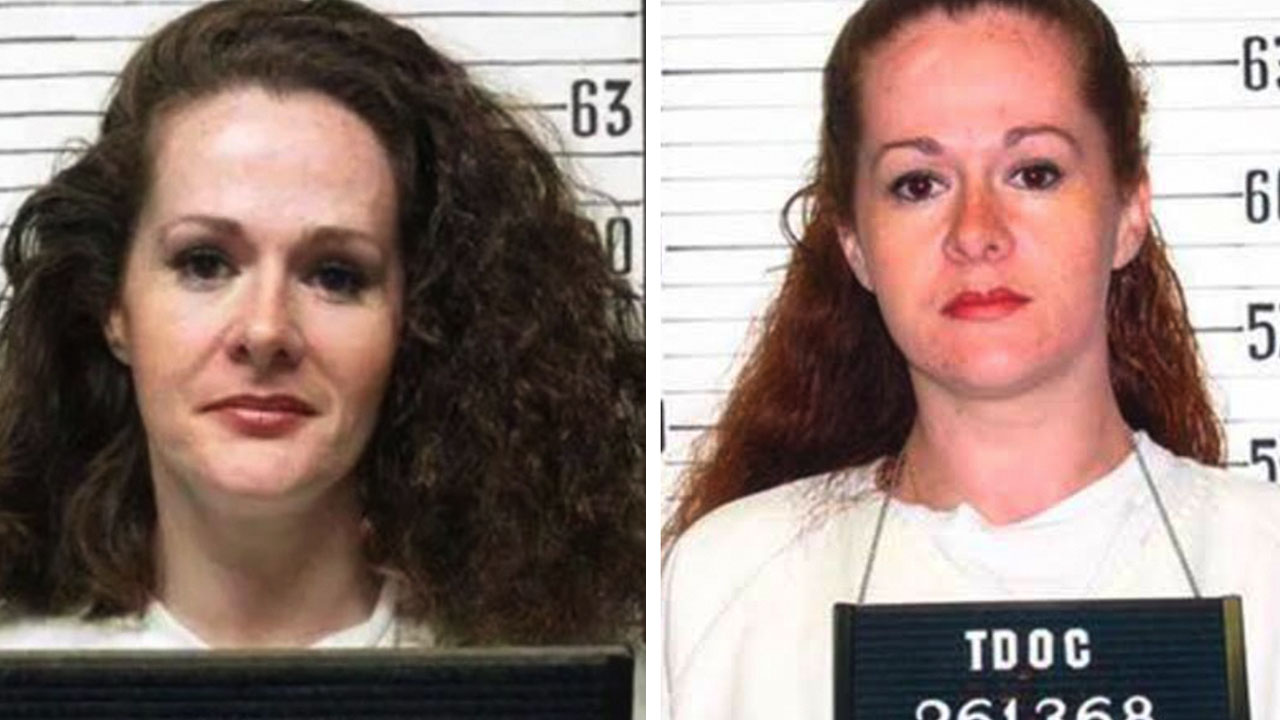
According to Christa Pike’s aunt the family was told she was brain dead and would be taken off life support, but instead she woke up and can even talk now.
Christa Pike’s aunt, Carrie Ross, says relatives were told 50-year-old Christa Pike was brain dead after the botched execution and that she had been taken off the ventilator.
“We got word that she was brain dead and they were taking her off the ventilator,” the sister of Pike’s late mother told the Daily Mail. “They were going to let her go – let her die – at 1 o’clock tomorrow. That was yesterday or a day before.”
Instead, Pike woke up on Tuesday, nearly a week after Tennessee tried to execute her by lethal injection on September 30.
The family has been left waiting in the dark
Ross says no one in the family has been able to speak to Pike since she woke up, instead relying on her lawyers, who told them she “knew who she was and where she was.”
“This whole week has been a blur,” Ross said, and Pike’s legal team agrees. “On Monday night, it was our understanding that Christa was brain dead and that life support would be removed the next day,” attorney Randy Spivey said at a press conference on Wednesday and added:
“I do not have an explanation for what happened between Monday night and Tuesday morning, but what we do know is Christa has a long road to recovery.”
Pike’s current condition
Pike’slawyers say she woke “against all odds” and can talk, though only a little. She has pneumonia and a blood clot in one arm. She can’t swallow and hasn’t eaten since waking up and remains handcuffed to the hospital bed.
Her arms are the biggest worry. Her lawyers say at least seven needles were used on her during the attempt, and at one point she herself told prison staff where to inject her.
“Both of her arms and hands are tremendously swollen and we do not know what if any function she will regain in her arms,” Spivey said. As far as her attorneys know, her first words were “Where am I?” and “Who are you?” She’s also asked about her legal team and the victim’s family. “I think she is angry and confused about everything right now,” Spivey said.
Dr. Joel Zivot, an anesthesiologist advising her team, told The Sun that Pike has no memory of the execution itself. “She does not have any memory of the execution itself, but does have some memory of at least being a patient in the hospital on a ventilator,” he said.
Could Tennessee try the execution again?
According to Dr. Zivot, what happens next depends on Pike’s recovery. Her attorneys say the state has made “no promises” that it won’t try executing her again.
“If Christa Pike returns to her normal neurologic self – that is to know who she is, where she is and what she’s done – then she certainly faces the prospect of another attempt at executing her,” he said. If she has a permanent cognitive decline, however, it could work in her favor.
The botched execution did not come as a surprise to many. Pike’s lawyers had warned about this exact outcome before the execution. The Tennessee Supreme Court rejected the argument that the state’s protocol had no plan for medical care if she did. It said the state was “under no obligation to attempt revival” and called her fears “too speculative.” The judges also noted that pentobarbital had been used in more than 100 executions “without incident.”
On Wednesday, her lawyers won a court fight to preserve evidence from the attempt, including the drugs, the IV lines and surveillance footage. It could lay the groundwork for legal action against Tennessee.
Pike is the first person known to have survived a lethal injection of pentobarbital, but others, including Tony Carruthers in Tennessee, have survived executions when executioners failed to get IV access.
-
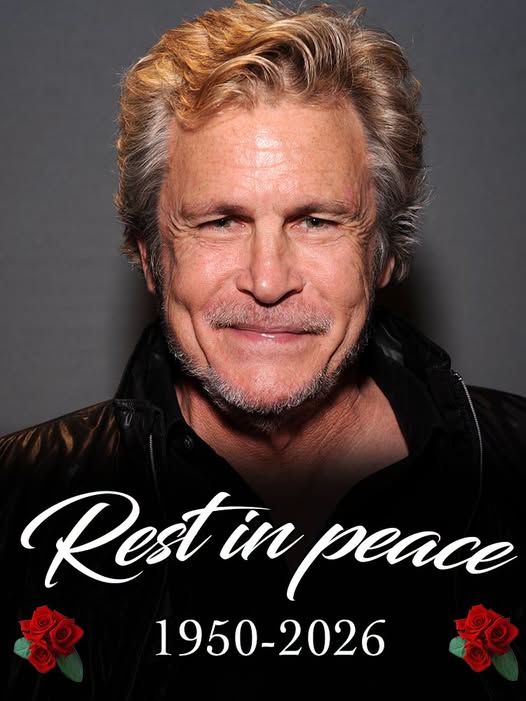
With great sadness, we share the news that the pioneering actor who gave us so much has passed away at the age of 76 💔🌹 Link in comments ⬇️
Michael Kearns, pioneering gay ‘Cheers’ and ‘Bevery Hills 90210’ actor, dies at 76
Actor and activist Michael Kearns, known for his roles in Cheers and Beverly Hills, 90210, has died at age 76. The actor was an advocate for people living with HIV and AIDS and broke barriers by announcing his HI
Actor and activist Michael Kearns, known for his roles in Cheers and Beverly Hills, 90210, has died at age 76. The actor was an advocate for people living with HIV and AIDS and broke barriers by announcing his HIV status in 1991
MIcahel Kearns died on October 5, according to reports. Filmmaker and longtime friend Roland Palencia confirmed his death, saying that the actor had been “in and out of emergency rooms over five times within a three-month period,” per Entertainment Weekly.
Palencia didn’t specify more about his friend’s health problems. He added that Michael Kearns was “a friend, mentor, neighbor, and my movie buddy.”
A cause of death has not yet been announced. However, what we do know is that Michael Kearns shared he was HIV-positive and revealed his diagnosis on television in 1991.
The actor was a pioneer who helped change Hollywood, fighting for people living with HIV and AIDS at a time when the stigma surrounding the disease was massive.
Born in St. Louis, Missouri, in 1950, Kearns discovered his love of acting as a child. He later studied drama in Chicago before beginning his professional career
Michael Kearns, pioneering gay ‘Cheers’ and ‘Bevery Hills 90210’ actor, dies at 76
He also appeared in the 1984 film Body Double and HBO’s drama And the Band Played On, which told the story of the early AIDS crisis.
Kearns was among the early openly gay actors in Hollywood, at a time when many performers feared that being open about their sexuality could damage their careers. In 1991, he publicly revealed that he was HIV-positive, wanting to challenge the shame and discrimination surrounding the disease.
He also played HIV-positive characters on television, helping bring the experiences of people living with the virus to a wider audience.
LOS ANGELES, CA – MARCH 08: Actor Michael Kearns poses before participating in “Male Call – Actors Read the Words of Great Women” at The Coast Playhouse on March 8, 2010 in Los Angeles, California. (Photo by Amanda Edwards/WireImage) Away from the screen, Kearns worked as a director and activist. He co-founded Artists Confronting AIDS, an organization that used art and personal stories to raise awareness of the crisis.
On a personal level, Michael. Kearns also went through a lot. He married Philip Juwig in 1992, but his husband died that same year.
Broke stigma surrounding HIV
In 1995, Kearns adopted a daughter, Katherine, and became a single adoptive father. At the time, it was even far less common than being openly gay, living with HIV.
Kearns had been scheduled to take part in a special event celebrating LGBTQ+ theater history at Celebration Theatre in Los Angeles just days after his death.
Rest in peace, Michael Kearns. Please share this article to honor him and his fight to make the world a better place.
-

14-year-old teenager passed away after putting silicone on us… See more…
14-year-old teenager passed away after putting silicone on us… See more
A shocking and heartbreaking case has come to light after a 14-year-old teenager tragically passed away in circumstances that have left both family and doctors in disbelief. What was supposed to be a harmless attempt at something new quickly turned into a nightmare that ended her young life far too soon. At just 14 years old, her dreams, her laughter, and her future were all cut short in a way that has devastated everyone who knew her. The loss of such a young soul has sent waves of grief through her community.
According to reports, the teenager made a decision that many thought would not be dangerous, but her body reacted in the most tragic way. In an attempt to experiment and imitate something she had seen or heard, she applied silicone on herself — an act that, unknown to her, carried serious and life-threatening consequences. What seemed like a simple action at the time turned into an irreversible tragedy that no one could have predicted.
Her family watched helplessly as her condition worsened, unable to understand how quickly the situation spiraled out of control. Paramedics and doctors tried to save her, but her body could not withstand the damage that had already been done. The image of a young girl fighting for her life has left her loved ones shattered, haunted by the memory of her final moments. For her parents, the pain of losing a child in such a way is beyond what words can express.
This heartbreaking story is now a warning for others about the dangers of experimenting with unknown substances or imitating harmful trends. At just 14 years old, her life was full of potential, yet it was stolen by a choice that she never realized could be fatal. Now, her community mourns the loss of a beautiful teenager whose innocence was met with tragedy. Her story will not be forgotten, and it stands as a painful reminder that even the smallest decisions can carry unimaginable consequences. READ MORE BELOW -
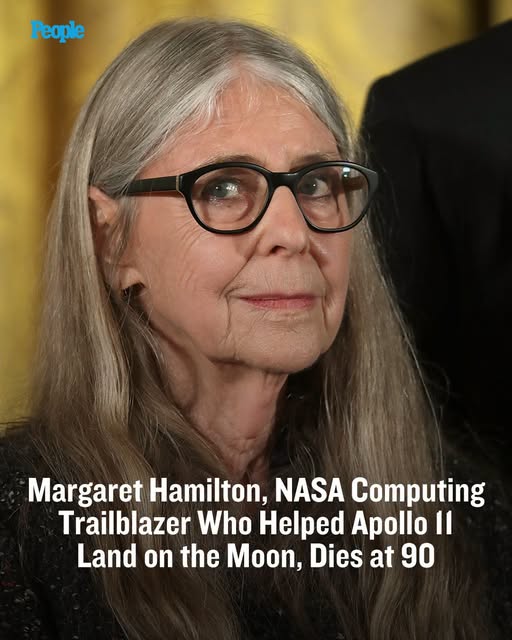
Margaret Hamilton, the pioneering computer scientist whose software helped NASA launch Apollo 11 to the moon, has died. She was 90. Click the link in the first comment for the full story.
Margaret Hamilton, NASA Computing Trailblazer Who Helped Apollo 11 Land on the Moon, Dies at 90
The scientist led the software engineering team at MIT during the Apollo program and was awarded the Presidential Medal of Freedom by Barack Obama in 2016
- Margaret Hamilton died on Wednesday, Sept. 30, at the age of 90
- The pioneering computer scientist led the software engineering team at MIT during the Apollo program that landed humans on the moon
- She authored more than 130 publications, became a CEO and entrepreneur and was awarded the Presidential Medal of Freedom by Barack Obama in 2016
Margaret Hamilton, the pioneering computer scientist whose software helped NASA launch Apollo 11 to the moon, has died. She was 90.
She died on Wednesday, Sept. 30, the Massachusetts Institute of Technology announced in a news release. No cause of death has been shared.
Hugely influential in establishing software engineering as a dedicated field, Hamilton led the team at MIT’s Instrumentation Lab during the Apollo program that landed 12 people on the moon between 1969 and 1972, the university wrote.
“I was attracted both by the sheer idea and the fact that it had never been done before. I was the first programmer to join and the first woman they hired,” she told The Guardian in 2019.
Hamilton was born in Paoli, Ind., in 1936, and began studying math at the University of Michigan in 1955 before moving to Earlham College, where she majored in math with a minor in philosophy, per the MIT release.
In 1959, she moved to Boston with her then-husband, James Cox Hamilton, and began working at MIT, originally on a temporary basis.
Six years later, she applied to develop software to “send man to the moon” at MIT’s Instrumentation Lab after her husband saw an advertisement in the newspaper.
She was hired as the first programmer for the Apollo project, and by 1968, the year before Neil Armstrong and Buzz Aldrin made history by becoming the first people to set foot on the moon, she was assistant director in charge of the Command and Service Module team.
“From my own perspective, the software experience itself (designing it, developing it, evolving it, watching it perform and learning from it for future systems) was at least as exciting as the events surrounding the mission,” she told MIT News in 2009. “Looking back, we were the luckiest people in the world; there was no choice but to be pioneers.”
Hamilton left MIT in the mid-1970s and authored 130 publications across her career, later becoming a computing entrepreneur and CEO — she founded Higher Order Software and Hamilton Technologies — working to promote software engineering as its own discipline, per the university.
I fought to bring the software legitimacy so that it — and those building it — would be given its due respect, and thus I began to use the term ‘software engineering’ to distinguish it from hardware and other kinds of engineering,” she told Spanish newspaper El País in 2018.
“When I first started using this phrase, it was considered to be quite amusing. It was an ongoing joke for a long time. They liked to kid me about my radical ideas,” she said. “Software eventually and necessarily gained the same respect as any other discipline.”
In 2016, she was awarded the Presidential Medal of Freedom by then-President Barack Obama.
“Luckily for us, Margaret never stopped pioneering,” Obama said at the presentation. “She symbolizes the generation of unsung women who helped send humankind into space. Her software architecture echoes in countless technologies today.”
“Her example speaks of the American spirit of discovery that exists in every little girl and little boy who know that somehow, to look beyond the heavens is to look deep within ourselves, and to figure out just what is possible,” he continued.
Over the years, Hamilton also earned the NASA Exceptional Space Act Award, the Computer History Museum Fellow Award and the Intrepid Lifetime Achievement Award. In addition, she was a member of the National Aviation Hall of Fame, MIT said.
Hamilton is survived by her daughter, Lauren Hamilton; her son-in-law, Richard Selesnick; two grandsons; four great-grandchildren; and her siblings John, David and Kathryn.
LEAVE A COMMENT
-

A man who underwent a painful, pricy leg-lengthening procedure said he doesn’t “feel that sense of inadequacy” now that he’s three inches taller. Click the link in the first comment for the full story. ⬇️
Dad Pays for His Son to Have $150K Leg-Lengthening Surgery to Gain 3 Inches in Height (Exclusive)
Aaron Trinh says he feels “much more at peace” since having the surgery
- Ultramarathon runner Aaron Trinh says height discrimination shaped his decision to undergo a leg-lengthening procedure
- His father, who is 5’2”, supported the surgery after experiencing lifelong insecurity about his own height, and paid the $150,000 cost
- Trinh says recovery involved severe nerve pain but believes the surgery was worth it
A man who underwent a painful, pricy leg-lengthening procedure sai
His height was something Trinh’s father monitored as he grew up, and as he shares, “He’d done a lot of things to proactively make sure I was tall,” like “make me drink a glass of milk in the mornings.”
His father, who asked to remain anonymous, says that at 5’2”, he had long felt “rejected” and “dejected.”
“Because of my height. I just feel bad. I feel humiliated,” he says, sharing that he avoided socializing because it made him self-conscious. ”Can you imagine when you speak to people, you have to look up to them?” he asks. “And when they talk to you, they have to look down and you feel like you’re being talked down to all the time.
It was after Trinh was scrolling on TikTok that he saw a video about leg-lengthening surgery. A Google search led him to the Paley Orthopedic & Spine Institute in West Palm Beach.
“My dad offered full financial support for the surgery. It was a really deep father and son connection moment,” Trinh says about his father, who says if the technology had been around when he was younger, he also would have undergone the procedure.
They kept it a secret from Trinh’s mother until the day before the surgery, where Trinh had his bones broken so metal inserts could be inserted. Using magnets applied externally, the metal stretches the bone to add height, one millimeter a day, over up to four months, as muscles and nerves and other tissue have to gradually grow. After that comes recovery, and learning to walk again.
Trinh says he was “extremely nervous” on the day of the surgery — which he called the “easiest part” of the whole process. The “lowest” part, he tells PEOPLE, was the nerve pain, which left him crying out in pain at times. Still, he called it “manageable.”
About eight months after the surgery, Trinh says he became aware of his new height. “Things were shrinking,” he says. He would have to reach out his arm to grab something that had previously been closer. That’s when he realized, “This is actually becoming a reality.”
Trinh’s first surgery was a year ago; he needed a second surgery to remove the hardware from his leg. Now 5’9”, he’s focused on moving forward.
“Now that my height dysphoria is gone, I can mentally focus on a lot of other things” like graduation, his career, and a social life — what he calls “things that any normal human being would love to just focus on.”
“I am absolutely much more at peace with my mind and my body, and I think that’s gonna stick around for a very long time,” he says. “This surgery was purely just for my self-fulfillment, just so that I could be able to mentally focus on other things.”
The surgery, he says, was a “necessity” — and not a punchline. “I don’t think anyone has the right to judge,” Trinh says. “It’s no different from wanting to work hard to improve yourself just as much as if you were wanting to go to the gym.”
LEAVE A COMMENT