On the morning of February 28, 2026, a conflict that had been building for years finally erupted with devastating force. The United States and Israel launched coordinated surprise airstrikes against multiple locations across Iran, setting off a chain of events that has since reshaped the balance of power in the Middle East, rattled global energy markets, and sent shockwaves through every corner of the international community. As of today, March 23, 2026 — day 24 of the conflict — the fighting shows no clear sign of stopping, and the human cost on all sides continues to rise.
This is a factual account of what happened, how it escalated, and where things stand now.
The news hit like a drum crack in the dark. Rob Hirst was gone, and suddenly the world felt off-rhythm.
Fans, activists, fellow musicians, and generations of listeners paused in disbelief, struggling to imagine a world without the relentless heartbeat that had driven one of Australia’s most influential rock bands for decades. Social media filled…
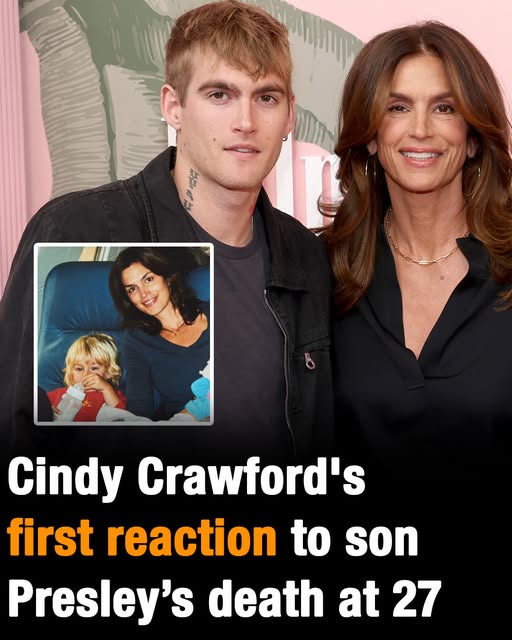
Supermodel Cindy Crawford’s only son, Presley Gerber, died on Sunday. The police are investigating it as a suspected overdose. Now, reports about how his mother is coping with the situation have come to light, a situation that is every parent’s worst nightmare.
Presley Gerber died on Sunday at a rehabilitation facility in Santa Monica, California, the Santa Monica Police Department has shared. On Monday, the Santa Monica police shared a statement saying that his death is being looked into as a suspected overdose.
Gerber had been checked in for treatment at the rehabilitation facility Resolutions Living the same weekend he was pronounced dead, per Page Six.
The Medical Examiner said, “Death was pronounced at 09:45 hours on September 20, 2026, by responding paramedics. The Santa Monica Police Department is the investigating law enforcement agency.”
“At this time, there is no indication of foul play. The official cause and manner of death will be determined by the Los Angeles County Department of Medical Examiner. The investigation remains ongoing,”
Not long after, the Medical Examiner’s office released a new statement, saying that they were in the “early stages of investigating” Presley Gerber’s death. At the time, there is also “limited information.”
Presley Gerber and her mom, Cindy Crawford, were part of a tight-knit family with her father, RAnde Gebrer, and sister, Kaia. They were often seen together in public and supported each other through it all.
Update on Cindy Crawford as son Presley dies at 27
Presley had been very open about his mental health struggles and substance abuse for years, something his sister even spoke about earlier this year in an interview.
Supermodel Cindy Crawford’s only son, Presley Gerber, died on Sunday. The police are investigating it as a suspected overdose. Now, reports about how his mother is coping with the situation have come to light, a situation that is every parent’s worst nightmare.
Presley Gerber died on Sunday at a rehabilitation facility in Santa Monica, California, the Santa Monica Police Department has shared. On Monday, the Santa Monica police shared a statement saying that his death is being looked into as a suspected overdose.
Gerber had been checked in for treatment at the rehabilitation facility Resolutions Living the same weekend he was pronounced dead, per Page Six.
The Medical Examiner said, “Death was pronounced at 09:45 hours on September 20, 2026, by responding paramedics. The Santa Monica Police Department is the investigating law enforcement agency.”
“At this time, there is no indication of foul play. The official cause and manner of death will be determined by the Los Angeles County Department of Medical Examiner. The investigation remains ongoing,”
Not long after, the Medical Examiner’s office released a new statement, saying that they were in the “early stages of investigating” Presley Gerber’s death. At the time, there is also “limited information.”
Presley Gerber and her mom, Cindy Crawford, were part of a tight-knit family with her father, RAnde Gebrer, and sister, Kaia. They were often seen together in public and supported each other through it all.
Update on Cindy Crawford as son Presley dies at 27
Presley had been very open about his mental health struggles and substance abuse for years, something his sister even spoke about earlier this year in an interview.
But perhaps his biggest support of all was his mother. Cindy. In March, Presley gave his followers a glimpse into a deeply personal trip to Mexico, where he was working on his sobriety.
During the trip, he took ibogaine, a powerful psychoactive substance derived from the root bark of the Tabernanthe iboga plant that has been used in some addiction treatment settings.
His mom, Cindy, commented on the Instagram post and showed her support, writing, “You are a warrior! Walk thru the fire to find yourself So proud!”
“I’m so proud of you and your courage. Facing what’s hard takes real strength, and watching you find your way back to yourself is everything. I love you so much,” his father, Rande, commented.
Sister Kaia Gerber also praised her brother, commenting, “That’s my brother I am so damn proud.”
“Every parent’s worst nightmare”
The loss of a family member, even more so a child, is every parent’s worst nightmare. Now, a source has shared how Cindy Crawford is trying to process the horrifying loss of her only son.
Speaking with Page Six, the source said that Presley and Cindy “were so close,” adding that “what you saw online and in the press wasn’t just for that purpose.”
“Cindy is inconsolable. She’s absolutely devastated. This is every parent’s worst nightmare, and the family is still trying to process everything that happened,” another source told the news outlet.
Cindy was extremely involved in everything when it came to Kaia and Presley growing up. She never missed a school function and was on top of everything when it came to her kids.”
“I’m sure that Cindy would make sure her kid was going to the best rehab though,” the source continued. “That’s the kind of mom she was. She was so involved in everything for them.”
Donald Trump’s saga is not a clean morality play; it is a collision between ruin and reinvention played out on the world’s brightest stages. From Queens to Manhattan, from tabloid spectacle to reality television, he learned to turn visibility into armor. Debt, scandal, and ridicule became recurring characters, but never the ending. Each collapse was re-scripted as proof of resilience, each humiliation reframed as evidence that he was too dangerous to the establishment to be allowed peace.
His leap into politics weaponized everything he had learned about attention. The same bravado that once sold luxury towers now sold a promise to forgotten voters that he would shatter the system that ignored them. To some, he became a savior; to others, a symptom of democratic decay. Yet his trajectory exposes an uncomfortable truth: in an age where narrative often outruns fact, the person who refuses to exit the stage can eventually rewrite the script for an entire nation.
His death, confirmed by La Salle University, comes after a valiant but brief struggle with the aftermath of a severe stroke—a detail shared by La Salle’s head coach, Fran Dunphy, who remembered Bryant not just as a statistical powerhouse, but as a “beloved member of the Explorer family.”To understand the weight of this loss, one must look beyond the proximity to his legendary son, Kobe Bryant. Joe Bryant was an architectural force in his own right, a local icon whose influence was woven into the very fabric of Philadelphia’s storied hoops culture. Long before he was known to the world as Kobe’s father, he was the flamboyant, charismatic
“Jellybean,” a 6-foot-9 forward with the ball-handling skills of a guard and a smile that could light up the Spectrum. His journey began in the high-stakes playgrounds of Philly and led him to La Salle University, where he dominated the court with an average of 20.8 points and 11.1 rebounds per game over two seasons. He didn’t just play the game; he choreographed it, bringing a sense of “fun” to the floor that inspired generations of young athletes in the Northeast.
When Joe was drafted by the Golden State Warriors in 1975 and subsequently traded to his hometown Philadelphia 76ers, it felt like a homecoming for a folk hero. The 76ers organization, reflecting on his legacy, noted that Joe was a “local basketball icon” whose impact transcended the box score. He was a player who possessed a rare combination of physical size and creative flair, a precursor to the versatile, multi-positional players that dominate the NBA today. Over eight seasons in the league, including tenures with the San Diego Clippers and Houston Rockets, Joe proved that basketball was as much an art form as it was a sport.However, for many, Joe Bryant’s greatest contribution to the game was the blueprint he provided for his son. The relationship between Joe and Kobe was complex, layered with the high expectations of a professional lineage and the deep, intrinsic bond of a mentor and protégé. Kobe once reflected on his father’s profound influence, noting that Joe taught him “from an early age how to view the game, how to prepare for the game, and how to execute.” It was Joe who introduced Kobe to the nuances of European basketball during his years playing professionally in Italy, exposing the young Mamba to a more tactical, fundamental style of play that would eventually become the cornerstone of Kobe’s legendary “Mamba Mentality.”
Since the world-shaking tragedy of January 2020—the helicopter crash that claimed the lives of Kobe, his daughter Gianna, and seven others—Joe Bryant had largely retreated from the public eye. The grief of losing a son and a granddaughter under such unthinkable circumstances is a burden few can fathom. Joe navigated that darkness with a quiet dignity, rarely granting interviews or seeking the spotlight that had once followed him. His absence from the public stage made the news of his passing feel all the more poignant, as if the final tether to a specific era of the Bryant family legacy had been severed.
The tributes pouring in from colleagues and former teammates paint a picture of a man whose warmth was as significant as his jump shot. Arn Tellem, the high-profile sports executive and Kobe’s former agent, described Joe as a “true Philly hoops legend” whose personality touched everyone he encountered. It wasn’t just the professional circles that felt his warmth; it was the local communities where he coached, including his stint as the head coach of the WNBA’s Los Angeles Sparks. In the women’s professional league, Joe was known for his encouraging demeanor and his ability to connect with players on a human level, proving that his love for the game was inclusive and enduring.
Doug Young, a former teammate of Kobe’s, offered a perspective that perhaps best summarizes Joe’s enduring role: that of an exemplary role model. Young recalled how Joe “made basketball fun and made us all want to be better.” This sentiment captures the essence of “Jellybean.” In an industry often characterized by ruthless competition and cold statistics, Joe Bryant reminded people that the game was meant to be enjoyed. He brought a playground sensibility to the professional arena, a reminder that the ball was meant to bounce with rhythm and the players were meant to play with joy.
The Bryant family has endured a decade of unimaginable highs and devastating lows. From the five championships that solidified their name in the rafters of the Staples Center to the quiet, heartbreaking farewells in Philadelphia, their story is one of greatness and gravity. As Joe Bryant is laid to rest, he leaves behind a legacy that is inextricably linked to the history of the sport. He was the root of the tree that grew to touch the sky, the man who taught the greatest of all time how to tie his shoes and read a defense.
La Salle University remains a place of pilgrimage for those who remember Joe’s collegiate brilliance. To the Explorers, he will always be the young man with the infinite ceiling and the “Jellybean” nickname—a nod to his love for sweets and his sweet style of play. As the university and the 76ers fly their flags at half-mast, the basketball community at large is sending prayers to the remaining members of the Bryant family, acknowledging a loss that feels like the end of a grand, albeit tragic, dynasty.
In the final analysis, Joe Bryant’s life was defined by a circularity. He started in Philadelphia, traveled the world to showcase his talents, and eventually returned to his roots to give back to the game that gave him everything. He was a father, a coach, a legend, and a Philly icon. While the world may remember him through the lens of his son’s global stardom, those who stood on the court with him will remember the man who taught them that basketball was, above all else, a beautiful way to live.