Author: Leotrim

  • A day of fun at Six Flags has ended in tragedy after a man died in a horrifying roller coaster incident, leaving several others injured 💔 Now, witnesses are sharing chilling details about the moments they say they saw unfold. One rider recalled making direct eye contact with the man as he came out of his seat. Full story in the comments. ⬇️

    A day of fun at Six Flags has ended in tragedy after a man died in a horrifying roller coaster incident, leaving several others injured 💔 Now, witnesses are sharing chilling details about the moments they say they saw unfold. One rider recalled making direct eye contact with the man as he came out of his seat. Full story in the comments. ⬇️

    Witnesses describe horrifying moment when man was killed on Six Flags roller coaster

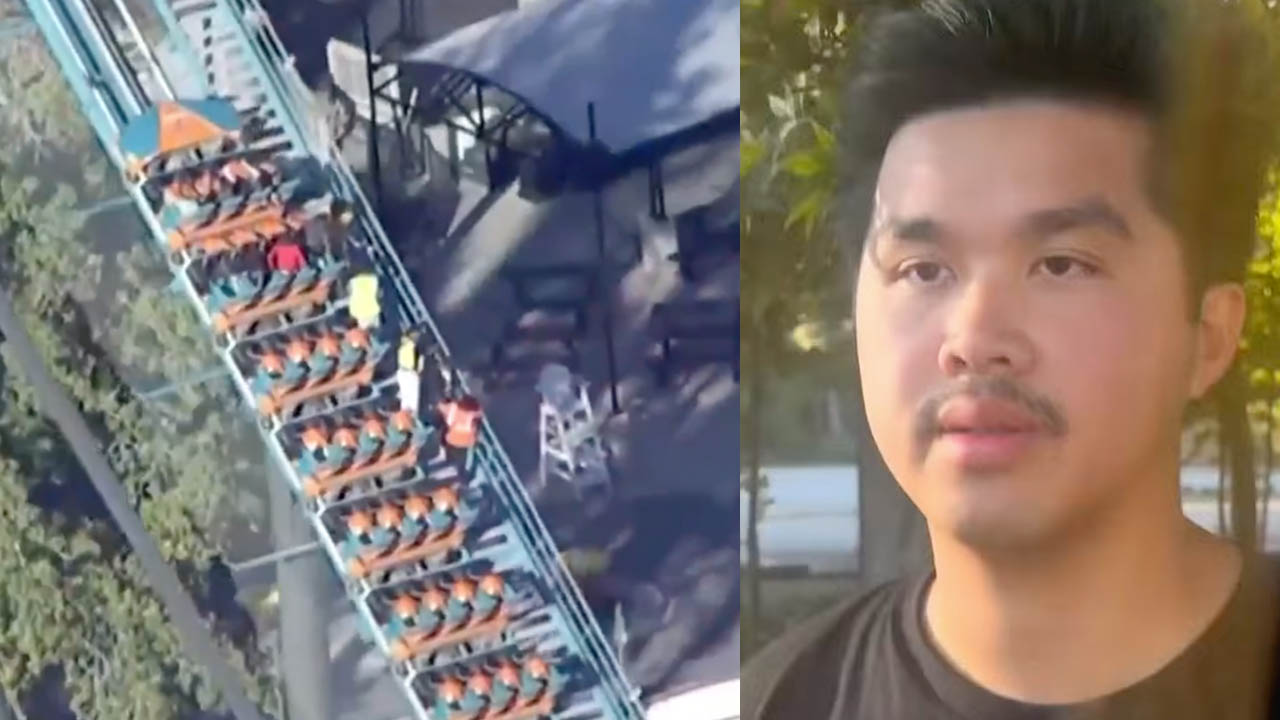
    One person was left dead and several others injured in an incident at Six Flags Over Georgia. Now, witnesses have shared horrifying details about what happened when a man, sitting next to a child, was thrown out of a roller coaster.

    One person has died, and several others have been injured following an incident at Six Flags Over Georgia in Mableton, Georgia, where riders were evacuated from a roller coaster. The incident happened shortly before 4 p.m. on Monday, October 12, police said.

    Authorities confirmed that one visitor had died and several others were injured. However, officials have not yet released further details about what happened or identified the person who died.

    The park’s Goliath roller coaster was seen coming to a stop, with some riders still high above the ground. Footage captured by a local news helicopter showed people being helped off the ride, with riders being evacuated four at a time.

    The Cobb County Police Department said its Major Crimes Unit is now investigating the circumstances surrounding the incident. Speaking with NBC affiliate WXIA of Atlanta, witnesses said they saw a man fall from the Goliath roller coaster.

    Two others said they saw him strike parts of the ride before hitting the ground.

    “He fell and hit the car three different times,” a witness told WXIA.

    Another rider, Logan Conner, who was on the ride with his fiancée, saw how the man came out of his seat. He recalled, “The man started levitating in the air sideways. We made direct eye contact with him.”

    Witnesses describe horrifying moment when man was killed on Six Flags roller coaster

    A man riding the train directly behind the one involved in the Goliath rollercoaster accident told 11Alive, “We were ascending up, and that’s when we heard a scream. Then we look down, and we see people running and panicking.”

    “We were obviously concerned. We saw all the ambulances come; we saw everyone run towards our rollercoaster and also evacuating everyone else,” he continued. “The worst part was that we were just up there for an hour with no news, no update, no nothing. We just saw everyone running out of the park.”

    Another witness said the man who fell and died sat next to a child. In a statement, Six Flags Over Georgia said it was deeply saddened by the tragedy.

    “We are deeply saddened by the guest incident at our park today. Our thoughts and heartfelt condolences are with the guest’s family, friends, and loved ones,” a park spokesperson said in a statement.

    Six Flags release statement

    The company also confirmed that it was cooperating fully with local authorities as the investigation continues. Out of respect for the family’s privacy, the park said it would not be sharing any additional details at this time.

    A Six Flags spokesperson said Monday night that the company had temporarily closed similar roller coasters at several other North American parks “out of an abundance of caution,” per NBC.

    The affected rides include Raging Bull at Six Flags Great America, Goliath at Six Flags Magic Mountain, Nitro at Six Flags Great Adventure, Leviathan and Behemoth at Canada’s Wonderland, Fury 325 and Thunder Striker at Carowinds, and Orion and Diamondback at Kings Island.

    The closures come after Six Flags was involved in multiple lawsuits in September when riders claimed to have suffered brain injuries on the X2 roller coaster at Six Flags Magic Mountain in Valencia, California.

    X2 has been closed since July 12. The day after, attorney Christopher Bulone said one of his clients had suffered a catastrophic brain injury while riding the coaster. On September 29, Magic Mountain President Brian Oerding announced that the ride would be permanently retired, saying it was “the right thing to do.”

    Our thoughts and prayers go out to the family of the man who was killed and all those affected by this tragedy.

  • My husband cheated on me with our son’s wife. When my son and I found out, we decided neither of them was going to walk away from it easily. My name is Carol. I’m fifty-six years old, and I had been married to Mark for thirty-one years. Three months earlier, our son Daniel married Jenna. It was a beautiful wedding. Daniel looked happier than I had seen him in years. I cried through half the ceremony. I truly believed our family was entering one of the happiest chapters of our lives. Then Mark started changing. He began coming home late. He guarded his phone. A few nights, I noticed a perfume on his clothes that definitely wasn’t mine. At first, I refused to believe what my instincts were telling me. After thirty-one years of marriage, you don’t immediately assume the man sleeping beside you is betraying you. You make excuses. Work is stressful. He’s tired. You’re imagining things. Then Thursday happened. A notification appeared on the tablet Mark and I shared. A message from someone saved only as: J. I opened it. Tonight at 8. Same place. Daniel’s on his night shift. I read those words three times. My hands went cold. I didn’t confront Mark. I waited. That evening, when he left the house, I followed him. He drove across town and pulled into the parking lot of a hotel. I stopped far enough away that he wouldn’t notice me. Then I waited. My hands were shaking around the steering wheel. At 8:07, another car entered the lot. A white one. I recognized it immediately. Jenna’s. My son’s wife. I felt sick. Still, part of me kept hoping there was some explanation. Then, about ten minutes later, I saw them. Mark came out of the hotel lobby. Jenna was beside him. And my husband had his arm wrapped around her waist. I stopped breathing. Thirty-one years of marriage. Three months of my son believing he had married the woman he loved. And there they were. Together. I lifted my phone. Took a photograph. Then recorded video. I didn’t storm across the parking lot. I didn’t scream Mark’s name. I didn’t cry. Something inside me had gone completely quiet. And suddenly, I remembered something my father once told me years ago. “That man will disappoint you one day, Carol.” At the time, I had been furious with him. Sitting in that parking lot, I finally understood. I opened my contacts and called Daniel. He answered almost immediately. “Mom?” He sounded cheerful. “Everything okay?” I stared through the windshield at the hotel. “Daniel.” Something in my voice made him go quiet. “What happened?” “Come to your grandfather’s grave.” “What?” “Right now. I’ll meet you there.” “Mom, why?” “I need to show you something.” There was silence on the line. Then I added, “And after you see it, I’m going to tell you everything.” “Mom, you’re scaring me.” “I know, sweetheart.” I swallowed. “But after tonight, nothing is going to be the same.” He didn’t answer. I looked once more toward the hotel. Then said, “Just come.” I ended the call. Started the engine. And drove straight to my father’s grave. The rest of the story is in the first comment. 👇

    My husband cheated on me with our son’s wife. When my son and I found out, we decided neither of them was going to walk away from it easily. My name is Carol. I’m fifty-six years old, and I had been married to Mark for thirty-one years. Three months earlier, our son Daniel married Jenna. It was a beautiful wedding. Daniel looked happier than I had seen him in years. I cried through half the ceremony. I truly believed our family was entering one of the happiest chapters of our lives. Then Mark started changing. He began coming home late. He guarded his phone. A few nights, I noticed a perfume on his clothes that definitely wasn’t mine. At first, I refused to believe what my instincts were telling me. After thirty-one years of marriage, you don’t immediately assume the man sleeping beside you is betraying you. You make excuses. Work is stressful. He’s tired. You’re imagining things. Then Thursday happened. A notification appeared on the tablet Mark and I shared. A message from someone saved only as: J. I opened it. Tonight at 8. Same place. Daniel’s on his night shift. I read those words three times. My hands went cold. I didn’t confront Mark. I waited. That evening, when he left the house, I followed him. He drove across town and pulled into the parking lot of a hotel. I stopped far enough away that he wouldn’t notice me. Then I waited. My hands were shaking around the steering wheel. At 8:07, another car entered the lot. A white one. I recognized it immediately. Jenna’s. My son’s wife. I felt sick. Still, part of me kept hoping there was some explanation. Then, about ten minutes later, I saw them. Mark came out of the hotel lobby. Jenna was beside him. And my husband had his arm wrapped around her waist. I stopped breathing. Thirty-one years of marriage. Three months of my son believing he had married the woman he loved. And there they were. Together. I lifted my phone. Took a photograph. Then recorded video. I didn’t storm across the parking lot. I didn’t scream Mark’s name. I didn’t cry. Something inside me had gone completely quiet. And suddenly, I remembered something my father once told me years ago. “That man will disappoint you one day, Carol.” At the time, I had been furious with him. Sitting in that parking lot, I finally understood. I opened my contacts and called Daniel. He answered almost immediately. “Mom?” He sounded cheerful. “Everything okay?” I stared through the windshield at the hotel. “Daniel.” Something in my voice made him go quiet. “What happened?” “Come to your grandfather’s grave.” “What?” “Right now. I’ll meet you there.” “Mom, why?” “I need to show you something.” There was silence on the line. Then I added, “And after you see it, I’m going to tell you everything.” “Mom, you’re scaring me.” “I know, sweetheart.” I swallowed. “But after tonight, nothing is going to be the same.” He didn’t answer. I looked once more toward the hotel. Then said, “Just come.” I ended the call. Started the engine. And drove straight to my father’s grave. The rest of the story is in the first comment. 👇

    My Husband Betrayed Me With Our Son’s Wife, Then We Made Sure Neither of Them Walked Away Unchanged

    What My Father Knew

    I drove to the cemetery with both hands locked on the steering wheel.

    Ten at night. Thursday. Rain coming down in thin, cold sheets that the wipers couldn’t keep up with. The radio was off. The only sound was the tires on the wet road and my own breathing, slow and careful, like I was afraid if I breathed too hard something inside me would crack.

    My phone was on the passenger seat. Face up. The video was still open on the screen.

    I didn’t look at it. I didn’t have to. I’d already seen it.

    My husband of thirty-one years, walking out of a hotel lobby with his arm around our son’s wife.

    I turned onto Cemetery Road. The gates of Holy Cross were still open. They never close them. My father used to say that was because the dead don’t keep business hours.

    I parked under the big oak by section twelve. I turned off the engine.

    Then I reached over and opened the glove box.

    It was still there. Where it had been for twelve years. Under the owner’s manual and the expired registration cards and a pack of tissues and an old ice scraper.

    A long white envelope. Yellowed now. Soft at the corners.

    On the front, in my father’s heavy, square handwriting:

    Carol.
    Open this the day he disappoints you.
    Not before.

    I picked it up. I held it in my lap.

    Then I sat there in the dark and the rain and waited for my son.


    My name is Carol. I’m fifty-six years old.

    I’ve been married to Mark Delaney for thirty-one years.

    Until Thursday night, I would have told you it was a good marriage. Not perfect. Nobody’s is. But good. We had a house on Sycamore Drive with a wraparound porch and a maple tree in the front yard. We had a son we loved more than anything. We had Sunday dinners and Friday movie nights and a camper we took to Lake Erie every August.

    We had my father’s company.

    Brennan Lumber & Supply. My father, Joe Brennan, started it in 1976 with a borrowed pickup truck and four thousand dollars. By the time he died, it was three locations, sixty employees, and the biggest building supply company in three counties.

    Mark had run it for the last twelve years. Since my father passed.

    Everybody said Mark was a natural. Everybody said Joe would have been proud.

    Everybody was wrong. But I didn’t know that yet.


    Three months ago, our son Daniel married Jenna.

    It was the most beautiful wedding I’d ever been to. Better than my own. A big white barn out in the country, strung with lights. Sunflowers on every table. A string quartet that played “Here Comes the Sun” when Jenna walked down the aisle.

    Daniel was glowing. My boy. Twenty-nine years old. An ER nurse at St. Vincent’s. The gentlest person I’ve ever known. When he was six, he cried for an hour because he stepped on a beetle. When he was sixteen, he gave his winter coat to a homeless man outside the library and walked home in the snow.

    He looked at Jenna like she’d hung the moon.

    Jenna was twenty-seven. Blonde. Pretty in a soft, friendly way. She worked in marketing for a dental chain. She called me “Mom C” from their second date. She brought me flowers on my birthday. She hugged me every time she saw me.

    I loved her. I truly did.

    At the reception, Mark gave a toast. He stood up in his navy suit with a glass of champagne, and he talked about Daniel as a little boy. About teaching him to ride a bike. About the beetle.

    Then he turned to Jenna.

    “Jenna,” he said, “welcome to the family. Daniel’s a lucky man. If I were thirty years younger, he’d have some competition.”

    Everybody laughed.

    I laughed too.

    I cried like a baby through most of that wedding. Happy tears. I thought my family was complete.

    I didn’t notice the way Mark’s eyes stayed on Jenna a beat too long after the toast.

    I didn’t notice anything.


    It started a few weeks after the wedding.

    Mark started working late.

    Not unusual, at first. Running a company with three locations means late nights. Inventory. Contractor meetings. Problems at the warehouse.

    But it became every night. Then weekends.

    “Big contract with the Hendricks development,” he said. “They want the whole subdivision supplied. It’s going to be huge, Carol.”

    He started coming home after ten. Sometimes after eleven.

    He started smelling different.

    Not different. Wrong. He’d come into the bedroom and lean down to kiss me goodnight, and I’d smell it on his collar. Something sweet. Vanilla and something floral. Not my perfume. I’ve worn the same perfume for twenty years. White Linen. My father bought me my first bottle for my high school graduation.

    “Did you hug somebody?” I asked one night, half asleep.

    “What?”

    “You smell like perfume.”

    He laughed. “Diane at the front desk. She sprays it everywhere. The whole office reeks of it. I’m going to have to say something.”

    I believed him. I went back to sleep.

    He started hiding his phone.

    Mark used to leave his phone everywhere. On the kitchen counter. On the couch. In the bathroom. I’d find it in the refrigerator once, next to the orange juice. He was the least secretive man I’d ever known.

    Now it was in his pocket. Always. Face down on the table at dinner. In his hand when he went to the bathroom. On silent.

    When it buzzed at night, he’d pick it up and look at it and put it face down on his nightstand. Quick. Like he was hiding a card in poker.

    “Work,” he’d say.

    I told myself I was imagining it.

    After thirty-one years, you don’t suspect the man who sleeps beside you. You don’t. You can’t. It would mean everything you’ve built is made of paper. It would mean you’ve been a fool for decades.

    So I didn’t suspect him.

    I suspected myself instead. I thought maybe I was getting paranoid. Menopause. Empty nest. Too much time on my hands since I retired from teaching second grade.

    I made an appointment with my doctor to talk about my hormones.

    That’s how far I went to not see it.


    On Thursday, the tablet lit up.

    We have a tablet. A big one. Mark bought it two Christmases ago. It sits on a stand on the kitchen counter, and we use it for recipes and the weather and video calls with my sister in Arizona. It’s synced to both our accounts. Mark set it up himself.

    I don’t think he remembered that.

    I was standing at the counter at four in the afternoon, chopping onions for meatloaf. Mark’s favorite. Thursday night meatloaf. Thirty-one years.

    The tablet chimed.

    A notification slid down from the top of the screen. A message. The little green bubble.

    From a contact saved as just one letter.

    J.

    Tonight at 8. Same place. Daniel’s on his night shift. ❤️

    I put the knife down.

    I read it again.

    Daniel’s on his night shift.

    My blood went cold. I mean that. I’ve heard people say that my whole life, and I always thought it was just an expression. It’s not. I felt it. Starting in my chest and spreading out down my arms into my fingers. Ice. Like somebody had opened a freezer inside me.

    I stood there at the counter with onion tears running down my face and stared at that message until the screen went dark.

    Then I tapped it awake again.

    I tried to open the message. To see the rest. To see who J was, even though I already knew. Even though there was only one J in the world who would know when Daniel worked nights.

    It asked for Mark’s passcode.

    I knew Mark’s passcode. Daniel’s birthday. Zero-four-one-nine-nine-six. He’d used it for everything for twenty-nine years.

    I typed it in.

    Incorrect passcode.

    He’d changed it.

    In thirty-one years of marriage, Mark Delaney had never once changed a password without telling me.

    I picked up the knife and went back to chopping onions.

    I finished the meatloaf. I put it in the oven. I set the timer.

    Then I went upstairs and put on my coat.


    Mark called at six-thirty.

    “Hey, babe. Bad news. Hendricks wants to meet tonight. Over drinks. Down at the Marriott downtown. I’m going to be late again. Don’t wait up.”

    “Okay,” I said.

    “Save me some meatloaf?”

    “Of course.”

    “You’re the best, Carol.”

    “I know,” I said.

    He hung up.

    I took the meatloaf out of the oven. I wrapped it in foil. I put it in the refrigerator.

    Then I got in my car.


    He didn’t go to the Marriott downtown.

    I followed him. I’m not proud of that. I’m not ashamed of it either. I just did it. I sat in the parking lot of Brennan Lumber’s main location on Route 8 with my headlights off and waited for him to come out. At seven-forty, he did. He got in his black truck and drove the wrong way.

    West. Toward the other side of town.

    I stayed four cars behind him. I don’t know how I knew how to do that. I’d never followed anybody in my life. I taught second grade for thirty years. The most dangerous thing I ever did was confiscate a pocketknife from a nine-year-old.

    He drove twenty-two minutes across town. He pulled into the parking lot of a hotel. Not the Marriott. A Hampton Inn off the interstate, by the outlet mall. The kind of place where nobody knows you.

    He parked near the back. He went inside.

    I parked across the street, in the lot of a closed-down Applebee’s. I turned off my engine. I sat there with my hands on the steering wheel.

    They were shaking. My hands. I couldn’t make them stop.

    At 8:07, a white car pulled into the hotel lot.

    A white Honda Civic. With a dent in the back bumper from when Daniel backed into a pole at Kroger last spring. With a little sunflower sticker on the rear window. From their wedding.

    Jenna’s car.

    She parked right next to Mark’s truck.

    She got out. She was wearing a black dress I’d never seen before. Short. Her blonde hair was down, curled. She looked around the parking lot once, fast, nervous.

    Then she went inside.


    Ten minutes later, they came out.

    Together.

    My husband walked out of the hotel lobby with his arm around her waist. His hand on her hip. She was laughing at something he said. She leaned her head against his shoulder.

    They walked to the corner of the building where there was a little patio with a fire pit and some chairs. They sat down. Side by side. He kept his arm around her.

    He kissed her.

    Our son’s wife.

    I picked up my phone.

    I took a photo. Then I opened the camera and switched to video. I zoomed in. My hands were shaking so badly I had to brace my elbows on the steering wheel to hold it steady.

    I filmed for one minute and forty-one seconds.

    I filmed my husband of thirty-one years kissing the girl who called me Mom C. I filmed him laughing. I filmed her running her fingers through his gray hair. I filmed them get up and walk back inside.

    Together.

    Then I put the phone down.

    I didn’t scream. I didn’t cry. I didn’t get out of the car and run across the street and make a scene.

    Something inside me went completely silent.

    I can’t explain it better than that. It was like a television being turned off in another room. All the noise in my head just stopped. The shaking stopped. My hands went still on the wheel.

    And in that silence, I heard my father’s voice.

    That man will disappoint you one day, Carol.


    He said it at my wedding.

    June 1995. I was twenty-five. Mark was twenty-seven. We got married at St. Brigid’s with a reception at the VFW hall. Chicken or beef. A DJ named Lenny who played “The Electric Slide” four times.

    My father walked me down the aisle. Joe Brennan. Six foot three, built like a refrigerator, with hands the size of dinner plates and a voice like gravel in a coffee can. He’d been a widower since I was twelve. It was just him and me for thirteen years.

    He didn’t cry when he gave me away. He just kissed my cheek and put my hand in Mark’s and went and sat down.

    Later, at the reception, he found me alone by the cake table.

    “You happy, Carol?”

    “So happy, Dad.”

    He looked across the room at Mark. Mark was at the bar, laughing with his groomsmen, a beer in each hand.

    My father was quiet for a long time.

    “He’s charming,” he said finally.

    “He is.”

    “Charming men are dangerous, kiddo.”

    “Dad. Don’t.”

    “I’m just saying.” He took a sip of his coffee. My father never drank. Not at weddings, not at funerals, not ever. “That man will disappoint you one day, Carol.”

    I was so angry. I remember that. I remember my face going hot.

    “Why would you say that? Today? On my wedding day?”

    My father looked at me. His eyes were sad. I didn’t understand why.

    “Because somebody should say it,” he said. “And when it happens, I want you to remember that I said it. And I want you to remember that I loved you anyway. And I’ll love you after.”

    Then he kissed my forehead and walked away.

    We didn’t talk for two weeks after that.

    I was wrong. He was right.

    It just took thirty-one years.


    I picked up my phone and called Daniel.

    I knew he was at work. Thursday night. Night shift in the ER. Seven to seven. He’d be busy. He’d be with patients.

    He answered on the second ring.

    “Mom?” he said cheerfully. I could hear the hospital in the background. Monitors beeping. Somebody paging a doctor. “Everything okay? You never call during my shift.”

    “Daniel,” I said.

    My voice was steady. I don’t know how. It didn’t sound like my voice. It sounded like my father’s.

    “Come to your grandfather’s grave,” I said. “Right now. I’ll meet you there. I’ll show you something, and I’ll tell you everything. And then we’re going to do something.”

    There was a long silence on the other end.

    “Mom,” Daniel said slowly. “You’re scaring me. What’s going on? Is Dad okay? Are you hurt?”

    “I’m not hurt,” I said. “Just come, sweetheart.”

    “I’m on shift. I can’t just—”

    “Daniel. Please. Come.”

    He heard something in my voice. I don’t know what. Something he’d never heard before.

    “Okay,” he said quietly. “Okay. I’ll tell my charge nurse it’s a family emergency. I’ll be there in thirty minutes.”

    “Thank you.”

    I hung up.

    I started the engine.

    And I drove to my father’s grave.


    That’s where I was sitting when this story began. In my car. Under the big oak in section twelve. In the dark and the rain. With my father’s envelope in my lap.

    Open this the day he disappoints you.

    I’d gotten it twelve years ago. At the reading of my father’s will. His lawyer, an old man named Saul Feldman with a bow tie and a hearing aid, handed it to me across his desk after everything else was done.

    “Your father asked me to give you this personally,” Saul said. “He was very specific about it. He said you’d know when to open it.”

    I read the front. I felt sick.

    “Did he tell you what’s in it?”

    Saul shook his head. “Joe wrote it himself. Sealed it in my office. Watched me put it in the safe. Said only you should ever read it.” He looked at me over his glasses. “He also said, and I’m quoting him exactly, ‘She’s going to want to throw it away. Tell her not to.’”

    I didn’t throw it away.

    I didn’t open it either.

    I put it in the glove box of my car. And every time I got a new car, I moved it to the new glove box. Three cars in twelve years. I never opened it. I never threw it away. Sometimes I’d forget it was there for months at a time. Then I’d reach in for a napkin and my fingers would touch it and I’d feel sick all over again.

    I told myself it was just my father being dramatic. Just an old man who never liked my husband. Just a grudge from the grave.

    I told myself the day would never come.


    Headlights swept across the cemetery.

    Daniel’s blue Subaru pulled in behind my car. He got out fast. He was still in his scrubs. Dark blue, with his hospital badge clipped to the pocket and a stethoscope around his neck. He hadn’t even taken off his stethoscope.

    He ran over to my car. I rolled down the window.

    “Mom. Mom, what’s going on? You look… you look like you’ve seen a ghost.”

    “Walk with me,” I said.

    I got out of the car. I put the envelope in my coat pocket. I took my phone.

    We walked together through the wet grass to my father’s grave. A big gray granite stone. Polished. With a carving of a pine tree at the top, because my father loved pine trees. And underneath:

    JOSEPH PATRICK BRENNAN
    1942 – 2014
    HE BUILT THINGS THAT LASTED

    I stood in front of it for a moment. The rain was soft now. More mist than rain.

    “Mom,” Daniel said. “Please. Talk to me.”

    I turned around and looked at my son.

    My beautiful boy. With his father’s dark hair and my father’s big hands and his own gentle eyes. Three months married. Glowing at his wedding. Crying at a beetle.

    I was about to break his heart.

    There’s no way to prepare for that. There’s no right way to do it. I’d thought about it the whole drive over. A hundred ways to say it. Soft ways. Gentle ways. Ways that might hurt less.

    There are none.

    “Daniel,” I said. “I’m going to show you something. And it’s going to be the worst thing you’ve ever seen. And I’m so sorry. I’m so sorry, sweetheart. But you need to see it. Because you deserve the truth. And because I’m not going to keep it from you. Not for one single night.”

    He was very still.

    “Okay,” he said quietly.

    I held out the phone.

    I pressed play.


    I watched his face while he watched the video.

    I’m his mother. I’ve watched his face his whole life. I watched it when he took his first steps. When he lost his first tooth. When he got into nursing school. When he saw Jenna walking down the aisle in that big white barn.

    I watched it now.

    At first, he didn’t understand. I saw the confusion. A hotel. A patio. Two people by a fire pit.

    Then he recognized the black truck in the background.

    Then he recognized his father’s gray hair.

    Then he recognized the woman.

    I watched it hit him. I watched it go through him like a bullet. I watched the color drain out of his face, all at once, like someone pulled a plug. His mouth opened. No sound came out.

    He watched his father kiss his wife.

    He watched her run her fingers through his father’s hair.

    He watched them get up and walk back inside together.

    One minute and forty-one seconds.

    When it ended, he didn’t move. He just stood there in the wet grass in his scrubs, holding my phone, staring at the frozen last frame. The empty patio. The fire pit still burning.

    “When,” he finally said. His voice was a whisper. “When was this?”

    “Two hours ago.”

    “Tonight?”

    “Tonight. At the Hampton Inn by the outlet mall.”

    “I’m on shift tonight.”

    “I know.”

    “She told me she was going to her sister’s. She said they were going to watch a movie.”

    “I know, honey.”

    He looked up at me. His eyes were wet. But he wasn’t crying. Not yet. He was in that place just before crying. The terrible, frozen place.

    “How long?” he said.

    “I don’t know. A few months, I think. Since right after the wedding. Maybe before.”

    He handed me back the phone. His hand was shaking.

    Then he turned around and walked a few steps away. He stood with his back to me, looking out at the dark rows of headstones.

    And then my son sank down onto his knees in the wet grass in front of his grandfather’s grave and put his face in his hands.


    I didn’t touch him. Not right away.

    I knew him. I knew he needed a minute. I knew he needed to fall apart without anybody holding him together.

    So I stood there in the rain and let him.

    He didn’t make much noise. Daniel never did. Even as a baby, he cried quietly. He just knelt there with his shoulders shaking, making small, broken sounds into his hands.

    After a while, I knelt down next to him. My knees sank into the wet grass. I didn’t care.

    I put my arm around him. He leaned into me. All six feet of him. He put his head on my shoulder the way he used to when he was small.

    “I’m sorry,” I kept saying. “I’m so sorry. I’m so sorry, baby.”

    “Why?” he said. “Why would they do this? Why would he do this? He’s my dad. He gave a toast at my wedding. He said…”

    He stopped.

    I knew what he was remembering. I was remembering it too.

    If I were thirty years younger, he’d have some competition.

    Everybody laughed.

    “He said it right there,” Daniel whispered. “In front of everybody. He said it right to my face. And I laughed.”

    “We all laughed.”

    “Was he already… was it already happening? At the wedding?”

    “I don’t know, honey.”

    He pulled back. He looked at me. His face was wet. Rain and tears, I couldn’t tell which.

    “Why did you bring me here?” he said. “To Grandpa’s grave. Why here?”

    I reached into my coat pocket.

    I took out the envelope.


    I held it out so he could see the front.

    Carol.
    Open this the day he disappoints you.
    Not before.

    Daniel stared at it.

    “What is that?”

    “Your grandfather left it for me. When he died. Twelve years ago.” I turned it over in my hands. “I’ve never opened it. Not once. I kept it in my glove box for twelve years and I never opened it.”

    “He knew?” Daniel said. “Grandpa knew Dad would…”

    “I don’t know what he knew,” I said. “He told me at my wedding that your father would disappoint me one day. I thought he was just being a grumpy old man. I didn’t talk to him for two weeks.”

    I looked at the envelope.

    “I brought you here,” I said, “because I didn’t want to open it alone. And because I think whatever’s in here, it’s for both of us now.”

    Daniel wiped his face with the back of his hand.

    “Open it,” he said.


    My hands were shaking again. The silence inside me was cracking. I could feel it.

    I slid my thumb under the flap. Twelve-year-old glue. It gave way easily.

    Inside, there were three things.

    A letter. Several pages, folded in thirds. My father’s square handwriting, in blue ink, pressing so hard into the paper you could feel the letters on the back.

    A business card. Old. Yellowed. SAUL FELDMAN, ATTORNEY AT LAW. On the back, in my father’s handwriting: Call his daughter Ruth. She’ll have the papers.

    And a photograph.

    An old Polaroid. Faded. The colors gone orange and soft, the way old Polaroids go.

    It was a picture of a parking lot at night. A motel. A sign in the corner of the frame I could just barely read. STARLITE MOTOR INN.

    And in the parking lot, standing beside a red Pontiac Firebird, a young man with dark hair, kissing a woman with big curly hair and a denim jacket.

    The young man was Mark.

    Twenty-seven years old.

    On the back of the Polaroid, in my father’s handwriting:

    March 11, 1995. Route 30. Three months before the wedding.


    I stopped breathing.

    Daniel took the Polaroid out of my hand. He looked at it under the light from his phone.

    “Is that…”

    “That’s your father,” I said. My voice sounded very far away. “Before we got married.”

    “Who’s the woman?”

    “I don’t know.”

    I unfolded the letter.

    I couldn’t read it at first. The words wouldn’t stay still. I held it under Daniel’s phone light. My father’s handwriting. I hadn’t seen it in twelve years.

    I read it out loud. Kneeling in the wet grass in front of his grave. With my son’s head on my shoulder.


    Carol,

    If you’re reading this, it happened. I’m sorry, kiddo. I’m so sorry. I hoped I was wrong. I prayed every night for nineteen years that I was wrong. I’m writing this in 2014, and I’m sick, and I don’t have much time, and I’m still hoping I’m wrong.

    But if you’re reading this, I wasn’t.

    I need to tell you something I should have told you a long time ago. I need you to forgive me for not telling you. And then I need you to stop forgiving people who don’t deserve it.

    In March of 1995, three months before your wedding, I was driving home late from a supplier meeting in Harrisburg. I stopped for gas on Route 30. And I saw Mark’s car in the parking lot of the Starlite Motor Inn. That red Firebird he was so proud of.

    I sat in the gas station parking lot for an hour. Then I saw him come out with a woman. Her name was Debbie Kowalski. I found out later she was a bartender at the Elks Club.

    I took that picture. I don’t know why. I had a Polaroid camera in the truck for job sites. I just took it.

    The next morning, I went to see Mark at the apartment he was renting. I showed him the picture. He cried. He got down on his knees on that dirty carpet and begged me not to tell you. He said it was one time. He said it was a mistake. He said he was scared about getting married and he did something stupid. He said he loved you more than anything in the world. He said if I told you, it would destroy you.

    And then, Carol, he said the thing that made me keep quiet.

    He said you were pregnant.

    He said you’d just found out. That you hadn’t told me yet because you wanted to wait until after the wedding. That you were scared I’d be disappointed.

    Daniel. You were pregnant with Daniel.


    I stopped reading.

    Daniel had lifted his head off my shoulder. He was staring at the letter.

    “Me?” he whispered.

    I nodded. I couldn’t speak.

    It was true. I’d found out I was pregnant in February of 1995. Four months before the wedding. Daniel was born in April of 1996. I’d told everybody he was a honeymoon baby. Even my father. I was so ashamed. I was Catholic and twenty-five and terrified.

    Mark knew. Mark was the only one who knew.

    And he used it.

    I kept reading.


    I didn’t know what to do, kiddo. You were so happy. You were having a baby. Your mother had been gone for thirteen years and you were finally building a family of your own. And this boy was on his knees crying, swearing it would never happen again.

    So I made a deal with him.

    I told him I would keep his secret. I told him I would never tell you, as long as he never did it again. As long as he was good to you and good to that baby. And I told him that if he ever hurt you, if he ever broke that promise, I would make sure you knew everything.

    And then I did something else. Something I never told you either.

    I went to Saul Feldman. I had him draw up papers. I put everything I owned into a trust. The company. The building on Route 8. The land. The house I bought you and Mark for a wedding present on Sycamore Drive. Everything.


    The trust is in your name, Carol. And Daniel’s name, when he turns twenty-five. Not Mark’s. Never Mark’s.

    Mark can run the company. I knew he’d be good at it. He’s smart and he’s charming and people like him. But he can never own it. He can never sell it. He can never take it from you. He’s an employee of the trust. That’s all he’s ever been. He signed papers agreeing to it before the wedding. He knew if he didn’t sign, I’d show you the Polaroid.

    He signed.

    I don’t know if he ever told you. I’m guessing he didn’t.


    I put the letter down in my lap.

    The house on Sycamore Drive. The house we’d lived in for thirty-one years. The house Mark always called “my house.” “Welcome to my house,” he’d say to guests. “Come on in.”

    It wasn’t his house.

    Brennan Lumber. The company Mark had run for twelve years. The company he talked about at every dinner party like he’d built it with his own two hands. “My company.” “My guys.” “My business.”

    It wasn’t his company.

    It was mine.

    It had always been mine.

    And he had never told me.

    “Mom,” Daniel said. “Mom, there’s more. Keep reading.”


    Here’s the hardest part, Carol.

    I should have told you. The day I saw them in that parking lot, I should have driven straight to your apartment and told you everything. I didn’t, because I was scared of hurting you. Because you were pregnant. Because you were happy. Because I told myself I was protecting you.

    I was wrong.

    I wasn’t protecting you. I was protecting myself from having to watch you cry. I was protecting myself from being the one who broke your heart. I let you walk into a marriage without knowing who you were marrying, because I was a coward. And I’ve regretted it every single day for nineteen years.

    Silence isn’t protection, kiddo. It’s just a slower way of getting hurt.

    So here’s what I want you to do. Whatever he’s done, whoever she is, don’t make my mistake. Don’t keep it quiet to protect anybody. Not yourself. Not him. Not Daniel. Tell the truth. All of it. Out loud. To the people who deserve to know.

    And then take back what’s yours.

    Call Ruth Feldman. Saul’s daughter. She’s a lawyer now, a good one. She has copies of everything. The trust. The papers Mark signed. All of it. She’ll know what to do.

    I love you, Carol. I loved you when you were born. I loved you when you didn’t speak to me for two weeks after your wedding. I’ll love you after.

    Be braver than I was.

    Dad

    P.S. — Tell Daniel I’m sorry too. I hope he’s a better man than his father. Something tells me he will be.


    I folded the letter.

    I put it back in the envelope with the Polaroid and the business card.

    I sat there in the wet grass in front of my father’s grave.

    And then, finally, the silence inside me broke.

    I cried. Not quiet. Not the way Daniel cried. I cried the way I hadn’t cried since my mother died when I was twelve. Big, ugly, howling sobs that came up from somewhere so deep I didn’t know it was there. I bent over in the grass and pressed my forehead against the cold granite of my father’s headstone and I screamed.

    Thirty-one years.

    Thirty-one years of marriage built on a lie. A lie my husband told before we even walked down the aisle. A lie my own father kept to protect me. A lie that had been sitting in my glove box for twelve years, waiting.

    And now my husband had done it again.

    To our son.

    Daniel held me. He knelt behind me and wrapped his arms around me and held on while I screamed into my father’s grave.

    “I know, Mom,” he kept saying. “I know. I know.”


    I don’t know how long we stayed there.

    At some point, the rain stopped. The clouds broke a little. A few stars came out.

    I sat back on my heels. I wiped my face with my sleeve. My knees were soaked through. My hair was plastered to my head.

    Daniel sat next to me in the grass. His scrubs were soaked too. He’d taken off his stethoscope and was holding it in his lap, turning it over and over in his hands.

    “He used me,” Daniel said quietly. “Dad. In 1995. He used me to make Grandpa keep quiet.”

    “Yes.”

    “I wasn’t even born yet. And he used me.”

    “Yes.”

    “And now he’s sleeping with my wife.”

    “Yes.”

    Daniel looked at the headstone.

    HE BUILT THINGS THAT LASTED.

    “Grandpa built a trap,” he said slowly. “Didn’t he? He built a trap for Dad. Thirty-one years ago. And he left it here. Waiting.”

    I hadn’t thought of it that way.

    But it was true.

    My father knew. He knew Mark would do it again someday. He didn’t know when. He didn’t know with who. But he knew. And he spent the last thirty-one years of his life, and twelve years after it, making sure that when the day came, I wouldn’t be helpless.

    He made sure the house was mine.

    He made sure the company was mine.

    He made sure I had the truth.

    All I had to do was open the envelope.


    “Mom,” Daniel said. “What did you mean on the phone? When you said we’re going to do something?”

    I looked at my son.

    “Saturday,” I said, “is the fiftieth anniversary party for Brennan Lumber.”

    He nodded slowly. He knew. Everybody knew. It had been planned for a year. A big gala at the Hilton downtown. Two hundred guests. Every contractor and builder and supplier in three counties. The mayor was coming. The newspaper was covering it.

    And Mark was giving the keynote speech.

    “Your father,” I said, “has been asking me to sign something for three months.”


    It started right after the wedding. The same week, now that I thought about it. The same week he started working late.

    He came home one night with a folder. He spread the papers out on the kitchen table.

    “Carol, I’ve been talking to the accountants. With the fiftieth anniversary coming up, it’s the perfect time to restructure. Modernize. Get the company set up for the next fifty years.”

    “What kind of restructuring?”

    “It’s complicated. Tax stuff. Mostly paperwork.” He slid a pen across the table to me. “The accountants say it’ll save us a fortune. I just need your signature on a few things. Since you’re technically on some of the old paperwork from your dad.”

    Technically on some of the old paperwork.

    I’d almost signed it. That first night. I had the pen in my hand.

    Then Mark’s phone buzzed. He looked at it. He smiled at it. And something about that smile made me put the pen down.

    “Let me read it first,” I said.

    “It’s just boring legal stuff, babe.”

    “I’ll read it this weekend.”

    I never read it. I put it in the desk drawer and forgot about it.

    He asked about it every week after that. Every single week. Gently at first.

    “Did you get a chance to look at those papers?”

    Then less gently.

    “Carol, the accountants need those signatures.”

    Then two weeks ago, he got angry. Actually angry. Red in the face.

    “For God’s sake, Carol, just sign the damn papers! It’s my company! I’ve been running it for twelve years! I should be able to make decisions without begging you for permission!”

    My company.

    He’d calmed down after that. Apologized. Bought me flowers. And then, last Sunday, he’d sat me down and said something else.

    “I want to do something special at the gala,” he said. “I want you to sign the papers on stage. In front of everybody. It’ll be symbolic. The next fifty years. Passing the torch. Your dad’s legacy going forward. What do you think?”

    I’d thought it was sweet.

    I’d said yes.


    Daniel was staring at me.

    “What are the papers?” he said.

    “I don’t know,” I said. “I never read them.”

    But I was starting to think I knew.

    I pulled out my phone. I opened the photos. I scrolled back through them. Past the video. Past the pictures of the hotel. Back to the folder of screenshots I keep of recipes and coupons and Daniel’s work schedule.

    I didn’t find anything. Of course I didn’t.

    But then I remembered the tablet.

    The tablet on the kitchen counter. Synced to Mark’s account. Where the notification from J had popped up.

    I couldn’t open his messages. He’d changed the passcode.

    But the notifications. The notifications still came through.


    We drove back to my house together. Separately. Daniel followed me in his Subaru. I kept looking at his headlights in my rearview mirror the whole way.

    It was almost midnight when we pulled into the driveway on Sycamore Drive.

    Mark’s truck wasn’t there.

    Of course it wasn’t.

    We went inside. I turned on the kitchen light. The tablet was sitting on the counter, dark.

    I tapped it awake.

    There were eleven new notifications. All from J.

    All from the last three hours.

    I didn’t have to unlock it. I could read them right there on the lock screen. The previews. Stacked one on top of the other like cards.

    Daniel stood next to me and read them over my shoulder.

    Can’t stop thinking about tonight ❤️

    I hate going home to him. He’s so boring.

    When can we stop sneaking around?

    Saturday. Once she signs, you said. Then we tell everybody.

    Then you’re free. Then we’re free.

    I can’t wait to watch her face.


    Daniel made a sound. Like somebody had punched him in the stomach.

    I kept reading.

    The last one had come in at 11:48 p.m. Twelve minutes ago.

    Once you have the company in your name, she can’t do anything. Ruth or whatever her name is can’t stop it. You’ll own all of it. Then we’ll go to Arizona like we talked about. Sell everything. Start over. Just us. ❤️

    I read that one three times.

    Once you have the company in your name.

    The papers.

    The papers he wanted me to sign on stage. In front of two hundred people. At my father’s fiftieth anniversary. As a symbol. Passing the torch.

    He wasn’t trying to modernize the company.

    He was trying to steal it.

    He was going to get me to sign my father’s company over to him, in front of everybody, at the gala my father would have been so proud of. And then he was going to take Jenna and the money and leave.

    And I was going to stand on that stage and smile while he did it.


    I put the tablet down.

    I went to the desk in the living room. I opened the top drawer. I took out the folder Mark had brought home three months ago.

    I sat down at the kitchen table and read it. Every page. With Daniel sitting across from me.

    It took twenty minutes. It was dense. Legal language. Whereas and heretofore and notwithstanding.

    But I’m not stupid. I taught second grade for thirty years. I know how to read.

    It was a transfer of beneficial interest. From the Joseph P. Brennan Family Trust. To Mark Delaney. Personally.

    Everything.

    The company. The building. The land. The house we were sitting in.

    Everything my father built.

    Everything he’d spent thirty-one years protecting.

    All I had to do was sign my name on page fourteen.

    On stage. In front of everybody.

    I can’t wait to watch her face.


    I closed the folder.

    I looked across the table at my son.

    He was sitting very straight in his chair. His face was pale. His jaw was tight. His big hands, my father’s hands, were flat on the table in front of him.

    He didn’t look like the boy who cried at a beetle anymore.

    He looked like Joe Brennan.

    “Mom,” he said. “What are we going to do?”

    I picked up my phone. I found Saul Feldman’s business card in the envelope. I turned it over.

    Call his daughter Ruth. She’ll have the papers.

    It was midnight. I didn’t care.

    I called the number.


    Ruth Feldman answered on the fifth ring. Groggy. Annoyed.

    “This is Ruth Feldman. Who is this? It’s midnight.”

    “Ms. Feldman,” I said. “My name is Carol Delaney. My father was Joe Brennan. Your father was his lawyer.”

    Silence on the other end of the line.

    Then her voice changed completely. Wide awake.

    “Carol Brennan,” she said slowly. “Joe’s daughter.”

    “Yes.”

    “Did you open the envelope?”

    I closed my eyes.

    “You know about the envelope?”

    “My father told me about it before he died,” Ruth said. “He made me promise. He said, ‘Someday Carol Brennan is going to call you in the middle of the night. When she does, you drop everything.’” She paused. “It’s been twelve years. I’d started to think you never would.”

    “I opened it tonight.”

    “I’m so sorry, Carol.”

    “Can you meet me tomorrow? Early?”

    “I’ll be at my office at seven,” Ruth said. “Bring everything.”


    I didn’t sleep.

    Mark came home at one-fifteen. I heard his truck in the driveway. I heard the front door open and close. I heard him in the kitchen. The refrigerator door. Foil crinkling. He was eating the meatloaf.

    I was lying in bed with the lights off when he came upstairs. I kept my eyes closed. I made my breathing slow and even.

    He stood in the bedroom doorway for a long moment.

    Then he came over and leaned down and kissed my forehead.

    He smelled like vanilla and something floral.

    “Love you, babe,” he whispered.

    I didn’t move.

    He got into bed. He was asleep in four minutes. He always was.

    I lay there in the dark next to my husband of thirty-one years and stared at the ceiling until the sun came up.


    Ruth Feldman’s office was on the third floor of an old brick building downtown. Her father’s office. She’d kept his name on the door. FELDMAN & FELDMAN.

    She was about fifty. Gray streaks in her dark hair. Reading glasses. A navy suit. She’d made coffee.

    Daniel came with me. He’d called in sick to work. First sick day in four years.

    He’d also gone home at six in the morning while Jenna was still asleep, packed a bag, and left. He didn’t wake her. He didn’t leave a note.

    Ruth had two thick folders on her desk. Old ones. Yellowed at the edges. My father’s name on the tabs in Saul Feldman’s handwriting.

    “Show me everything,” she said.

    I showed her. The letter. The Polaroid. The video. The screenshots of the tablet notifications that Daniel had taken on his phone. The transfer papers Mark wanted me to sign.

    Ruth read the transfer papers very slowly. All fourteen pages. When she was done, she took off her glasses and pinched the bridge of her nose.

    “Who drew these up?” she said.

    “I don’t know. Mark said it was the accountants.”

    “It wasn’t the accountants.” She tapped the letterhead. “This is a firm in Philadelphia. Hargrove and Mills. I’ve seen their work before. They’re the kind of lawyers you hire when you want something to look simple and be very, very complicated.” She set the papers down. “Carol, if you’d signed this, it would have been almost impossible to undo. You’d have handed over your entire inheritance. Voluntarily. In front of two hundred witnesses.”

    “He wanted witnesses,” Daniel said quietly. “That’s why he wanted her to sign it on stage. So she could never say she didn’t know what she was signing.”

    Ruth looked at him.

    “Your grandfather was right about you,” she said.


    Then she opened my father’s folders.

    Everything was there. Just like he said.

    The trust documents. Dated May 1995. Everything owned by Joseph P. Brennan, transferred into the Joseph P. Brennan Family Trust. Sole beneficiary: Carol Ann Brennan. Contingent beneficiary: any child of Carol Ann Brennan, upon reaching the age of twenty-five.

    And behind that, a separate document. Two pages. Signed and notarized. Dated June 1, 1995. Nine days before my wedding.

    I, Mark Thomas Delaney, acknowledge that I have no ownership interest, present or future, in the assets of the Joseph P. Brennan Family Trust, including but not limited to Brennan Lumber & Supply and the residential property at 1407 Sycamore Drive. I understand that any role I may hold in the management of Brennan Lumber & Supply is as an employee of the Trust only, and that such employment may be terminated by the Trustee at any time, for any reason.

    And at the bottom, Mark’s signature. Young and loopy. The same signature that was on our marriage license.

    And beneath that, a line I’d never seen before. Handwritten. In Mark’s writing.

    I will never hurt her again. — M.D.

    Again.

    He wrote again.

    He knew. He knew exactly what he was signing and why.

    “Who’s the trustee?” I asked. My voice was very quiet.

    Ruth turned the page.

    “Your father was the trustee until his death,” she said. “After that, it passed to you.”

    “To me?”

    “To you, Carol. You’ve been the trustee of this trust for twelve years. You have absolute authority over every asset in it. The company. The building. The house. All of it.” She looked at me over her glasses. “Including the authority to terminate the employment of any person working for Brennan Lumber & Supply. At any time. For any reason.”

    I stared at her.

    “I didn’t know,” I said. “I signed some papers after Dad died. Saul gave them to me. Mark said they were just formalities. He said Saul was old and confused. He told me not to worry about it. He said he’d handle everything.”

    “I’m sure he did,” Ruth said dryly.


    We spent four hours in Ruth’s office.

    By noon, we had a plan.

    Ruth drew up papers. A lot of papers. Termination of employment. Notice of removal as President of Brennan Lumber & Supply. Formal revocation of all signing authority on company accounts. And a letter to Hargrove and Mills in Philadelphia, informing them that any attempt to transfer assets from the Brennan Trust would be considered fraud and referred to the district attorney.

    And then she drew up one more set of papers.

    A divorce petition.

    She slid it across the desk to me.

    “You don’t have to file this today,” she said gently. “You can take some time. Think about it.”

    I looked at it.

    Thirty-one years.

    I thought about the meatloaf. Thursday nights. The wraparound porch. Friday movie nights. Lake Erie every August. The way he used to sing in the shower, badly. The way he held Daniel the first time, in the hospital, crying so hard the nurse brought him tissues.

    I thought about a Polaroid of a young man in a motel parking lot. Three months before our wedding.

    I thought about a young man on his knees on a dirty carpet, using his unborn son to buy my father’s silence.

    I thought about I can’t wait to watch her face.

    I picked up the pen.

    “I’ve had thirty-one years to think about it,” I said.

    I signed.


    Then Ruth turned to Daniel.

    “You’re three months married,” she said. “In this state, you may be able to get an annulment instead of a divorce. On grounds of fraud. If you can show she entered the marriage under false pretenses.” She hesitated. “Do you know when it started? Between them?”

    Daniel was quiet for a long time.

    “I don’t know,” he said. “But I can find out.”

    He pulled out his phone. He opened his photos. He scrolled back. Way back. To his engagement party. Last November. At our house on Sycamore Drive.

    He found a picture. Jenna and Mark, standing together in the kitchen, laughing. Mark’s hand on her lower back. A little too low.

    Then another one. From the rehearsal dinner. Jenna sitting next to Mark at the bar. Leaning in close. Whispering something in his ear.

    Then another one. From the wedding. The toast. If I were thirty years younger. Jenna looking up at Mark with an expression on her face that Daniel had seen a hundred times. The way she looked at him when she wanted something.

    “It started before the wedding,” Daniel said quietly. “I just didn’t see it.”

    “None of us did,” I said.

    He put down his phone.

    “File it,” he said to Ruth. “The annulment. Whatever I need to file. File it.”


    That night, I went home to Sycamore Drive.

    I made dinner. Chicken and rice. Mark came home at seven. On time, for once. He was in a great mood. He kissed my cheek. He told me about his day. He talked about the gala. About his speech. About how the mayor was going to say a few words before him.

    “And then,” he said, smiling at me across the table, “you and me on stage. Signing those papers. The next fifty years. Your dad would be so proud, babe.”

    I smiled back at him.

    “He would,” I said. “He’d be so proud.”

    That was the hardest thing I’ve ever done. Harder than the cemetery. Harder than signing the divorce papers. Sitting across the dinner table from that man and smiling at him and eating chicken and rice.

    I did it anyway.

    I did it for my father.


    Daniel stayed at a hotel that night. He texted Jenna that he’d picked up an extra shift. A double. She texted back a heart.

    Love you! Don’t work too hard! ❤️

    He showed it to me on Friday morning. In Ruth’s office. We’d gone back to finalize everything.

    “A heart,” he said. His voice was flat. “She sent me the same heart she sends him.”

    I put my hand on his.

    “Tomorrow night,” I said, “this is over.”


    Saturday.

    The Hilton downtown. The Grand Ballroom.

    Crystal chandeliers. White tablecloths. Two hundred people in suits and cocktail dresses. A big banner across the stage:

    BRENNAN LUMBER & SUPPLY — 50 YEARS OF BUILDING TOGETHER — 1976 – 2026

    On an easel by the stage, a huge black-and-white photograph of my father. Joe Brennan in 1976, standing beside his borrowed pickup truck, grinning, with his hard hat pushed back on his head.

    I wore a navy blue dress. The one my father bought me for my fortieth birthday. I put on White Linen.

    Mark wore a black tux. He looked handsome. He always did.

    Daniel came in a gray suit. Alone.

    Jenna came too. Of course she came. Mark had invited her personally. She sat at table four, near the stage, in a red dress. When she saw Daniel walk in, she jumped up and hugged him.

    “You made it! I thought you were working!”

    “I got the night off,” Daniel said.

    He let her hug him. He didn’t hug her back.

    She didn’t notice.


    The dinner went on forever. Salad. Prime rib. Speeches from contractors who’d worked with my father for decades. Stories about Joe Brennan. How he once drove three hundred miles in a snowstorm to deliver lumber to a church that had burned down. How he never charged a widow full price for anything. How he knew every single employee’s kids’ names.

    People laughed. People cried. I sat at table one next to Mark and held a glass of water and didn’t eat a single bite.

    At nine o’clock, the mayor gave a short speech. Then he introduced Mark.

    “And now, the man who’s carried Joe Brennan’s legacy forward for the last twelve years, the President of Brennan Lumber & Supply, Mr. Mark Delaney!”

    Applause. Big applause.

    Mark stood up. He buttoned his tux jacket. He kissed my cheek.

    “Showtime, babe,” he whispered.

    He walked up to the stage. He stood behind the podium. He looked out at the crowd. He smiled that charming smile.

    “Thank you,” he said. “Thank you so much. Fifty years. Can you believe it?”

    More applause.

    He gave his speech. It was good. He was always good at speeches. He talked about my father. About the early days. About growth and expansion and the future.

    Then he said:

    “And now, before we cut the cake, I’d like to invite my beautiful wife, Carol, to join me up here. Because tonight, we’re going to do something very special. Something symbolic. Tonight, we’re going to make sure the next fifty years are in good hands.”

    He held out his hand toward me.

    On the podium in front of him was a leather folder. And a pen.

    Everybody turned to look at me.

    At table four, Jenna leaned forward in her chair. Her eyes were bright.

    I can’t wait to watch her face.


    I stood up.

    I walked to the stage. Up the three steps. Across to the podium.

    Mark took my hand. He squeezed it. He leaned down and whispered in my ear.

    “Page fourteen, babe. Right where the yellow tab is.”

    I looked at him.

    Thirty-one years.

    Then I let go of his hand.

    I stepped up to the microphone.

    “Thank you, Mark,” I said.

    He frowned slightly. That wasn’t the plan. The plan was for me to sign and him to talk.

    “I’d like to say a few words,” I said into the microphone. “If that’s all right.”

    Mark smiled at the crowd. A little stiff. “Of course. Of course, babe.”

    I looked out at the ballroom. At two hundred faces. At contractors and builders and suppliers. At employees. At the mayor. At the reporter from the newspaper with her notebook.

    At table four, Jenna.

    At table one, Daniel. My son. Sitting very straight. Watching me. He nodded once.

    I took a breath.


    “My father,” I said, “started this company with four thousand dollars and a borrowed truck.”

    I pointed at the photograph on the easel.

    “He used to say that a business is only as good as the promises it keeps. He said lumber can rot, and concrete can crack, and steel can rust. But a promise, if you keep it, lasts forever.”

    The room was quiet.

    “Thirty-one years ago,” I said, “a young man made my father a promise. He made it in writing. He signed it. My father kept that promise in a safe in his lawyer’s office for thirty-one years.”

    I reached into my purse.

    I took out a single sheet of paper. A copy. Ruth had made it for me.

    I held it up.

    “The promise,” I said, “was this. I will never hurt her again.”

    Mark had gone completely still beside me.

    “Tonight,” I said, “I learned that the young man broke his promise.”


    I didn’t show the video.

    I want you to know that. I had it on my phone. I could have played it on the big screen behind the stage. Two hundred people. The mayor. The newspaper.

    I didn’t.

    Not because he didn’t deserve it. Because Daniel didn’t.

    My son did not need two hundred people watching his wife kiss his father. He did not need to be the story that every contractor in three counties would whisper about for the rest of his life.

    My father’s letter said tell the truth. Out loud. To the people who deserve to know.

    The people who deserved to know were sitting at table one and table four.

    Everybody else just needed to know what happened to the company.


    “So I’m making some changes,” I said into the microphone. “Effective immediately.”

    I opened the leather folder on the podium. I took out the papers Mark had put there. The transfer. Fourteen pages. With a yellow tab on page fourteen.

    I held them up so everybody could see them.

    Then I tore them in half.

    Then in half again.

    I set the pieces down on the podium.

    A murmur went through the crowd. Somebody gasped.

    “As trustee of the Joseph P. Brennan Family Trust,” I said, “which has owned this company since 1995, I am announcing that Mark Delaney is no longer the President of Brennan Lumber & Supply.”

    The room went dead silent.

    “Luis Ortega,” I said, “who has worked at Brennan Lumber for thirty-four years, who started on the loading dock when my father hired him at nineteen, and who knows more about this business than anybody alive, will serve as interim President while the trust conducts a full review of the company’s finances.”

    At table six, an older man with gray hair and a mustache stood up slowly. Luis. He’d been my father’s right hand for twenty years. He’d cried at my father’s funeral harder than anybody but me. Ruth had called him that morning. He’d said yes before she finished the sentence.

    He put his hand over his heart and nodded at me.

    People started clapping. Slowly at first. The old-timers. The ones who’d known my father. Then more. Then the whole room.

    I waited until they stopped.

    “Thank you,” I said. “My father would want you to know one more thing. He used to say, the lights stay on. The trucks still roll. Monday morning, everybody comes to work like always. Your jobs are safe. Your families are safe. Nothing changes for any of you.”

    I looked at Mark.

    “It only changes for one person,” I said.


    I stepped away from the microphone.

    I turned to my husband.

    He was white. Completely white. Sweat standing out on his forehead. His mouth was open. I’d never seen Mark Delaney with nothing to say.

    “Carol,” he whispered. “Carol, what are you doing? What is this? We can talk about this. Whatever you think—”

    “I don’t think,” I said quietly. Just for him. “I know.”

    I reached into my purse one more time.

    I took out the Polaroid.

    The faded, orange-tinted photograph of a young man in a motel parking lot, kissing a woman with big curly hair beside a red Firebird.

    I held it up between us. Just for him. Nobody else could see it.

    I watched his face.

    I watched thirty-one years fall apart behind his eyes.

    “My father took this,” I said. “March 11, 1995. Route 30. The Starlite Motor Inn.”

    He made a sound. Like an animal caught in a trap.

    “He saved you, Mark,” I said. “He saved you once. He kept your secret for nineteen years. He took it to his grave. He did it for me. And for Daniel. And you used Daniel to make him do it.”

    “Carol, please—”

    “Nobody’s saving you this time.”

    I put the Polaroid back in my purse.

    Then I handed him an envelope. Thick. Manila. With Ruth Feldman’s letterhead on the front.

    “Divorce papers,” I said. “And a notice from the trust. You have thirty days to vacate 1407 Sycamore Drive. It was never your house. It was always mine. You knew that. You signed it.”

    He stared at the envelope in his hand.

    “Ruth Feldman will be in touch about everything else,” I said. “Don’t call me. Don’t come to the house. Talk to Ruth.”

    “Carol.” His voice cracked. “Carol, thirty-one years—”

    “I know,” I said. “I was there.”

    And I walked off the stage.


    I walked straight to table one and sat down next to my son.

    Daniel took my hand under the table. He squeezed it so hard it hurt.

    Then he let go. He stood up.

    He walked to table four.

    Jenna was sitting frozen in her red dress. She’d watched the whole thing. She’d watched Mark go white. She’d watched me hand him an envelope. She didn’t know what was in it. But she knew something had gone very, very wrong.

    She looked up at Daniel. Her face was scared.

    “Baby,” she said. “Babe, what’s going on? What’s happening with your dad?”

    Daniel didn’t say anything.

    He reached into the inside pocket of his gray suit. He took out his phone. He opened it to a screenshot. The tablet. The lock screen. The notifications.

    I can’t wait to watch her face.

    Then we’ll go to Arizona like we talked about. ❤️

    He set the phone on the table in front of her.

    Jenna looked down at it.

    I watched her read it. I watched every bit of color leave her face. I watched her mouth open and close like a fish.

    “Daniel,” she whispered. “Daniel, I can explain—”

    “You can’t,” Daniel said quietly. “Nobody can.”

    He reached into his other pocket. He took out a second manila envelope. Ruth Feldman’s letterhead.

    He set it on the table next to the phone.

    “Annulment papers,” he said. “Ruth says it should go through quickly. On grounds of fraud. Since it started before the wedding.”

    Jenna started crying.

    “Daniel, please. He pursued me. He wouldn’t stop. He kept texting me. He said such nice things. He said you didn’t appreciate me. He said—”

    “I know what he said,” Daniel said. “He says nice things. That’s what he does. He said nice things to my mother for thirty-one years.”

    He took his phone back.

    “I would have given you everything,” he said softly. “Everything I had. It wasn’t much. But it was all of it. I would have spent my whole life trying to make you happy.”

    He looked at her for a long moment.

    “I hope you find somebody who makes you happy, Jenna,” he said. “I really do. I just hope it’s not him. Because he’ll do to you exactly what he did to my mom.”

    Then he turned around and walked back to our table.

    He sat down next to me.

    His hands were shaking. But his face was calm.

    My father’s face.


    Mark left before the cake.

    He walked off the stage, down the steps, past table four without looking at Jenna, and straight out the ballroom doors. People stepped out of his way. Nobody said anything to him.

    Jenna left about five minutes later. Alone. Crying. Mascara running down her face. She ran out of the ballroom so fast she left her purse on the chair. Somebody had to chase her down the hallway with it.

    Daniel didn’t watch her go.


    Then Luis Ortega walked up to the stage.

    He stood behind the podium in his rented tux. He adjusted the microphone. He looked out at the crowd.

    “Well,” he said in his slow, gravelly voice. “That’s not how I thought tonight was going to go.”

    The whole room laughed. The tension broke like a dam.

    “I’m not much for speeches,” Luis said. “Joe Brennan was the talker. I was the guy who loaded the trucks. But I’ll say this.” He looked at me. “Joe told me once, a long time ago, that he was worried about his daughter. He never told me why. He just said, ‘Luis, if Carol ever needs you, you show up. No questions.’” He nodded slowly. “So here I am, Carol. No questions.”

    Then he raised his glass.

    “To Joe Brennan,” he said. “Who built things that lasted.”

    Two hundred people stood up and raised their glasses.

    “To Joe.”


    We cut the cake.

    Daniel and me. Together. A big white sheet cake with blue frosting letters. 50 YEARS.

    He held the knife. I put my hand over his.

    The photographer from the newspaper took our picture. It ran on the front page of the business section on Monday. Not the drama. Just the picture. A mother and son cutting a cake in front of a photograph of a man with a hard hat pushed back on his head.

    The caption said: Carol Brennan and her son Daniel celebrate fifty years of Brennan Lumber & Supply.

    Brennan.

    Not Delaney.

    I didn’t ask them to write it that way. They just did.

    I kept it.


    That was a year ago.

    Mark moved out on day twenty-nine. He took his clothes, his golf clubs, and his recliner. He left everything else.

    He tried to fight it. Of course he did. He hired the lawyers from Philadelphia. Hargrove and Mills. They sent Ruth a letter on very expensive paper.

    Ruth sent them back a copy of the document Mark signed in 1995. With his handwritten line at the bottom.

    I will never hurt her again.

    Hargrove and Mills dropped him as a client two weeks later.

    The divorce was final in March.

    He lives in an apartment in Harrisburg now. Not Arizona. I heard he’s selling cars at a Chevy dealership on Route 22. I heard he’s good at it.

    Of course he is. He always was charming.

    Jenna didn’t go with him. She moved back in with her parents in Ohio the week after the gala. Daniel’s annulment went through in December. Ruth said it was the fastest one she’d ever filed.

    Jenna sent Daniel a letter in January. Handwritten. Four pages.

    He didn’t open it. He gave it to me and asked me to keep it.

    “Someday,” he said. “Maybe. Not now.”

    It’s in my glove box.


    Mark sent me letters too. Eleven of them. One a month.

    I opened the first one. It was three pages of apologies. He said he didn’t know what was wrong with him. He said he’d always been weak. He said there had been others. Not just Debbie Kowalski in 1995. Not just Jenna. Others. Over the years. He listed them. Four names.

    He said he was finally telling the truth because a counselor told him he had to.

    He said he loved me. He’d always loved me. He just loved himself more.

    That was the only honest thing he ever wrote to me.

    I didn’t open the other ten.


    Daniel moved in with me after the gala.

    Just for a while, we said. Just until he got back on his feet.

    It’s been a year. He’s still here.

    He works nights at the ER. I make him breakfast when he comes home at seven-thirty in the morning. Eggs and toast and coffee. We sit at the kitchen table together, him in his scrubs, me in my bathrobe, and we talk.

    About his patients. About the company. About my father.

    About everything.

    He started seeing a counselor in October. A good one. He goes every Tuesday. Some weeks he comes home and doesn’t talk at all. Some weeks he can’t stop talking.

    One morning in February, he put his fork down in the middle of breakfast.

    “Mom,” he said. “Can I ask you something?”

    “Anything.”

    “Do you regret it? Marrying Dad?”

    I thought about it for a long time.

    “No,” I said finally.

    He looked surprised.

    “If I hadn’t married him,” I said, “I wouldn’t have you.”

    Daniel looked down at his plate.

    “But I regret not knowing,” I said. “I regret thirty-one years of not knowing who I was sleeping next to. I regret that my father kept a secret to protect me, and it didn’t protect me at all. It just made the fall longer.”

    “Grandpa was trying to help.”

    “I know he was. And he did help, in the end. He made sure I had the truth and the means to use it.” I reached across the table and took Daniel’s hand. “But I want you to know something. I’m never going to keep a secret from you to protect you. Never. Not one. No matter how much it hurts. If I see something, I’ll tell you. The same night. Even if it breaks your heart.”

    Daniel squeezed my hand.

    “You already did,” he said. “You called me from a parking lot.”

    “I did.”

    “You could have waited. You could have thought about it. Talked to a lawyer first. Protected me.”

    “I could have.”

    “Why didn’t you?”

    I looked out the kitchen window at the maple tree in the front yard. My father planted that tree. In 1995. As a wedding present. Along with the house.

    “Because I’d been protected my whole life,” I said. “And I know exactly what it costs.”


    The company is doing well.

    Luis isn’t interim anymore. The board made it permanent in June. He’s the President of Brennan Lumber & Supply now. He still goes down to the loading dock every Friday afternoon to help load the trucks.

    When Ruth and I did the financial review, we found some things. Mark had been moving money. Small amounts. Over years. Into an account in his own name. Ruth said it added up to almost two hundred thousand dollars.

    We could have pressed charges.

    I thought about it for a long time.

    In the end, Ruth sent him a letter. He paid it back. All of it. In installments. He’s still paying.

    That’s brutal enough.


    Today is a Thursday.

    One year since the hotel parking lot. Since the tablet lit up on my kitchen counter. Since I followed my husband across town and sat in the parking lot of a closed Applebee’s with my hands shaking on the steering wheel.

    Daniel and I drove out to Holy Cross this evening. Section twelve. Under the big oak tree.

    It wasn’t raining this time. It was clear and cold. The sky was turning orange and pink over the hills. The leaves on the oak were red and gold.

    We stood in front of my father’s grave.

    JOSEPH PATRICK BRENNAN
    1942 – 2014
    HE BUILT THINGS THAT LASTED

    I’d brought something. A new envelope. White. Sealed.

    On the front, in my handwriting:

    Daniel.
    Open this whenever you want.
    There are no secrets in it.

    I handed it to him.

    He looked at it. He looked at me.

    “What is it?”

    “It’s everything,” I said. “Everything I know. About your father. About Grandpa. About me. About the company and the trust and the house. Every single thing. No secrets. No surprises. So you never have to find a Polaroid in a glove box.”

    Daniel held the envelope in both hands.

    “You don’t have to do this, Mom.”

    “Yes, I do,” I said. “Your grandfather left me an envelope that said open it the day he disappoints you. I’m leaving you one that says open it whenever you want.” I put my hand on his arm. “Because I don’t want you waiting for the worst day of your life to find out the truth. I want you to have it now. On a good day. On any day.”

    Daniel looked at the envelope for a long moment.

    Then he put it in the inside pocket of his jacket. Right over his heart.

    “I’ll read it tonight,” he said.

    “Okay.”

    He looked at his grandfather’s headstone.

    “I wish I’d known him better,” he said. “I was seventeen when he died. I thought he was just a grumpy old man who smelled like sawdust.”

    “He was a grumpy old man who smelled like sawdust,” I said. “He was also the bravest man I ever knew. Even when he wasn’t brave enough.”

    Daniel smiled a little.

    “He said he hoped I’d be a better man than Dad,” he said. “In the letter. He said something told him I would be.”

    “He was right.”

    “How do you know?”

    I looked at my son. At his big hands. My father’s hands. At his gentle eyes. At the boy who cried over a beetle and gave his coat away in the snow. At the man who walked to table four in a gray suit and said I hope you find somebody who makes you happy to the woman who broke his heart.

    “Because you could have destroyed her,” I said. “That night. You had the video. You had the messages. You could have put it on the big screen. You could have humiliated her in front of everybody.”

    “So could you.”

    “I know.”

    “Why didn’t we?”

    I thought about it.

    “Because the truth was enough,” I said. “We didn’t need to make them suffer. We just needed to stop protecting them from what they did.” I looked at the headstone. “Your grandfather spent nineteen years protecting your father from the truth. That’s the only mistake he ever made. We didn’t make it.”


    We stayed until the sun went down.

    Then we walked back across the grass to the car.

    At the car, Daniel stopped. He turned around and looked back at the oak tree. At the gray headstone, just visible in the dusk.

    “Hey, Grandpa,” he said quietly. “Thanks for the envelope.”

    I got in the driver’s seat. Daniel got in the passenger side.

    Before I started the engine, I reached over and opened the glove box.

    It was almost empty now. The owner’s manual. An ice scraper. A pack of tissues. Jenna’s letter to Daniel, still sealed.

    And my father’s envelope. The old one. Soft and yellow. With his square handwriting on the front.

    Carol.
    Open this the day he disappoints you.
    Not before.

    I took it out. I looked at it for a long time.

    Then I put it back.

    I’ll keep it forever. Not because I need to read it again. I know every word by heart.

    I keep it because it reminds me of the last thing my father ever taught me.

    Silence isn’t protection.

    It’s just a slower way of getting hurt.

    I closed the glove box.

    I started the engine.

    And my son and I drove home together. To the house on Sycamore Drive. To the maple tree my father planted. To the wraparound porch and the kitchen table and Thursday nights.

    Thursday nights are still meatloaf.

    But now Daniel makes it.

    And it’s better than mine.

  • My husband’s best friend had been driving our 16-year-old daughter to ballet three times a week. I trusted him completely. Then one afternoon, I decided to pick her up myself. The moment her teacher saw me, her expression changed. Then she asked quietly, “Your daughter hasn’t told you what’s been happening, has she?” Audrey had dreamed about ballet for years. When a studio nearly an hour away finally accepted her, she wrapped her arms around me so tightly I could barely breathe. “Please, Mom. I want to go so badly.” I wanted to make it work. But the distance was a problem. The studio was about fifty minutes from our house. Taking public transportation meant changing buses twice. And several of her classes finished after dark. My husband, Scott, and I both worked late. Neither of us could promise to make that drive three evenings every week. And I wasn’t comfortable letting Audrey travel that far alone. So I told her no. At least for the time being. She was heartbroken. Then, a few weeks later, Scott’s best friend Derek came over for Sunday dinner. Scott and Derek had known each other since high school. He had been part of our lives for years. He had watched Audrey grow up. She had even called him Uncle Derek when she was younger. During dinner, Audrey brought up ballet again. “Mom, there has to be some way.” I had just started explaining the transportation problem when Derek interrupted. “My office is close to that studio.” I looked at him. “How close?” “Just a few minutes.” Then he smiled at Audrey. “I can drive you.” Her face lit up. “Really?” “Of course.” Scott immediately agreed. “That solves everything.” I hesitated. But this was Derek. Someone we had trusted for decades. So I said yes. At first, everything seemed wonderful. Audrey came home from class full of energy. She would sit in the kitchen while I warmed dinner and tell me about every new exercise she had learned. Sometimes she practiced turns between the counter and the table. She talked about her teacher. The other dancers. The music. Everything. Then, after a few weeks, the stories stopped. “How was class?” “Fine.” “What did you learn?” “Nothing much.” She began taking her food upstairs. Her dance bag went straight into her room. And instead of talking to me, she closed her bedroom door. I told myself she was sixteen. Teenagers became private. It didn’t necessarily mean anything. Then one evening, I happened to be outside when Derek brought her home. His car stopped at the curb. Audrey didn’t get out immediately. She was leaning toward him. One hand was gripping his sleeve. They appeared to be arguing about something. The moment Audrey noticed me watching, she released him. She grabbed her bag and hurried toward the house. I walked up to the driver’s side. “What happened?” Derek smiled immediately. “Nothing.” “She looked upset.” He shrugged. “She wanted me to stop for food. I told her it was getting late.” That should have been enough. But something about it didn’t feel right. Later that night, I told Scott. He dismissed it almost immediately. “You’re worrying for no reason.” “She looked really upset.” “It’s Derek.” He smiled. “He’s practically family.” I wanted that to reassure me. It didn’t. The following morning, I tried talking to Audrey. “Is something going on?” “No.” “With ballet?” “No.” “With Derek?” Her whole expression changed. “What are you talking about?” “You haven’t been yourself lately.” “I’m fine.” “If something happened, you can tell me.” She suddenly raised her voice. “Just leave me alone!” I froze. Audrey had never spoken to me like that. “It’s none of your business.” Then she grabbed her backpack and walked away. Scott told me I was pushing too hard. But I couldn’t ignore the feeling anymore. So the next afternoon, I left work early. I didn’t tell Scott. I didn’t warn Derek. I drove directly to the ballet studio. Class had already begun when I arrived. Through the glass panel in the door, I saw a row of dancers at the barre. I searched for Audrey. She wasn’t there. I checked again. Nothing. I found her teacher in the hallway. “Hi. I’m Audrey’s mother.” The woman smiled automatically. Then the smile disappeared. “Oh.” My stomach tightened. “Where is she?” The teacher glanced toward the classroom. Then she stepped out and quietly closed the door behind her. For a moment, she just looked at me. Then she lowered her voice. “Your daughter hasn’t told you anything, has she?” I stared at her. “Told me what?” The teacher hesitated. She looked toward the front entrance. Then back at me. And before she even answered, I knew one thing for certain. Audrey had not simply been skipping ballet. Something had been happening during those three evenings every week. Something everyone seemed to know about except me. The full story is in the first comment.

    My husband’s best friend had been driving our 16-year-old daughter to ballet three times a week. I trusted him completely. Then one afternoon, I decided to pick her up myself. The moment her teacher saw me, her expression changed. Then she asked quietly, “Your daughter hasn’t told you what’s been happening, has she?” Audrey had dreamed about ballet for years. When a studio nearly an hour away finally accepted her, she wrapped her arms around me so tightly I could barely breathe. “Please, Mom. I want to go so badly.” I wanted to make it work. But the distance was a problem. The studio was about fifty minutes from our house. Taking public transportation meant changing buses twice. And several of her classes finished after dark. My husband, Scott, and I both worked late. Neither of us could promise to make that drive three evenings every week. And I wasn’t comfortable letting Audrey travel that far alone. So I told her no. At least for the time being. She was heartbroken. Then, a few weeks later, Scott’s best friend Derek came over for Sunday dinner. Scott and Derek had known each other since high school. He had been part of our lives for years. He had watched Audrey grow up. She had even called him Uncle Derek when she was younger. During dinner, Audrey brought up ballet again. “Mom, there has to be some way.” I had just started explaining the transportation problem when Derek interrupted. “My office is close to that studio.” I looked at him. “How close?” “Just a few minutes.” Then he smiled at Audrey. “I can drive you.” Her face lit up. “Really?” “Of course.” Scott immediately agreed. “That solves everything.” I hesitated. But this was Derek. Someone we had trusted for decades. So I said yes. At first, everything seemed wonderful. Audrey came home from class full of energy. She would sit in the kitchen while I warmed dinner and tell me about every new exercise she had learned. Sometimes she practiced turns between the counter and the table. She talked about her teacher. The other dancers. The music. Everything. Then, after a few weeks, the stories stopped. “How was class?” “Fine.” “What did you learn?” “Nothing much.” She began taking her food upstairs. Her dance bag went straight into her room. And instead of talking to me, she closed her bedroom door. I told myself she was sixteen. Teenagers became private. It didn’t necessarily mean anything. Then one evening, I happened to be outside when Derek brought her home. His car stopped at the curb. Audrey didn’t get out immediately. She was leaning toward him. One hand was gripping his sleeve. They appeared to be arguing about something. The moment Audrey noticed me watching, she released him. She grabbed her bag and hurried toward the house. I walked up to the driver’s side. “What happened?” Derek smiled immediately. “Nothing.” “She looked upset.” He shrugged. “She wanted me to stop for food. I told her it was getting late.” That should have been enough. But something about it didn’t feel right. Later that night, I told Scott. He dismissed it almost immediately. “You’re worrying for no reason.” “She looked really upset.” “It’s Derek.” He smiled. “He’s practically family.” I wanted that to reassure me. It didn’t. The following morning, I tried talking to Audrey. “Is something going on?” “No.” “With ballet?” “No.” “With Derek?” Her whole expression changed. “What are you talking about?” “You haven’t been yourself lately.” “I’m fine.” “If something happened, you can tell me.” She suddenly raised her voice. “Just leave me alone!” I froze. Audrey had never spoken to me like that. “It’s none of your business.” Then she grabbed her backpack and walked away. Scott told me I was pushing too hard. But I couldn’t ignore the feeling anymore. So the next afternoon, I left work early. I didn’t tell Scott. I didn’t warn Derek. I drove directly to the ballet studio. Class had already begun when I arrived. Through the glass panel in the door, I saw a row of dancers at the barre. I searched for Audrey. She wasn’t there. I checked again. Nothing. I found her teacher in the hallway. “Hi. I’m Audrey’s mother.” The woman smiled automatically. Then the smile disappeared. “Oh.” My stomach tightened. “Where is she?” The teacher glanced toward the classroom. Then she stepped out and quietly closed the door behind her. For a moment, she just looked at me. Then she lowered her voice. “Your daughter hasn’t told you anything, has she?” I stared at her. “Told me what?” The teacher hesitated. She looked toward the front entrance. Then back at me. And before she even answered, I knew one thing for certain. Audrey had not simply been skipping ballet. Something had been happening during those three evenings every week. Something everyone seemed to know about except me. The full story is in the first comment.

    I Went to Pick My Daughter Up From Ballet Myself, but Her Teacher’s Reaction Made Me Realize Something Was Wrong

    “Your daughter hasn’t told you anything, has she?”

    The ballet teacher said it quietly, with her back against the closed classroom door, like she was afraid the girls inside would hear.

    Behind that door, I could hear piano music and the soft thump of feet landing in unison. Twelve girls in black leotards. Twelve buns. Twelve sets of arms lifting at the same time.

    None of them was my daughter.

    “Told me what?” I said. My voice came out higher than I wanted. “Where is she? Where’s Audrey?”

    The teacher looked at me for a long moment. Then she looked past me, toward the big front window of the studio, and the street outside.

    “I think you’d better sit down, Mrs. Hale,” she said.

    I didn’t sit down. I couldn’t.

    Because in that moment, every terrible thought I’d been pushing away for a month came rushing back at once. Every late night. Every closed bedroom door. Every time my daughter wouldn’t meet my eyes. And the picture I couldn’t get out of my head: Audrey’s fingers gripping Derek’s sleeve through an open car window, and the way she let go the second she saw me.

    To understand why I was standing in that hallway with my heart slamming against my ribs, I have to go back to the beginning. To a little girl, and a dream, and a Sunday dinner where we said yes to something without thinking twice.

    My daughter fell in love with ballet when she was six years old.

    My mother took her to see The Nutcracker at the big theater downtown for Christmas. I had to work that night, so I didn’t go. When they came home, Audrey was still wearing her good red dress and her tights had a hole in one knee, and she walked through the front door on her tiptoes.

    “Mommy,” she whispered, like it was a secret. “Did you know people can fly?”

    She didn’t stop talking about it for a year. She danced in the kitchen. She danced in the grocery store. She danced in the bathtub until she slipped and split her chin open and needed three stitches. Even in the emergency room, holding a bloody washcloth to her face, she asked the doctor if she could still be a ballerina.

    “I don’t see why not,” he said.

    She grinned at me with blood on her teeth.

    We signed her up for lessons at a little studio in a strip mall near our house. Miss Patty’s School of Dance, between a nail salon and a pizza place. Miss Patty was seventy years old and wore leg warmers and smoked in her car between classes. She taught tap, jazz, ballet, and something she called “creative movement,” which mostly involved the little ones pretending to be leaves.

    Audrey went every Tuesday and Thursday for nine years.

    She was good. Everybody said so. Better than good. By the time she was twelve, Miss Patty was taking me aside after recitals.

    “That girl needs a real teacher,” she told me once, smelling of menthols. “I’m not saying that to get rid of you. I love having her. But I’ve got nothing left to teach her. She’s going to outgrow this place like a goldfish outgrows a bowl.”

    I nodded and thanked her and didn’t do anything about it.

    I’m not proud of that. But real ballet schools cost real money, and Scott and I didn’t have real money. Scott managed the parts department at a car dealership. I was a nurse at the county hospital, working twelve-hour shifts that turned into fourteen. We had a mortgage and a car payment and a refrigerator that sounded like a lawnmower. Every time Audrey brought up a “real school,” I found a reason why not this year.

    Then, last spring, when she was sixteen, she came home from school holding a printout like it was a winning lottery ticket.

    “Mom. Mom. Look at this.”

    It was from the Moreau Ballet Academy downtown. A serious school. The kind of place that sent girls to summer programs in New York. Once a year, they held open auditions for older students and offered a few spots with reduced tuition.

    “I want to audition,” she said. “Please. Miss Patty says I’m ready. She already said she’d write me a letter.”

    “Honey, downtown is so far.”

    “I know.”

    “And the tuition, even reduced…”

    “I’ll babysit. I’ll work at the pizza place. I already asked Mr. Romano. He said I could start in June.”

    “Audrey.”

    “Please, Mom.” She grabbed both my hands. “I’ll never ask for anything else. I swear. I just want to know if I’m good enough. Even if I don’t get in. I just want to know.”

    So I let her audition. I figured she wouldn’t get in. That’s the truth. I figured she’d go, and dance her heart out, and come home disappointed, and I’d hold her while she cried, and then we’d all move on with our lives.

    Three weeks later, a letter came in a heavy cream envelope. I was at work. Scott texted me a photo of Audrey standing in our kitchen holding it up, her face wet and red and shining.

    When I got home that night, she was waiting at the front door. She hugged me so tightly I could barely breathe.

    “I got in,” she kept saying into my shoulder. “I got in, I got in, Mom, I got in.”

    “I know, baby. I know. I’m so proud of you.”

    “Please, Mom.” She pulled back and looked at me. “I want to go so badly!”

    And I wanted to say yes. God, I wanted to say yes.

    But then I sat down at the kitchen table with the letter and the schedule and a map on my phone, and my stomach sank lower with every line I read.

    Classes were Monday, Wednesday, and Friday evenings. Six thirty to nine. The studio was fifty minutes away by bus, with two changes. One of them was at the Fourth Street transit center, which I knew from work. I had stitched up more than one person who’d been mugged at that bus station.

    Scott worked until eight most nights. I worked until seven, if I was lucky, and I was rarely lucky. There was no way either of us could get across town by six thirty, and there was no way I was letting my sixteen-year-old daughter ride two buses through downtown and stand at Fourth Street alone at nine thirty at night.

    “We’ll figure something out,” Scott said that night in bed.

    “Like what?”

    He didn’t have an answer. Neither did I.

    For two weeks, we went around and around. Audrey suggested a ride app. I said absolutely not, not alone, not at night. Audrey suggested a girl from school whose older brother drove. I didn’t know the brother. Audrey suggested she could ride the bus with her phone on speaker the whole time so I could hear her. I lay awake picturing a hand reaching for that phone in the dark.

    I was going to have to say no.

    And then came that Sunday dinner.

    Derek Lyle had been coming to Sunday dinner at our house, on and off, for eighteen years.

    He and Scott met in the ninth grade, in detention. Scott had been caught smoking behind the gym. Derek had been caught fighting. The way Scott tells it, Derek had a split lip and a black eye and wouldn’t say a word to anybody, and Scott offered him a piece of gum, and that was that. Friends for life.

    I didn’t learn the rest of it until years later. That Derek’s father drank. That the black eye wasn’t from the fight. That half the dinners Derek ate between the ages of fourteen and eighteen were at Scott’s mother’s kitchen table, where she’d set out an extra plate without asking and never made him feel like a charity case.

    He was the best man at our wedding. He gave a toast so funny that my grandmother laughed until she had to take out her teeth. When Audrey was born, he showed up at the hospital at two in the morning with a giant stuffed giraffe that wouldn’t fit through the door of my room.

    He got married once, to a woman named Tina. It lasted four years. They didn’t have kids. After the divorce, he got quieter, and he came over more. He’d sit at our table on Sundays in his rumpled work shirt, eating my pot roast, teasing Audrey about whatever boy band she liked that year, helping Scott fix whatever was broken in the garage.

    Audrey called him Uncle Derek until she was about twelve, and then she decided that was babyish and just called him Derek. He taught her to ride a bike when Scott threw out his back. He taught her to throw a curveball. He came to her dance recitals at Miss Patty’s and sat in the front row and whistled through his fingers, which embarrassed her horribly and which she secretly loved.

    So that Sunday, the third Sunday in August, he was at our table like always.

    I remember noticing that he looked tired. Thinner, maybe. He’d been working a lot, he said. Big project at the engineering firm. His face had a grayish color that I put down to fluorescent office lights.

    He didn’t finish his pot roast. I noticed that too, and then I forgot about it.

    Halfway through dinner, Audrey brought up ballet again. She’d been bringing it up at every meal for two weeks, like water dripping on a stone.

    “The deadline to confirm my spot is Friday,” she said, pushing a potato around her plate. “After that they give it to someone on the waiting list.”

    “Audrey,” I said. “We talked about this.”

    “I know, but…”

    “Honey, I’m sorry. I really am. But the answer is no. It’s too far, and we can’t get you there, and I’m not letting you take the bus downtown alone at night. That’s final.”

    Her face crumpled. Not dramatically. She’d stopped doing dramatic years before. It just sort of folded in on itself, quietly, and she looked down at her plate and blinked hard.

    “Okay,” she whispered.

    Scott looked at me. I looked at my plate. Nobody said anything.

    And then Derek set down his fork.

    “My office is right down the street from the studio,” he said. “I’ll take her.”

    We all looked at him.

    “Come again?” Scott said.

    “The Moreau place, right? On Delancey?” Derek shrugged. “Our building is two blocks over. I’m there till seven most nights anyway. I can swing by here, pick her up at five thirty, drop her at the studio, go back to the office, pick her up at nine. Monday, Wednesday, Friday. Easy.”

    “Derek, that’s way too much,” I said. “That’s three nights a week.”

    “It’s on my way.”

    “It’s not on your way to our house.”

    “So I’ll take the long way home.” He smiled at Audrey. “Ballerina needs a chauffeur. I’ve always wanted to wear one of those little hats.”

    Audrey looked from him to me. She was afraid to hope. I could see it on her face.

    “Mom?” she said.

    I looked at Scott. Scott looked at me and raised his eyebrows a little, the way he did when he was asking without saying anything. Derek had known Audrey since the day she was born. He was family. More than family, in some ways. If you’d asked me that night to name five people in the world I trusted with my daughter’s life, Derek Lyle would have been on the list without me even thinking about it.

    So of course we said yes.

    Audrey screamed. She actually screamed. She jumped up from the table and threw her arms around Derek’s neck so hard she almost knocked him out of his chair. He laughed and patted her back.

    “Easy, kid,” he said. “Easy. You’ll break my neck before you get to your first class.”

    Then she ran around the table and hugged Scott and hugged me, and she was crying, and I was crying a little too, and Scott was grinning like an idiot.

    And Derek sat there watching us with a strange look on his face. Happy, but something else too. Something I couldn’t read. Like a man watching a party through a window from outside.

    I remember thinking, he’s lonely. That’s all. It’s good for him, having somewhere to be. Having someone who needs him.

    I was right about that. I just didn’t know yet how right.

    Derek began driving her three times a week.

    The first night, I took the afternoon off so I could see them go. Audrey came downstairs in a black leotard and pink tights under her sweatpants, her hair in the tightest bun I’d ever seen, carrying a dance bag so new it still had the tag on the zipper. She’d been ready for two hours. She’d done her bun three times.

    Derek pulled into the driveway at exactly five thirty in his old silver Honda. He got out and opened the passenger door for her like a real chauffeur.

    “Madam,” he said, with a bow.

    “Oh my God, stop,” Audrey said, turning red, and got in.

    He winked at me over the roof of the car. “I’ll have her back by nine thirty. Safe and sound.”

    “Thank you, Derek,” I said. “Really. I don’t know how to thank you.”

    “Make me some of those lemon bars,” he said. “We’ll call it even.”

    At first, everything was wonderful.

    She would come home describing every exercise while I reheated her dinner. Pliés and tendus and something called a rond de jambe, which she demonstrated in the space between the stove and the table, holding onto the back of a kitchen chair like it was a barre.

    “Madame Moreau says my turnout is good but my port de bras is sloppy,” she reported, swinging her arm through the air. “That means my arms. She says I dance like a happy puppy. Is that bad? I think that’s bad.”

    “Puppies are very cute,” I offered.

    “Mom. Nobody wants to see a puppy in Swan Lake.”

    She’d eat standing up, talking with her mouth full, telling me about the other girls. There was a tall girl named Simone who’d been dancing since she was three and didn’t talk to anyone. There was a funny girl named Priya who did impressions of Madame Moreau’s accent. There was a boy named Theo, one of only two boys, who could jump so high it looked like he was hanging in the air.

    “Is Theo cute?” I asked.

    “Mom!”

    “I’m just asking.”

    “He’s okay,” she said, and turned pink, and fled upstairs.

    I’d stand at the stove smiling to myself.

    On the car rides, she said, Derek let her pick the music. He sang along badly to everything. He bought her a bottle of water every night from the gas station on the corner because she always forgot hers.

    “He’s so weird,” she said fondly. “He knows all the words to Taylor Swift. All of them.”

    For three weeks, it was the happiest I’d ever seen her.

    And then, slowly, it wasn’t.

    It didn’t happen all at once. If it had, I might have noticed sooner.

    At the end of September, the stories started to get shorter. Instead of ten minutes of rond de jambes in the kitchen, it was two. Then it was a few sentences. Then, by the middle of October, it was just “Class was fine.”

    “Just fine?” I asked one night, putting her plate in the microwave. “What did you work on?”

    “Stuff.”

    “What kind of stuff?”

    “Ballet stuff, Mom.”

    She was standing in the kitchen doorway with her dance bag still over her shoulder. She looked tired. Not dance-tired, the good kind, with pink cheeks and messy hair. A different kind of tired. Gray under the eyes. Like she hadn’t slept.

    “How’s Priya?” I tried. “Is she still doing the Madame Moreau impression?”

    “I guess.”

    “And Theo?”

    She didn’t even blush. “Can I just take my food upstairs? I have a chem test tomorrow.”

    “Honey, we always eat together when you get home.”

    “Please, Mom. I’m really tired.”

    And she started taking her dinner and dance bag straight upstairs. Every night. I’d hear her bedroom door close, and then nothing. Sometimes, if I stood in the hall, I could hear her on the phone, talking low. Once I thought I heard her crying. When I knocked, she said she was fine and that I should go to bed.

    I told myself it was normal. She was sixteen. Sixteen-year-old girls are moody. They shut doors. They stop telling their mothers things. I’d done it to my own mother. I’d made her cry more than once at that age.

    But there were other things.

    Her pointe shoes, for one. She’d been so proud of them in September, sitting on the living room floor sewing on the ribbons, cursing when she pricked her finger. They were new and pink and stiff, and she was supposed to be wearing them every class. I was doing her laundry one Saturday in October and saw them sitting on top of her dance bag. They still looked brand new. Barely a scuff on the satin.

    For another, she smelled different when she got home. Not like sweat. Like something sharp and clean. Antiseptic. I knew that smell. I’d been smelling it on my own hands for twenty years.

    Hand sanitizer. The hospital kind.

    “Do they make you use hand sanitizer at the studio?” I asked her once.

    She froze. Just for a second.

    “Yeah,” she said. “It’s, like, a flu season thing.”

    “Huh. Okay.”

    And she went upstairs.

    And then there was the night I stepped outside.

    It was a Wednesday, the third week of October. Cold. The first real cold night of the year. I’d gotten home early for once, and I was standing at the living room window when Derek’s headlights turned into the driveway at nine forty. Ten minutes late. He was never late.

    The car sat there in the driveway with the engine running. Nobody got out.

    One minute. Two. Three.

    I put on my slippers and went out onto the porch.

    The passenger window was open, even though it was cold. And through it, in the dim light from the dashboard, I could see Audrey leaning toward Derek. She was gripping his sleeve. Both hands. Holding onto the fabric of his coat like a little kid holding onto a parent in a crowd. She was saying something fast and low that I couldn’t hear. Her face was twisted up. She was crying.

    Derek was looking straight ahead through the windshield. He wasn’t looking at her at all. His hands were on the steering wheel.

    The moment she noticed me, she let go.

    She grabbed her bag, shoved the car door open, and hurried past me into the house without a word. I heard her feet pounding up the stairs. I heard her door slam.

    I walked down the porch steps to the car. My legs felt strange. Derek rolled the window down the rest of the way and looked up at me.

    He looked terrible. That was the first thing I noticed. His face was gray and sweaty in the dashboard light, and there were dark circles under his eyes like bruises.

    “What happened?” I asked.

    “Oh, nothing,” Derek said with a smile. It wasn’t a very good smile. “She’s just upset we didn’t stop at the drive-thru.”

    I stared at him.

    “The drive-thru,” I repeated.

    “She wanted a milkshake. I said it was too late.” He shrugged. “Teenagers, right?”

    “She was crying, Derek.”

    “She’s sixteen, Rachel. Everything’s a tragedy.” He put the car in reverse. “Tell Scott I’ll call him this weekend. Night.”

    And he backed out of the driveway and drove away before I could say another word.

    I stood in the driveway in my slippers for a long time, watching his taillights disappear around the corner.

    That night, I couldn’t sleep.

    I want to be honest about what was in my head. It wasn’t pretty, and I’m not proud of it, but I think any mother would understand.

    I’m a nurse. I’ve worked in an emergency room for twenty years. I’ve seen things that would turn your stomach. I’ve sat with girls who were hurt by men their families trusted. Coaches. Pastors. Uncles. Family friends. Men everybody said were wonderful. Men nobody ever would have suspected. In almost every one of those cases, there was a moment afterward when the mother sat in that little family room down the hall and said the same thing, in the same broken voice:

    “But he was like family.”

    I lay in the dark next to my husband and I thought about those mothers. I thought about the closed bedroom door. The crying through the wall. The secrecy. The new pointe shoes that were never worn. A grown man and my teenage daughter, alone in a car for hours every week. Her hands gripping his sleeve. “She’s upset about a milkshake.” That terrible smile.

    I felt sick. Actually sick. I got up at two in the morning and knelt on the bathroom floor, sure I was going to throw up. I didn’t. I just knelt there with my forehead against the cool edge of the bathtub.

    Then I felt guilty for even thinking it. This was Derek. Derek, who held her at her christening. Derek, who taught her to ride a bike. Derek, who’d stood beside my husband at our wedding. What kind of person was I, to think something like that about him?

    And then I thought about the mothers in that little room again.

    Back and forth. All night long.

    The next morning, I told Scott.

    Not everything. I couldn’t make myself say the worst of it out loud. I told him about the car, and the crying, and the milkshake, and the way Audrey had been acting for weeks.

    He was buttering toast. He didn’t stop.

    “Rach,” he said. “She’s sixteen. She’s moody. That’s the whole job description.”

    “It’s more than moody, Scott. Something’s wrong.”

    “Like what?”

    “I don’t know. That’s the problem. I don’t know. She won’t talk to me.”

    “Maybe she’s having trouble at the studio. Maybe it’s harder than she thought. Maybe some mean girl said something.” He shrugged. “Or maybe it’s about a boy. That Theo kid. You said she had a crush.”

    “And Derek? He looked awful, Scott. And he was ten minutes late. And she was holding onto his arm and crying.”

    Scott put down the butter knife. He looked at me, and for the first time, there was something hard in his face.

    “What are you saying, Rachel?”

    “I’m not saying anything. I’m just…”

    “Because it sounds like you’re saying something.”

    “I’m saying something is wrong with our daughter, and I don’t know what it is, and the only other person who sees her three nights a week is your best friend, and he lied to my face last night. I know he lied. I could see it.”

    Scott stood up. He picked up his plate.

    “Derek is the most decent man I’ve ever known,” he said quietly. “He’d die before he’d hurt her. I’ve known him for thirty years. You’ve known him for eighteen. If you want to talk to Audrey, talk to Audrey. But don’t you dare put that on him.”

    He went to work without kissing me goodbye. In eighteen years of marriage, I could count on one hand the times he’d done that.

    That afternoon, I tried talking to Audrey.

    I waited until she got home from school. She was in the kitchen, eating peanut butter out of the jar with a spoon. I sat down at the table across from her.

    “Honey,” I said. “Can we talk for a minute?”

    “About what?” She didn’t look up.

    “About you. About whatever’s been going on these past few weeks.”

    “Nothing’s going on.”

    “Audrey. I’m your mother. I can tell when something’s wrong.”

    “Nothing’s wrong.”

    “Last night, in the car with Derek. You were crying. You were holding onto his arm.”

    She went completely still. The spoon stopped halfway to her mouth.

    “What happened?” I said gently. “You can tell me anything. Anything at all. I promise I won’t be mad at you. Whatever it is, it’s not your fault, and I’ll help you. Did Derek do something? Did he say something to you? Did he…”

    She dropped the spoon. It clattered on the table.

    And then she snapped at me for the first time in sixteen years.

    “It’s none of your business!” she shouted. Her face was bright red, her eyes full of tears. “Just leave me alone!”

    She ran upstairs. Her door slammed so hard a picture fell off the hallway wall. It was a photo from her first recital at Miss Patty’s, when she was six. A little girl in a pink tutu with a gap in her front teeth. The glass cracked right across her face.

    I sat at the kitchen table, staring at the jar of peanut butter.

    She was wrong. It was my business. It was absolutely my business. It was the only business I’d ever had that really mattered.


    That night, I made a decision. I didn’t tell Scott. I didn’t tell Audrey. I didn’t tell anyone.

    The next day was Friday. Ballet day.

    I called in sick to work. I had never called in sick in twenty years unless I was actually throwing up. My charge nurse, Denise, was so shocked she asked if I was dying.

    “Something like that,” I said.

    At five thirty, Derek’s silver Honda pulled into the driveway like always. Audrey went out to meet it without saying goodbye. I watched from behind the curtain as she climbed in. Derek didn’t wave at the house. He just backed out and drove away.

    I waited ten minutes. Then I got in my own car and drove downtown.

    It took me fifty-five minutes in Friday traffic. The whole way, I gripped the steering wheel so hard my hands cramped. I kept practicing what I’d say. To Audrey. To Derek. To the police, if it came to that. I had a whole speech worked out, and then I’d hit a red light and the whole thing would fall apart in my head, and I’d start again.

    The Moreau Ballet Academy was on the second floor of an old brick building on Delancey Street. There was a coffee shop on the ground floor, closed for the night, and a narrow staircase going up. I could hear the piano from the sidewalk.

    I didn’t see Derek’s car anywhere on the street.

    I parked across the road, in front of a low, beige medical building with a sign I didn’t bother to read. I ran across the street and up the stairs.

    At the top, there was a small lobby with benches and cubbies full of shoes and bags, and beyond that, a long hallway with a big window into the main studio. I walked to the window and looked in.

    It was beautiful. I’ll say that. Twelve girls in black leotards at the barre, in a long row, moving together like they were one creature. Soft pink light from the windows. An old man at a piano in the corner. A tall, thin woman with silver hair walking slowly down the line, touching a shoulder here, an elbow there, correcting.

    I scanned their faces. All of them.

    Through the classroom window, I saw girls practicing at the barre.

    But Audrey wasn’t there.

    I looked again. And again. I checked every girl. I looked at the floor, at the corners, at the bench by the piano. I saw a tall dark-haired girl who must have been Simone, and a small girl with a long braid laughing at something who might have been Priya. Her eyes slid over to the window, saw me, and her smile disappeared.

    But no Audrey.

    My heart started pounding so hard I could feel it in my throat.

    I turned and walked down the hallway, fast. There was a little office at the end with the door open, and a bulletin board covered in flyers, and a woman coming out of it with a clipboard. It was the silver-haired teacher. She must have stepped out of the class when she saw me in the window. She was older than I’d thought. Sixty, maybe. She held herself like a queen.

    I found her teacher in the hallway and introduced myself.

    “Madame Moreau? I’m Rachel Hale. Audrey Hale’s mother.”

    The woman’s polite smile faded the moment she heard the name. She looked at me for a long moment. Then she turned around and quietly closed the classroom door behind her, so the girls couldn’t hear. The piano music went muffled.

    She turned back to me.

    “Your daughter hasn’t told you anything, has she?”

    Which is where I started this story. In that hallway, with my heart slamming, and every terrible picture I’d tried to push away all month rushing back into my head.

    “Told me what?” I said. “Where is she? Where’s Audrey?”

    “I think you’d better sit down, Mrs. Hale.”

    “I don’t want to sit down. I want to know where my daughter is.”

    Madame Moreau sighed. She looked tired, suddenly, and older.

    “Audrey has not taken a class here in almost four weeks,” she said.

    The floor seemed to tilt under my feet. I put a hand on the wall.

    “That’s not possible. She comes here every Monday, Wednesday, and Friday. Her friend drives her. I see him drop her off.”

    “Oh, she comes,” Madame Moreau said. “She comes every time. She walks up those stairs, and she says hello to the girls, and she puts her bag in her cubby. And then she goes back down.” She paused. “I asked her why. Of course I asked. She is the most talented student I have accepted in five years, Mrs. Hale. When she stopped coming to class, I thought my heart would break.”

    “What did she tell you?”

    “She told me a friend of the family was very sick. She said he had no one else. She said she could not tell her parents, because she had made a promise. She begged me not to call home. I told her I must. Of course I must.” Madame Moreau shook her head. “So I called the emergency number on her enrollment form. The man who answered told me he was the family contact. He told me the parents were aware and that everything was being handled. That Audrey would be back in a few weeks.”

    “What man?” I whispered. But I already knew. I remembered the night Derek had sat at our kitchen table filling out Audrey’s enrollment forms, because I’d been on a double shift and Scott was in the garage. I remembered thinking how kind it was of him.

    “His name was Mr. Lyle,” she said.

    I couldn’t speak.

    Madame Moreau looked at me with sympathy now. Real sympathy. She reached out and touched my arm, very lightly, the way she’d been touching her students’ elbows at the barre.

    “I can see now that he lied to me,” she said. “I’m so sorry. I should have called you directly. I should have looked harder. I believed him. I’m sorry.”

    “Where is she?” I said. “Please. Where does she go?”

    She took my arm and walked me back down the hall to the big front window of the lobby. The one that looked out on the street. She pointed down.

    At the low beige building across the road. The one I’d parked in front of without even looking at the sign.

    I looked now.

    Delancey Street Dialysis Center, it said. Open Monday, Wednesday, Friday, until 10 p.m.

    “She goes there,” said Madame Moreau.

    I don’t remember crossing the street. I remember a car honking. I remember the automatic doors sliding open and the smell hitting me, that sharp clean antiseptic smell I’d been smelling on my daughter’s clothes for a month. Hand sanitizer. The hospital kind.

    There was a woman at the front desk in purple scrubs. She looked up.

    “Can I help you?”

    “I’m looking for Derek Lyle,” I said. “And a teenage girl. My daughter.”

    The woman’s face changed. She knew exactly who I meant.

    “Oh,” she said softly. “You must be Audrey’s mom.”

    She took me through a set of double doors into a long, wide room. It was quiet except for the soft hum and beep of machines. There were maybe fifteen big reclining chairs along the walls, each one next to a tall machine with tubes running in and out of it, full of dark red blood. Most of the chairs had people in them. Old people, mostly. A man in a baseball cap asleep with his mouth open. A woman knitting. A man watching TV on a tiny screen.

    And in the chair at the end, by the window, was Derek.

    He was wearing a hospital blanket over his work clothes. There were two needles taped into his forearm, and tubes running from them to the machine beside him, and his blood was flowing out of him and through the machine and back into him again. He looked twenty years older than he had at our Sunday dinner in August. His face was the color of old paper. His eyes were closed.

    And beside him, in a plastic chair pulled up close, sat my daughter.

    She was still in her leotard and tights, with a sweatshirt pulled over the top. Her pink pointe shoes were sitting on the floor by her feet, untouched. She was holding a paperback book open in her lap and reading out loud to him in a soft, steady voice. A mystery novel. I could see the cover. She was doing the voices.

    Derek wasn’t asleep. Every once in a while, his mouth twitched at something she read.

    I stood in the middle of that room and couldn’t move.

    All those nights. All those terrible pictures in my head. And here she was. Reading him a book.

    Audrey looked up and saw me.

    The book slid off her lap and hit the floor.

    “Mom,” she said.

    Derek’s eyes opened. He turned his head slowly on the pillow and saw me too. And I watched every bit of color that was left in his face drain away.

    “Rachel,” he said.

    Nobody said anything for a long moment. The machine beside him beeped softly. The man in the baseball cap snored.

    Then Audrey burst into tears.

    I crossed the room in about three steps and pulled her out of that plastic chair and into my arms. She was shaking. She held onto me the way she had when she was little and woke up from a nightmare, with her whole body.

    “I’m sorry,” she sobbed. “I’m sorry, Mom, I’m so sorry, I wanted to tell you, I wanted to tell you so bad…”

    “Shh. It’s okay. It’s okay. I’ve got you.”

    Over her shoulder, I looked at Derek. He’d turned his face toward the window. His jaw was moving.

    “How long?” I said to him.

    He didn’t answer.

    “Derek. How long?”

    “Eight months,” he said to the window. “Since the diagnosis. Dialysis since July.”

    “Eight months.”

    “Polycystic kidney disease.” He laughed, a dry little sound. “My old man had it too. Turns out that’s the one thing he gave me that I couldn’t throw out.”

    I knew what that meant. I’m a nurse. His kidneys had been slowly turning into bags of cysts for years, and now they’d stopped working. Without this machine, three times a week, four hours at a time, he would die. Not quickly. But surely.

    “Your office,” I said. “Your office isn’t two blocks from the studio, is it?”

    He finally looked at me.

    “Firm moved out to the suburbs in May,” he said. “I’m on medical leave. They’re being decent about it, for now.” He swallowed. “This place is the only one with evening hours on my insurance. When Audrey talked about the studio on Delancey at dinner that night, I just…” He shrugged weakly. “It was right across the street. It seemed like a sign. I could drop her off, do my session, pick her up after. Nobody would ever need to know.”

    “And then?”

    Audrey pulled back from me and wiped her face.

    “And then the third week, he passed out,” she said. Her voice was shaking. “In the car. After his session. I came down from class and he was sitting in the driver’s seat, and he looked so weird, all gray, and he started driving and then he just… he went over the line. Into the other lane. And there was a truck. And I screamed, and he woke up, and he swerved back, and we went up on the curb.” She was crying again. “Mom, we almost died. We almost got hit by a truck.”

    I looked at Derek. He’d closed his eyes again.

    “And he made me promise not to tell,” Audrey said. “He said if I told, he’d have to stop driving me and I’d lose ballet. He said he’d be fine. He said it was just low blood pressure. But I googled it, Mom. I googled everything. I know it’s not just low blood pressure. People die from this. They die waiting for kidneys. There’s a list, and it’s like five years long, and people die on it every single day.”

    “Audrey,” Derek said quietly. “That’s enough.”

    “No!” She turned on him. “No, it’s not enough! I’m telling her! I’m telling her everything!”

    She turned back to me.

    “After that, I didn’t go to class anymore. I’d go upstairs and put my bag down so Madame wouldn’t think I quit, and then I’d come over here and sit with him. Because he’s all alone here, Mom. Every other person in this room has somebody. A wife or a son or somebody. And he just sits here by himself for four hours and then drives home sick, in the dark. So I sat with him. And after, I made him wait until he felt okay to drive. That’s why we were late sometimes.” She took a ragged breath. “I watched him the whole drive home. Every time. In case he passed out again. I’d grab his arm if he started to drift.”

    The car in my driveway. Her hands gripping his sleeve.

    “That night,” I said slowly. “In the driveway. When you were holding his arm.”

    “I was begging him to tell Dad,” she said. “I’ve been begging him for weeks. Dad could get tested. Family friends can donate. I read about it. You don’t have to be related. And I wanted to do it, I asked about it, but they won’t let you if you’re under eighteen. They won’t even test you.” Her voice cracked. “So I begged him to ask Dad. And he wouldn’t. He kept saying no. He kept saying he couldn’t ask Dad for something like that. And I didn’t know what to do anymore. And then you came out and I… I panicked.”

    I looked at Derek. He was staring at the ceiling now. There were tears running down the sides of his face into his ears.

    “You told her,” I said, “that she’d lose ballet if she told us.”

    “I know.”

    “You told a sixteen-year-old girl to keep a secret from her parents.”

    “I know, Rachel.”

    “Do you have any idea what I thought?” My voice was shaking now. I could hear myself getting louder and I couldn’t stop. “Do you have any idea what went through my head these past weeks? Watching her come home crying? Watching her hide in her room? Smelling something on her I couldn’t explain? Seeing her with you in that car? I’m an ER nurse, Derek! I know what it looks like when a grown man asks a girl to keep secrets! I’ve seen what’s at the end of that road!”

    Several people in the room were looking at us now. The woman stopped knitting. The nurse in purple scrubs started to come over and then stopped.

    Derek’s face crumpled.

    “Oh God,” he whispered. “Oh God, Rachel. No. You didn’t think…”

    “What was I supposed to think?”

    He covered his face with his hand, the one without needles in it.

    “I never thought,” he said into his palm. “I swear to God, I never once thought about how it would look. I just didn’t want anybody to know. I didn’t want anybody to look at me like this.” He gestured weakly at the machine, the tubes, the blood. “I didn’t want Scott to see me like this. He’d have done anything. He’d have dropped everything. He’d have… you know what he’d have done. He’d have offered his kidney before I finished the sentence. And how am I supposed to let him do that? His mom fed me dinner for four years when my own father couldn’t stand up straight. That family already saved my life once. I can’t ask them to do it again. I can’t take any more from you people.”

    “So you took it from our daughter instead,” I said.

    He flinched like I’d slapped him.

    Audrey grabbed my arm. “Mom. Mom, stop. He’s sick.”

    “I know he’s sick, honey.” I took a breath. I made my voice lower. “And I know he loves you. I can see it. I’m not saying he’s a bad man. But he was wrong. No grown-up should ever, ever ask a kid to keep a secret from her parents. Not even for a good reason. Not even to protect his pride. Not ever. Do you understand me? That’s the rule. That’s the rule for every adult in your life, and it’s the rule for you, too. If any grown-up ever asks you to keep a secret from me, that’s the moment you come and tell me. No matter who it is. Even if it’s somebody you love. Especially then.”

    She nodded, crying.

    I looked back at Derek. I don’t know what my face looked like. Angry. Frightened. Relieved so badly I wanted to collapse on the floor.

    “You’re right,” he whispered. “You’re right. I’m sorry, Rachel. I’m so sorry. Audrey, I’m sorry, kid. I put that on you. I had no right.”

    Audrey went back to his chair and took his hand, the one with the needles, very carefully, around the tape.

    “I’m not mad at you,” she said. “I was never mad at you. I was just so scared.”

    He held onto her hand and cried. A grown man crying in a dialysis chair while the machine beeped next to him. I’d seen a lot of things in twenty years of nursing. I’d never seen anything quite like that.

    The nurse in purple came over then, gently.

    “He’s got about forty minutes left,” she said. “Would you like to sit? I can get you a chair.”

    I looked at her badge. Her name was Gloria.

    “You’ve been watching my daughter,” I said. “All these weeks.”

    “Every visit,” Gloria said. “We all have. She’s quite a young lady. She knows the names of half the patients in here. She reads to Mr. Abbott over there when Derek’s sleeping.” She nodded at the man in the baseball cap. “She brought cookies on Wednesday. I hope you don’t mind.”

    “I don’t mind,” I said. My eyes were stinging. “I don’t mind at all.”

    I sat down in the chair Gloria brought. And for forty minutes, the three of us sat there by the window. Nobody talked much. Audrey picked the mystery novel up off the floor and found her place and started reading again, quietly, doing the voices. Derek lay with his eyes closed. I sat and watched the blood go round and round through the machine and thought about how close I’d come to getting everything wrong.

    When the session ended and the needles came out, Derek tried to stand up and swayed. I caught him. Professional reflex.

    “You’re not driving,” I said.

    “Rachel, I’m fine.”

    “You’re not driving, Derek. Give me your keys. Audrey and I will take you home. I’ll get a cab tomorrow and get your car.”

    He looked at me for a long moment. Then he took his keys out of his pocket and put them in my hand.

    At his apartment, I helped him up the stairs. It was a small, bare place. There was almost nothing in the refrigerator. Medicine bottles everywhere on the kitchen counter. On the wall beside the door, there was one framed photo. Him and Scott at seventeen, in caps and gowns, arms around each other’s necks, both of them grinning like idiots.

    “You’re going to tell Scott,” he said at the door. It wasn’t a question.

    “Tonight,” I said. “Or you are. Your choice.”

    He leaned his head against the door frame.

    “You do it,” he said. “I don’t think I can.”

    I didn’t sleep that night either. But for a completely different reason.

    Scott was waiting for us when we got home. He’d come home early to find the house empty and my car gone and he’d been calling my phone, which I’d left in the car the whole time. He was standing in the kitchen doorway with his keys in his hand.

    “Where have you been? I’ve been calling for an hour. Where’s Audrey, where’s…”

    Then he saw our faces. Mine and Audrey’s.

    “What happened?” he said. “Rach. What happened?”

    Audrey went upstairs. I asked her to. I sat my husband down at the kitchen table, the same table where Derek had offered to drive her, the same table where she had screamed at me that it was none of my business, and I told him everything.

    He didn’t interrupt. He just sat there with his hands flat on the table. When I said the words “kidney failure,” he made a sound like he’d been punched. When I said “dialysis since July,” he closed his eyes. When I told him about the truck, he got up from the table and walked to the sink and gripped the edge of it and stood there with his back to me for a long time.

    “Eight months,” he said finally, to the window over the sink. “Eight months, and he didn’t say a word to me.”

    “He said he couldn’t ask.”

    “Ask what?”

    “He’s on the transplant list, Scott. It can be years. Audrey looked into it. He could get a living donor. A friend can donate, if they’re a match. He didn’t want you to know because he knew you’d offer.”

    Scott turned around. His face was wet.

    “Of course I’ll offer,” he said. “Of course I will. What is wrong with him? What the hell is wrong with him?”

    “He’s proud,” I said. “And he’s scared. And your mother fed him for four years, and he never felt like he could pay it back.”

    Scott laughed, a horrible broken laugh.

    “Pay it back,” he said. “He paid it back a hundred times. Who do you think drove me to the hospital when my dad had his heart attack? Who sat with me in the waiting room for eleven hours? Who lent us the down payment on this house when we were three thousand short and the bank was going to take the deal away?”

    I stared at him. “He did what?”

    “He made me swear not to tell you. He said you’d be embarrassed.” Scott wiped his face with both hands. “That stupid, proud, stubborn idiot. He’s been doing this his whole life. Giving and giving and never letting anyone give back.”

    He grabbed his keys off the counter.

    “Where are you going?”

    “Where do you think?”

    He was gone for three hours. When he got home, it was almost two in the morning. His eyes were swollen and his shirt was untucked. He sat on the edge of the bed and took off his shoes very slowly.

    “Well?” I asked.

    “I yelled at him for about twenty minutes,” Scott said. “Then he yelled back for about twenty minutes. Then we both cried for about an hour, like a couple of old women. Then he fell asleep on the couch and I covered him with a blanket.” He lay down next to me in his clothes and stared at the ceiling. “I’m calling the transplant center first thing Monday. I’m getting tested. He doesn’t get a vote.”

    Then he turned his head and looked at me.

    “I’m sorry I snapped at you,” he said. “About Derek. You were right. Something was wrong. I just didn’t want to see it.”

    “I was wrong too,” I said. “About what it was.”

    “You were scared.”

    “I was.”

    “And you went and found out.” He reached over and took my hand. “That’s the part that matters.”

    The next morning, Saturday, I knocked on Audrey’s door.

    She was lying on her bed, still in her pajamas, staring at the ceiling. Her pink pointe shoes were on the nightstand.

    I sat on the edge of the bed.

    “I’m sorry I yelled,” she said, before I could say anything. “Yesterday. When you asked me. I’m sorry I said it was none of your business. I didn’t mean it.”

    “I know you didn’t.”

    “I just didn’t know what to do. Derek made me promise, and I didn’t want to break a promise, but I didn’t want him to die either, and I didn’t want to lose ballet, and I felt so selfish for even caring about ballet when he was sick, and then everything was all mixed up and I couldn’t think.” She turned her face toward the wall. “I felt like I was carrying something really heavy all by myself. All the time. Even in my sleep.”

    “That’s because you were,” I said. “And you never should have been. That was a grown-up’s job. Not yours.”

    She was quiet for a while.

    “Can I ask you something?” she said finally.

    “Anything.”

    “When you saw us in the car. And when you asked me if Derek did something to me.” She turned and looked at me. “Did you think he was… hurting me?”

    I took a long breath. I thought about lying. I thought about telling her of course not, don’t be silly. And then I thought about the rule I’d just taught her the night before. No secrets.

    “For a little while,” I said, “I was afraid that might be it. Yes.”

    She stared at me.

    “Not because of anything Derek did,” I said carefully. “Because of what I didn’t know. Because of the secret. When grown-ups ask kids to keep secrets, Audrey, that’s exactly what it can look like from the outside. Sometimes it’s something sick like Derek’s kidneys. And sometimes it’s something much, much worse. And a mother can’t tell the difference from the outside. That’s why the rule matters. That’s why I came looking. I’d do it again a hundred times.”

    She thought about that for a long time.

    “That’s really scary,” she said finally.

    “It is.”

    “I’m glad you came,” she whispered.

    “Me too, baby.”

    She sat up and put her head on my shoulder, and we sat there for a while, just like that, while the morning light came in through her curtains.

    Then she said, “Mom? Do you think Madame Moreau will let me come back?”

    I smiled into her hair.

    “I think,” I said, “you should ask her yourself.”

    She did.

    I drove her down on Monday. Not Derek. Me. I’d switched my schedule at work to the early shift, and Denise, my charge nurse, had pretended to grumble and then switched three people around to make it happen. Scott would take Wednesdays. We’d figure out Fridays.

    Madame Moreau was waiting in the hallway. Audrey walked up to her with her chin up and her hands shaking.

    “I’m sorry I lied to you,” Audrey said. “About my parents knowing. I’m sorry I missed so much class. I’ll work twice as hard. I’ll stay late. I’ll do whatever you need me to do. Please just let me come back.”

    Madame Moreau looked down at her for a long, terrible moment.

    Then she said, “Do you know what I see when I look at you, Audrey?”

    Audrey shook her head.

    “I see a girl who gave up the thing she loved most in the world for four weeks, to sit in a hospital chair and hold the hand of someone who was frightened.” The old woman’s voice was very soft. “There are girls in that room who would never do that. Very good dancers. Some of them better than you, on certain days.” She touched Audrey’s cheek. “But ballet is not only feet. It is the heart that moves the feet. You can learn a pirouette in four weeks. You cannot learn that.”

    Audrey burst into tears. Madame Moreau handed her a tissue from her sleeve like she’d been waiting with it.

    “Now go,” she said. “Put on your shoes. Your port de bras was sloppy before you left. I am sure it is a disaster now.”

    Audrey laughed through her tears and ran down the hall.

    When she was gone, Madame Moreau looked at me.

    “Your friend,” she said. “Mr. Lyle. How is he?”

    “His session’s tonight,” I said, glancing at the window. “Across the street. My husband’s sitting with him.”

    She nodded slowly. “Good,” she said. “No one should be alone over there.”

    I watched Audrey’s first class back through the window. She was stiff. She wobbled on a turn and nearly fell. Simone smirked. But Priya, the funny one, caught her eye and did a tiny silly face, and Audrey laughed and tried again. When the class was done and the girls did their curtsy to the pianist, Audrey looked through the window right at me.

    Then she pointed across the street, and I nodded, and we both went over to the dialysis center to wait with the men.

    Scott got tested the following week.

    It turned out to be a long process. Blood work, tissue typing, a psychological evaluation, CT scans. The transplant coordinator was a calm, kind woman named Dr. Okafor who explained everything three times without ever making us feel stupid. Derek came to every appointment and argued with Scott in the waiting room the whole time.

    “You’ve got a family. A kid. A wife. What if something goes wrong?”

    “Then Rachel will take care of me. She’s a nurse. Shut up.”

    “Scott.”

    “Derek. I swear to God. If you say one more word, I’ll donate both of them just to spite you.”

    The receptionist at the transplant center started laughing whenever they walked in.

    The results came back in early December.

    Scott wasn’t a match.

    I’ll never forget his face when Dr. Okafor told us. It just went blank. He nodded, and nodded, and kept nodding long after she’d stopped talking. In the car afterward, in the parking garage, he put his forehead on the steering wheel and didn’t move for ten minutes.

    “I can’t even do this,” he said finally. “Thirty years. He’s done everything for me. And I can’t even do this one thing.”

    “Scott.”

    “His blood doesn’t match my blood. That’s it. That’s all. There’s nothing I can do.”

    But there was. Dr. Okafor called the next morning.

    “Mr. Hale,” she said. “Have you ever heard of paired kidney exchange?”

    He hadn’t. Neither had I, to be honest, though I was a nurse. It’s simple, once someone explains it. Scott wasn’t a match for Derek. But somewhere out there was another person who needed a kidney, with someone who loved them who wasn’t a match for them either. If Scott’s kidney matched that stranger, and that stranger’s loved one matched Derek, they could swap. Two transplants, two lives, two strangers helping each other.

    Sometimes, Dr. Okafor said, the chains got even longer. Three pairs. Five. Ten. One donor starting a whole line of people saving people they’d never meet.

    “It might take time to find a match,” she said. “Months. But Mr. Lyle’s chances just got much better.”

    Derek cried when we told him. Then he got angry. Then he cried again.

    “Some stranger,” he kept saying. “Some stranger is going to give me a kidney. And you’re going to give yours to another stranger. Because of me.”

    “Not because of you,” Scott said. “For you. There’s a difference.”

    It took four months.

    All winter, the three of us took turns. Monday, Wednesday, Friday. I’d drop Audrey at the studio, then go across the street and sit with Derek until her class ended. Scott did the same. Sometimes Audrey still came over after class in her sweatshirt and tights and read the end of whatever mystery novel they were in the middle of. They’d gone through eleven by Christmas.

    The people at the dialysis center started to feel like a second family. Gloria in purple scrubs. Mr. Abbott in his baseball cap, who’d been on dialysis for six years and told terrible jokes. The knitting woman, whose name was Fran, and who knitted Audrey a pair of pink leg warmers for Christmas and gave them to her wrapped in a newspaper.

    Derek started coming back to Sunday dinner again. He was quieter than before, and he couldn’t eat much because of the diet, and he was always tired. But he came. And one Sunday in February, between the pot roast and the pie, he set down his fork and cleared his throat.

    “Rachel,” he said. “I need to say something to you. I should have said it a long time ago.”

    I looked up.

    “That night at the center. What you said. About a grown man asking a kid to keep secrets.” He swallowed hard. “I think about it every single day. You were right. I never stopped to think how it looked. How it would feel to Audrey, carrying that alone. How it would feel to you, watching her and not knowing. I was so worried about my own pride that I put that girl in a terrible position. And I made you afraid of me. You, who’s known me for eighteen years.” He looked down. “I’m so sorry. I don’t know if you can forgive that.”

    I looked at him across my kitchen table. This man who had held my baby at her christening. Who had lent us our down payment and never told me. Who had sat alone in a dialysis chair for months rather than ask for help.

    “I already have,” I said. “But Derek. Promise me you’ll never do it again. Not to her. Not to anybody’s kid.”

    “I swear it,” he said.

    Audrey, at the end of the table, rolled her eyes. “Can we eat the pie now? Everybody’s so emotional all the time.”

    We ate the pie.

    The call came on a Tuesday in April at six in the morning.

    A match. A chain of three pairs. Scott’s kidney would go to a fifty-two-year-old schoolteacher in Ohio. The schoolteacher’s husband’s kidney would go to a twenty-nine-year-old mother of two in Michigan. And the young mother’s brother’s kidney would come to our city, to a hospital forty minutes away, to a man named Derek Lyle.

    Six surgeries. Three states. All on the same day, a week from Thursday.

    On the morning of the surgery, I sat in the waiting room with Audrey. Two men I loved were on operating tables at the same time, in two different hospitals across town from each other, because Scott’s surgery was at his hospital and Derek’s was at another. Every forty-five minutes, I called Dr. Okafor’s assistant for an update. Every time, Audrey grabbed my hand.

    Scott came out first. Healthy and groggy and complaining about the hospital pudding.

    Derek came out four hours later. The new kidney started working before they even closed him up. The surgeon came out to tell us with a big grin on her face.

    “It’s making urine already,” she said. “That’s the best news we can get.”

    Audrey laughed so hard she cried. “That’s the grossest sentence I’ve ever heard,” she said. “And it’s the best one.”

    Three days later, I wheeled Scott down the hall in his wheelchair, against all hospital regulations and his nurse’s furious objections, so he could see Derek. They’d moved Derek to the same hospital for recovery. Derek was sitting up in bed. His face had color in it. Real pink color. For the first time in a year, he looked like himself.

    The two of them looked at each other for a long moment.

    “You look terrible,” Derek said.

    “You look worse,” Scott said.

    Then they both started laughing, and then both of them grabbed their stitches and groaned, and then they were laughing and groaning and crying all at once, and I had to leave the room because I couldn’t stand it.

    Out in the hallway, Audrey was sitting in a plastic chair. She had her phone out.

    “Mom,” she said. “Look.”

    It was a message from a number she didn’t know, from Michigan. A photo. A young woman with short dark hair in a hospital bed, holding up a hand-lettered sign: THANK YOU FOR MY KIDNEY, MR. HALE’S FRIEND’S DONOR’S FRIEND. And behind her, two little boys in matching dinosaur pajamas.

    Somebody had passed our number along through the coordinators. Somebody had wanted us to know.

    Audrey was crying again.

    “All of this,” she said. “All of this because I wanted to take ballet.”

    “No,” I said, sitting down next to her. “All of this because you told the truth. Eventually.”

    She leaned her head on my shoulder.

    “It was really hard,” she said.

    “The truth usually is.”

    The spring recital was in June.

    Audrey had been back at the studio for six months by then, working harder than I’d ever seen her work at anything. She came home sore and exhausted and happy, and she demonstrated every exercise between the stove and the table again, and her port de bras was no longer sloppy, or at least not as sloppy, according to Madame Moreau. She’d been given a small solo. Ninety seconds. A piece of music she wouldn’t tell us the name of.

    “It’s a surprise,” she said. “Just come.”

    We came. All of us.

    The theater was a little auditorium at a community college downtown, with hard red seats and a stage that creaked. Scott sat next to me, still moving a little carefully around his scar. Derek sat on his other side. He’d gained back fifteen pounds and his cheeks were pink and he had brought a giant bouquet of roses so big that the woman behind him complained she couldn’t see.

    And in the row behind us, because Audrey had insisted on inviting them, sat Gloria in a church dress, and Fran with her knitting bag, and Mr. Abbott in a clean baseball cap. Mr. Abbott was still on dialysis. Still waiting. But he’d come anyway.

    “I wouldn’t miss this,” he told me. “That kid read me three whole books. I owe her.”

    The lights went down.

    There were a lot of numbers before Audrey’s. Little ones dressed as flowers. Older girls in long white skirts. Theo, the boy who could jump, flew through the air so high that the audience gasped. Priya did a funny tap number that brought down the house.

    Then the stage went dark. A single light came up in the center.

    And my daughter walked into it.

    She was wearing a simple pale blue dress and her pink pointe shoes, scuffed now, worn soft and gray at the toes from six months of real work. Her hair was in a tight bun. She stood very still in the circle of light.

    Then the music started. Soft piano. And I recognized it in about three notes.

    It was from The Nutcracker. The music from the very first ballet she had ever seen, when she was six years old, sitting next to my mother in her red Christmas dress with a hole in her tights.

    Scott grabbed my hand.

    She danced.

    I’m not going to pretend I know anything about ballet. I couldn’t tell you the names of what she did. I only know that she rose up onto her toes and she turned, and turned again, and she lifted her arms like there was something in them she was carrying very carefully. And then, at the end, she ran across the stage and leapt, and for one moment, just one, she seemed to stay up there in the air longer than a person should.

    Like she was flying.

    Did you know people can fly, Mommy?

    When the music stopped, the auditorium was silent for one breath. Then everybody stood up at once. Derek was on his feet before anyone, roses held over his head, whistling through his fingers so loudly that half the room turned to look.

    Audrey looked out into the dark. She couldn’t see us, I knew. The lights are too bright up there. But she found the whistle. She looked straight at the sound of it. And she smiled.

    Afterward, in the crowded lobby, she came running out still in her blue dress and her stage makeup and threw herself at all of us at once. Scott winced and grabbed his side and laughed. Derek handed her the roses. They were almost as big as she was.

    “Madame Moreau said my port de bras was acceptable,” she gasped. “Acceptable! That’s like the nicest thing she’s ever said to anybody!”

    “It was better than acceptable,” Derek said. His eyes were wet. “Kid, it was the best thing I ever saw.”

    She looked at him. At the pink in his cheeks. At the way he was standing up straight, holding nothing but a bunch of roses, no tubes, no needles, no machine.

    “You’re here,” she said quietly. “You’re really here.”

    “I’m here,” he said. “Because of you.”

    She shook her head. “Because of a lot of people.”

    Then she threw her arms around his neck the way she had that Sunday night in August, when he’d offered to drive her, and he laughed and patted her back.

    “Easy, kid,” he said. “You’ll pop my new kidney.”

    Later that night, after everyone had gone home, I found Audrey in the kitchen. She was still in her blue dress, eating peanut butter out of the jar with a spoon. Her roses were in a bucket in the sink because we didn’t own a vase big enough.

    I sat down across from her.

    “Can I tell you something?” she said.

    “Anything.”

    “I’m never going to keep a secret like that again,” she said. “Not from you. Even if someone makes me promise. Even if it’s someone I love.” She put the spoon down. “That’s the rule, right?”

    “That’s the rule.”

    She nodded slowly. Then she grinned at me.

    “Except about Theo,” she said. “I’m not telling you anything about Theo.”

    “Audrey!”

    “That’s not a grown-up secret, Mom. That’s a normal secret.”

    I laughed so hard I had to hold onto the table.

    She got up and went to the cabinet and took down the jar of peanut butter’s best friend, the strawberry jam, and two spoons. She handed me one. Then she held onto the back of a kitchen chair like it was a barre, and there between the stove and the table, still in her blue costume, she showed me her solo again. Every step. Slowly this time, so I could see.

    I sat there and watched my daughter dance in my kitchen, and I didn’t say a word.

    Some things you don’t need to talk about. You just need to see them.

    Sophia Rivers is an experienced News Content Editor with a sharp eye for detail and a passion for delivering accurate and engaging news stories. At TheArchivists, she specializes in curating, editing, and presenting news content that informs and resonates with a global audience.

    Sophia holds a degree in Journalism from the University of Toronto, where she developed her skills in news reporting, media ethics, and digital journalism. Her expertise lies in identifying key stories, crafting compelling narratives, and ensuring journalistic integrity in every piece she edits.

    Known for her precision and dedication to the truth, Sophia thrives in the fast-paced world of news editing. At TheArchivists, she focuses on producing high-quality news content that keeps readers informed while maintaining a balanced and insightful perspective.

    With a commitment to delivering impactful journalism, Sophia is passionate about bringing clarity to complex issues and amplifying voices that matter. Her work reflects her belief in the power of news to shape conversations and inspire change.

    Sophia Rivers is an experienced News Content Editor with a sharp eye for detail and a passion for delivering accurate and engaging news stories. At TheArchivists, she specializes in curating, editing, and presenting news content that informs and resonates with a global audience. Sophia holds a degree in Journalism from the University of Toronto, where she developed her skills in news reporting, media ethics, and digital journalism. Her expertise lies in identifying key stories, crafting compelling narratives, and ensuring journalistic integrity in every piece she edits. Known for her precision and dedication to the truth, Sophia thrives in the fast-paced world of news editing. At TheArchivists, she focuses on producing high-quality news content that keeps readers informed while maintaining a balanced and insightful perspective. With a commitment to delivering impactful journalism, Sophia is passionate about bringing clarity to complex issues and amplifying voices that matter. Her work reflects her belief in the power of news to shape conversations and inspire change.
  • A new neighbor reported my 79-year-old father’s vegetable garden to the county and called it an eyesore. The inspector gave Dad thirty days to remove it. Dad didn’t argue. He shook the inspector’s hand and asked him for one favor. “Come back Saturday morning at six.” The notice arrived on a Tuesday. Dad sat at the kitchen table reading it with his glasses halfway down his nose. “Unmaintained agricultural use within a residential zone.” That was how the county described his garden. It covered about half an acre. Nine rows of green beans. Nearly three hundred tomato plants. Potatoes. Squash. Onions. Beets. More vegetables than one old man could possibly eat. Dad lived alone. And he ate about as much as a sparrow. Years earlier, I had asked him why he planted so many beans. “Who are all those for?” Dad shrugged. “People.” That was the whole explanation. The complaint had come from our new neighbor, Brent. He built a large gray house on the old Swenson property the previous spring. His back deck overlooked Dad’s fence. Most mornings, I could see him standing there with a coffee cup, staring down at the rows of corn and vegetables. He never seemed pleased. The county inspector arrived Thursday. He was young. Polite. Carried a clipboard. “Mr. Lindqvist, I’m sorry,” he said. “Once somebody files a complaint, we’re required to investigate.” Dad nodded. “How long?” “Thirty days.” I was ready for a fight. I already had the name of an attorney written on the back of an envelope in my purse. And I was about ten seconds away from walking across the property line to tell Brent exactly what I thought of his complaint. Dad did neither. He simply held out his hand to the inspector. The young man shook it. “Could you do me one favor before you make anything final?” Dad asked. “If I’m allowed to.” “Come back Saturday.” The inspector waited. “Six in the morning.” He looked at me. I shrugged. I had no idea what Dad was planning either. Every Friday since Mom died, Dad’s pickup had been gone before daylight. I always assumed he couldn’t sleep and went driving. I never asked. Saturday morning arrived cold and foggy. At five minutes before six, the county inspector parked along the road. Brent was already standing on his new deck wearing a robe with a mug in his hand. Dad was in the garden carrying his old bucket. Just another morning to him. Then, exactly at six, headlights appeared through the fog. One pickup came down the road. Then another. Then a car. Then four more vehicles behind them. They parked one after another along the ditch. Doors opened. Men and women climbed out carrying empty cardboard boxes, grocery bags, and plastic buckets. Nobody needed directions. Nobody asked where to go. They simply walked toward Dad’s garden. The inspector lowered his clipboard. He stopped writing. Another truck arrived. Then another. Some people headed toward the beans. Others toward the tomatoes. Dad nodded to each person as they passed. Like he had been expecting every one of them. Then the final vehicle came through the fog. A silver minivan. It parked at the end of the line. A woman stepped out carrying two folded grocery bags beneath one arm. She started up the driveway. Then she noticed Brent standing on his deck. She stopped. Brent saw her too. His hand froze around his coffee cup. Then he slowly set it on the railing. Would you have fought the county immediately with a lawyer, or done what Dad did and made them come see the garden for themselves? The full story is in the first comment. 👇

    A new neighbor reported my 79-year-old father’s vegetable garden to the county and called it an eyesore. The inspector gave Dad thirty days to remove it. Dad didn’t argue. He shook the inspector’s hand and asked him for one favor. “Come back Saturday morning at six.” The notice arrived on a Tuesday. Dad sat at the kitchen table reading it with his glasses halfway down his nose. “Unmaintained agricultural use within a residential zone.” That was how the county described his garden. It covered about half an acre. Nine rows of green beans. Nearly three hundred tomato plants. Potatoes. Squash. Onions. Beets. More vegetables than one old man could possibly eat. Dad lived alone. And he ate about as much as a sparrow. Years earlier, I had asked him why he planted so many beans. “Who are all those for?” Dad shrugged. “People.” That was the whole explanation. The complaint had come from our new neighbor, Brent. He built a large gray house on the old Swenson property the previous spring. His back deck overlooked Dad’s fence. Most mornings, I could see him standing there with a coffee cup, staring down at the rows of corn and vegetables. He never seemed pleased. The county inspector arrived Thursday. He was young. Polite. Carried a clipboard. “Mr. Lindqvist, I’m sorry,” he said. “Once somebody files a complaint, we’re required to investigate.” Dad nodded. “How long?” “Thirty days.” I was ready for a fight. I already had the name of an attorney written on the back of an envelope in my purse. And I was about ten seconds away from walking across the property line to tell Brent exactly what I thought of his complaint. Dad did neither. He simply held out his hand to the inspector. The young man shook it. “Could you do me one favor before you make anything final?” Dad asked. “If I’m allowed to.” “Come back Saturday.” The inspector waited. “Six in the morning.” He looked at me. I shrugged. I had no idea what Dad was planning either. Every Friday since Mom died, Dad’s pickup had been gone before daylight. I always assumed he couldn’t sleep and went driving. I never asked. Saturday morning arrived cold and foggy. At five minutes before six, the county inspector parked along the road. Brent was already standing on his new deck wearing a robe with a mug in his hand. Dad was in the garden carrying his old bucket. Just another morning to him. Then, exactly at six, headlights appeared through the fog. One pickup came down the road. Then another. Then a car. Then four more vehicles behind them. They parked one after another along the ditch. Doors opened. Men and women climbed out carrying empty cardboard boxes, grocery bags, and plastic buckets. Nobody needed directions. Nobody asked where to go. They simply walked toward Dad’s garden. The inspector lowered his clipboard. He stopped writing. Another truck arrived. Then another. Some people headed toward the beans. Others toward the tomatoes. Dad nodded to each person as they passed. Like he had been expecting every one of them. Then the final vehicle came through the fog. A silver minivan. It parked at the end of the line. A woman stepped out carrying two folded grocery bags beneath one arm. She started up the driveway. Then she noticed Brent standing on his deck. She stopped. Brent saw her too. His hand froze around his coffee cup. Then he slowly set it on the railing. Would you have fought the county immediately with a lawyer, or done what Dad did and made them come see the garden for themselves? The full story is in the first comment. 👇

    The County Gave My Father 30 Days to Tear Out His Vegetable Garden, but One Saturday Visit Changed Everything

    Who the Beans Are For

    The letter came on a Tuesday.

    I was standing at the sink rinsing out Dad’s coffee pot when he opened it. I heard the envelope tear. Then nothing. No sound at all.

    I turned around.

    Dad was sitting at the kitchen table with his reading glasses down his nose, holding a single sheet of paper. He read it once. Then he turned it over to see if there was anything on the back. There wasn’t. He turned it back over and read it again.

    “Dad? What is it?”

    He didn’t answer right away. He set the paper down on the table and smoothed it flat with both hands, the way he smooths the soil after he plants a seed.

    “Says here,” he said slowly, “I’ve got unmaintained agricultural use in a residential zone.”

    “What?”

    He slid the letter across the table to me.

    It was from the county. Code Enforcement Division. There was a seal at the top and a case number and a lot of words that all meant the same thing.

    A complaint has been received regarding the property at 1147 Ridge Road. An inspection will be conducted on Thursday, August 14. Please be advised that unmaintained agricultural use in a residential zone may constitute a public nuisance under County Ordinance 14-207.

    I read it twice. Then I looked out the kitchen window.

    Out past the back porch, past the clothesline, past the old red shed, was my father’s garden.

    Half an acre. Nine rows of green beans, climbing up strings he tied by hand every May. Three hundred tomato plants, staked and caged, heavy with fruit. Potatoes. Squash. Onions. Beets. Carrots. Cucumbers sprawling over a wire fence. Two long rows of sweet corn, taller than me, rustling in the morning wind. A patch of strawberries along the edge that my mother planted thirty years ago.

    There wasn’t a weed in it.

    Not one. I’d seen Dad out there at five in the morning on his knees in the dirt, pulling weeds the size of a fingernail.

    “Unmaintained,” I said.

    “That’s what it says.”

    “Dad. That garden is the most maintained thing in this entire county.”

    He took off his reading glasses and folded them and put them in his shirt pocket.

    “Well,” he said. “Somebody doesn’t think so.”


    My father is seventy-nine years old.

    His name is Arne Lindqvist. He was born in this house, on this land, in 1947. His father was born here before him. He worked thirty-four years at the paper mill in town until it closed, and then he worked another twelve driving a school bus, and then he retired and did what he’d always wanted to do.

    He grew things.

    My mother, Marta, died three years ago this October. Pancreatic cancer. Four months from the diagnosis to the funeral. They’d been married fifty-one years.

    After she died, I thought Dad would let the garden go. I thought he’d sell the house and move into one of those senior apartments in town, the ones with the little patios and the shuffleboard court.

    He didn’t. If anything, the garden got bigger.

    Dad lives alone. He eats like a bird. A bowl of oatmeal in the morning. A sandwich at noon. A piece of fish and some potatoes at night. That’s it. He’s thin as a fence post.

    One summer, maybe two years ago, I stood at the edge of those nine rows of green beans and did the math in my head. There had to be hundreds of pounds of beans out there. Thousands of tomatoes. Enough potatoes to feed an army.

    “Dad,” I said. “Who are all those beans for?”

    He was on his knees in the dirt, tying up a tomato plant that had fallen over in the wind. He didn’t look up.

    “People,” he said.

    That was it. That was the whole answer.

    I waited for him to say more. He didn’t. He just kept tying the tomato plant with a strip of old bedsheet, his big knotted fingers moving slow and careful.

    I figured he was giving them away to the neighbors. Or taking them to church. Or maybe just letting them rot. I didn’t ask again.

    I should have.


    The neighbor was a man named Brent.

    Brent Hollis. He’d built the big gray house on the old Swenson lot last spring.

    The Swensons had lived next door to my parents for forty years. Old Mr. Swenson taught me how to ride a bike on the gravel road between our houses. After he died, his kids sold the land to a developer. The developer sold it to Brent. And Brent tore down the Swensons’ little white farmhouse, every board of it, and built something that looked like it belonged in a magazine.

    Two stories of gray siding. Black window frames. A three-car garage with a basketball hoop that nobody ever used. A lawn so green and so perfect it looked painted on.

    And a deck.

    A huge, wraparound deck on the back of the house, up on the second floor. It looked right over Dad’s fence. Right over the corn and the beans and the tomatoes and the potatoes.

    I came out to Dad’s house most Sunday mornings to have coffee with him and check on him, the way you do when your father is seventy-nine and lives alone. And most Sunday mornings, I’d see Brent out on that deck. Standing at the railing in a bathrobe, holding a coffee mug, frowning down at Dad’s garden.

    Especially the corn. He always seemed to be frowning at the corn.

    The corn was tall that summer. Over seven feet. It blocked most of his view of the valley.

    “He doesn’t seem to like the garden much,” I said to Dad once, watching Brent through the kitchen window.

    Dad shrugged.

    “Takes all kinds,” he said.


    I’d only talked to Brent once before the letter came.

    It was back in June. I was out in the garden helping Dad pick the first strawberries of the summer. Brent came out onto his deck and stood there watching us. He was maybe forty-five. Tall. Fit, in the way of a man who goes to a gym and pays someone to tell him what to do there. Good haircut. Expensive watch that caught the sun.

    Dad straightened up from the strawberry patch. He wiped his hands on his overalls and walked over to the fence.

    “Morning,” he called up.

    Brent looked down at him. “Morning.”

    “Arne Lindqvist. I’ve been meaning to come over and say welcome.”

    “Brent Hollis.”

    Dad held up a little green cardboard pint basket, the kind you get at a farmer’s market. It was full of strawberries. Bright red, still warm from the sun.

    “First of the season,” Dad said. “My wife planted these. Best strawberries in the county, if I do say so. You’re welcome to them.”

    Brent looked at the strawberries. He looked at Dad. He looked at the garden, all those rows, all that dirt.

    “No, thanks,” he said. “I’m not big on fruit.”

    Dad lowered the basket a little.

    “Well,” he said. “Offer stands. Anytime you want something. Tomatoes will be ready in July. Beans in August. Just holler.”

    Brent nodded once. He didn’t smile. He went back inside and slid the glass door shut behind him.

    Dad stood at the fence for a moment, holding the little basket of strawberries.

    Then he walked back over to me and set it down in the dirt.

    “Not big on fruit,” he said. “Huh.”

    “Dad, he was rude.”

    “He was busy.”

    “He was standing on his deck doing nothing.”

    “Maybe he was busy thinking.” Dad knelt back down in the strawberry patch. “Man’s allowed to think.”

    That’s my father. He’d find something kind to say about a rattlesnake.


    So when the letter came that Tuesday, I knew exactly who’d sent the complaint.

    “It’s Brent,” I said, slamming the letter down on the table. “It has to be. Nobody else can even see the garden. The road’s on the other side of the house. It’s him. He’s been staring at that corn all summer like it insulted his mother.”

    Dad didn’t say anything.

    “He can’t do this,” I said. “He can’t just move in here and start telling you what to do with your own land. Your family’s been on this land for a hundred years, Dad. He’s been here five months.”

    “County says he can.”

    “The county’s wrong.”

    “Maybe.”

    I pulled out my phone and started typing. “I know a lawyer. Well, Jen from work knows a lawyer. Her brother-in-law. He does property stuff. Zoning stuff. I’m calling him.”

    “Kristin.”

    “I’m calling him right now.”

    “Kristin,” Dad said again, and his voice was so calm, so quiet, that I stopped. “Let’s just wait and see what the inspector says.”

    “Dad, they’re going to make you tear it out.”

    “Maybe they will. Maybe they won’t.”

    “How can you be so calm about this?”

    He looked out the window at the garden. At the corn rustling in the wind. At the tomato plants, so heavy with fruit they were bending their cages.

    “Because I’ve been growing things for seventy years,” he said. “You learn some things can’t be rushed. You plant the seed. You wait. You see what comes up.”

    I didn’t know what he meant.

    I wrote the lawyer’s name on the back of the county’s envelope anyway. Doug Pratt. With his phone number underneath. Just in case.


    I took Thursday off work.

    I’m a dental hygienist in Cedar Falls, forty minutes away. I’d only taken two sick days in three years. My boss gave me a funny look when I asked.

    “Family thing,” I said.

    “Is your dad okay?”

    “He’s fine. It’s the neighbor who’s the problem.”

    I drove out to the house at seven in the morning. Dad was already in the garden, of course. On his knees in the bean rows with his bucket, picking.

    “Dad, the inspector’s coming at nine.”

    “I know.”

    “Shouldn’t you come inside? Change your shirt?”

    He looked down at his shirt. It was his old blue work shirt, faded almost white at the elbows, with a tear in the pocket.

    “What’s wrong with my shirt?”

    “Nothing. Never mind.”

    I sat on the back porch steps and drank coffee and watched him work. The sun came up over the trees and lit up the garden gold. Bees were moving through the squash blossoms. A robin hopped along the end of a row, looking for worms.

    It was beautiful. It was honestly one of the most beautiful things I’d ever seen.

    And some man in a gray house had called it an eyesore.

    I looked up at Brent’s deck. It was empty. The glass door was shut. The curtains were drawn.

    Coward, I thought.


    The inspector came at five minutes to nine.

    He was young. Maybe twenty-six, twenty-seven. Thin, with glasses and a short haircut and a county ID badge clipped to his belt. His name was Tyler Ostrowski. He drove a little white county car with a seal on the door.

    He was polite. That was the first thing I noticed. He shook my hand. He shook Dad’s hand. He called Dad “sir.”

    He carried a clipboard.

    “Mr. Lindqvist,” he said. “Thanks for meeting with me. I’m sorry to bother you.”

    “No bother,” Dad said. “You want some coffee?”

    Tyler blinked. I don’t think anyone had ever offered him coffee on an inspection.

    “Uh. No, thank you, sir. I’m all right.”

    “Suit yourself.”

    Tyler walked the edges of the garden. He took pictures with his phone. He measured things. He wrote on his clipboard. Dad walked beside him, quiet, his hands in his overall pockets.

    I followed behind them, ready to fight.

    At one point, Tyler stopped at the end of the tomato rows. He just stood there for a minute, looking at them. Three hundred plants, every one of them staked and caged and tied with strips of old bedsheet. Not a single yellow leaf. Not a single weed.

    “Sir,” he said, “how many hours a day do you spend out here?”

    Dad thought about it.

    “Six,” he said. “Maybe seven. More in June when the weeds are bad.”

    “Every day?”

    “Every day God gives me.”

    Tyler wrote something on his clipboard. He looked over at the big gray house. At the empty deck. Then back at the garden.

    When we got back to the porch, Tyler took a deep breath. He looked uncomfortable. He kept tapping his pen against the clipboard.

    “Mr. Lindqvist,” he said, “I’m sorry. I really am. But a complaint’s a complaint. The ordinance says agricultural use over a quarter acre in an R-2 zone requires a special permit. You’ve got about half an acre out there. And you don’t have a permit.”

    “Never needed one,” Dad said. “My dad grew this garden. His dad before him.”

    “I understand. The zoning changed in 2019. When they rezoned this whole stretch of Ridge Road for residential development.” Tyler looked genuinely sorry. “It’s a grandfathered use, technically, but only as long as nobody complains. And somebody complained.”

    “So what happens now?” I asked. My voice came out sharp.

    Tyler looked at his clipboard. He didn’t want to say it.

    “I have to issue a notice of violation,” he said. “Thirty days to bring the property into compliance.”

    “Meaning what?”

    “Meaning reduce the cultivated area to under a quarter acre. Or remove it.”

    “Tear it out,” I said. “You’re saying he has to tear out half his garden.”

    “Or apply for the special permit. But that takes about six months, and the complaint would stay open in the meantime, and the fines would…” He trailed off. “I’m sorry. I really am.”

    “Thirty days,” Dad said quietly.

    “Thirty days, sir.”

    I stood up. I was shaking. I had the envelope with the lawyer’s name in my back pocket, and I could feel it there, burning.

    I wanted to say a lot of things. I wanted to tell this kid with his clipboard that my father’s garden was older than he was. That my mother planted those strawberries. That this land had been in our family since before his grandparents were born.

    I wanted to march over to that big gray house, bang on the door, and tell Brent Hollis exactly what I thought of him and his deck and his perfect painted lawn and his expensive watch.

    I opened my mouth.

    Dad put his hand on my arm.

    Just put it there. Didn’t squeeze. Didn’t pull. Just rested it there, heavy and warm, the way he used to when I was little and got too upset at the dinner table.

    I closed my mouth.

    Dad stood up from the porch steps. His knees cracked. He walked over to Tyler.

    He held out his hand.

    Tyler looked at it, surprised. Then he shook it.

    “I appreciate you coming out,” Dad said. “I know you’re just doing your job.”

    “Thank you, sir.”

    Dad didn’t let go of his hand right away.

    “Would you do me one favor,” he said, “before you write it up final?”

    Tyler hesitated. “If I can.”

    “Come back Saturday,” Dad said. “Six in the morning.”

    Tyler looked at me.

    I shrugged. I didn’t know either. I had no idea what my father was talking about.

    “Six in the morning,” Tyler repeated. “This Saturday?”

    “This Saturday.”

    “Can I ask why?”

    Dad finally let go of his hand.

    “There’s something I’d like you to see,” he said. “Before you decide.”

    Tyler looked at the garden. He looked at Dad. He looked at the gray house next door, at the empty deck.

    “Okay,” he said slowly. “Six a.m. Saturday. I’ll be here.”

    “Thank you, son.”

    Tyler walked back to his little white car. He sat in it for a minute before he drove away, looking at his clipboard.

    I turned to my father.

    “What’s on Saturday?”

    Dad picked up his bucket from the porch.

    “Saturday’s Saturday,” he said.

    And he walked back out to the beans.


    I didn’t go home that night.

    I couldn’t. I was too angry. I called work and told them I needed Friday off too. My boss sighed loud enough that I could hear it through the phone.

    Then I did something I probably shouldn’t have done.

    I walked next door.

    It was about six in the evening. The sun was low and orange. Brent’s car was in the driveway. A black SUV, so clean it shone.

    I walked up the long, perfect front walk, past the perfect lawn, and I rang the doorbell. It played a little song. Of course it did.

    Brent opened the door. He was wearing a golf shirt and khakis. He was holding a glass of wine. He looked at me like he was trying to remember if he’d ordered something.

    “Can I help you?”

    “I’m Kristin Lindqvist,” I said. “Arne’s daughter. From next door.”

    Something flickered across his face. Just for a second. Then it was gone.

    “Okay,” he said.

    “You called the county on my father’s garden.”

    He didn’t deny it. He took a sip of his wine.

    “I filed a complaint,” he said. “Yes. Through the proper channels.”

    “Why?”

    “Because it’s an eyesore.” He said it simply. Like it was obvious. “It’s half an acre of dirt and corn and rotting vegetables right outside my back windows. I paid a lot of money for this lot. I paid a lot of money for this house. I did not pay a lot of money to look at a farm.”

    “It’s not rotting. It’s the cleanest garden in the county.”

    “It’s a farm,” he said. “In a residential neighborhood. There’s a reason the county has zoning laws.”

    “He’s seventy-nine years old. He’s lived there his whole life. His family’s been on that land for a hundred years.”

    “And I’m sure that’s very meaningful to him.” Brent’s voice was flat. Bored. “But the zoning changed. He’s out of compliance. That’s not my fault.”

    “You could have talked to him. You could have walked over and knocked on his door like a human being.”

    “I don’t need to talk to him. The county will handle it.”

    “He offered you strawberries,” I said. My voice was shaking now. “In June. Remember? He walked over to that fence and offered you strawberries my mother planted before she died. And you said you weren’t big on fruit.”

    Brent’s jaw tightened.

    “Look,” he said. “I don’t know what your father’s running over there. But I see the trucks. Early in the morning. Every week. He loads up boxes and drives off before sunrise. That’s not a hobby garden. That’s an operation. He’s probably selling it. Without a license. Without paying taxes. I’m doing the county a favor.”

    I stared at him.

    “You have no idea,” I said. “You have no idea who my father is.”

    “I don’t need to,” Brent said.

    And he shut the door.


    I walked back home across the lawn, past the fence, past the corn.

    Dad was sitting on the back porch in his old metal lawn chair, shelling peas into a bowl. He’d seen me go. He’d seen me come back.

    “Well?” he said.

    “He says you’re running an operation. Selling vegetables without a license.”

    Tyler didn’t toast back.


    At six o’clock exactly, headlights came down the road through the fog.

    One pickup. An old red Ford with rust on the wheel wells. It slowed down, pulled off onto the shoulder, and parked along the ditch at the bottom of Dad’s property.

    Then two more pickups. A white Chevy and a blue Dodge with a cracked windshield. They parked behind the red Ford.

    Then a car. A little brown Corolla with a dented bumper.

    Then four more. A station wagon. A sedan with a donut spare tire. A rusty old Buick. A minivan with a handicap tag hanging from the mirror.

    They kept coming. One after another, their headlights cutting through the fog, pulling off onto the shoulder and parking along the ditch in a long, neat line.

    Tyler set his coffee cup down on the porch railing very slowly.

    I counted. I couldn’t help it.

    Eleven cars. Fourteen. Seventeen.

    People got out.

    An old man in a feed store cap and suspenders. A young woman with a baby strapped to her chest in a carrier, holding a toddler by the hand. A heavyset man in a Walmart vest, like he was coming straight from a night shift. Two teenage boys, brothers maybe, carrying a laundry basket between them. A woman in scrubs. An old lady with a cane and a canvas tote bag. A man with a prosthetic leg. A family of five, the kids still in pajamas with jackets thrown over them.

    They were all carrying something.

    Empty boxes. Empty buckets. Empty grocery bags. Empty laundry baskets. A little red wagon.

    Nobody said much. A few people nodded to each other. Somebody said, “Morning, Earl.” Somebody said, “How’s your hip, Doris?”

    And then they walked up the driveway, past the porch, past me and Tyler, and into the garden.

    Everybody knew where to go.

    The old man in the feed store cap went straight to the potatoes. He knelt down with a little hand fork and started digging. The young mother with the baby went to the strawberries along the edge, the ones my mother planted, and she sat the toddler down in the grass and let him pick, and he ate more than he put in the bag, and she laughed.

    The two teenage boys went to the corn. They worked together, one pulling the ears down and the other one twisting them off. They’d clearly done it before.

    The woman in scrubs went to the tomatoes.

    The old lady with the cane walked very slowly down to the end of the bean rows, where my father was. She stopped next to him. She put her hand on his arm. He straightened up and said something to her that I couldn’t hear. She laughed. He handed her his bucket. It was already full of beans. He’d been picking them for her.

    Everywhere I looked, there were people. Moving through the fog in my father’s garden. Quiet. Careful. Filling their boxes and buckets and bags.

    Taking only what they needed. I could see that. Nobody was grabbing. Nobody was greedy. They’d pick a bag of beans and a few tomatoes and some potatoes, and then they’d stop. They’d leave plenty for the next person.

    Tyler stood next to me on the porch.

    He’d stopped writing. His pen was still in his hand, hovering over the clipboard. But he wasn’t writing anything.

    “What is this?” he whispered.

    I couldn’t answer.

    Ezoic

    My eyes were full of tears. I didn’t even know why yet. I just knew.

    Ezoic

    Who are all those beans for?

    People.


    I looked up at the deck.

    Brent was still standing there. But he wasn’t holding his mug up anymore. He’d lowered it. He was gripping the railing with his other hand.

    Ezoic

    He was staring down at the garden. At all of those people. At the line of cars along the ditch, disappearing into the fog.

    His face had gone very still.


    The last car was a silver minivan.

    It came slowly down the road, the way people drive when they’re not sure they’re in the right place. Or when they’re sure, but they wish they weren’t.

    It parked at the very end of the line. Way down at the bottom of the hill, behind all the others.

    For a moment, nobody got out.

    Then the driver’s door opened.

    A woman stepped out into the fog. She was older. Maybe seventy. Small and thin, wearing a tan raincoat that was too big for her and a pair of white sneakers. Her gray hair was pulled back in a clip. She had two empty grocery bags folded under her arm. The cloth kind. Faded.

    She closed the car door very quietly. Like she didn’t want to wake anybody.

    Then she started walking up the driveway.

    She walked slowly. Her eyes were on the ground. Her shoulders were hunched up inside the raincoat. She walked like someone who’d made this walk many times before and still hadn’t gotten used to it.

    Halfway up the driveway, she lifted her head.

    She looked toward the garden.

    And then her eyes went past the garden. Past the fence. Up.

    To the deck of the big gray house.

    To the man in the dark blue bathrobe.

    She stopped walking.

    She stopped so suddenly that one of her grocery bags slipped out from under her arm and fell onto the gravel.

    She didn’t pick it up.

    She just stood there in the middle of my father’s driveway, in the fog, staring up at Brent Hollis.

    And up on his deck, Brent set his coffee cup down on the railing.

    Very slowly. Very carefully.

    Like his hands had stopped working.


    For a long moment, nobody moved.

    The people in the garden kept picking. They hadn’t noticed. The teenage boys were still twisting off ears of corn. The toddler was still eating strawberries.

    But I noticed. And Tyler noticed. And down at the end of the bean rows, my father straightened up and looked toward the driveway.

    He noticed too.

    The woman in the tan raincoat bent down slowly and picked up her fallen grocery bag. She held both bags against her chest. She didn’t take her eyes off the deck.

    Then Brent moved.

    He left his coffee cup on the railing. He disappeared through the glass door. I heard it slide open and slam shut.

    A minute later, he came around the side of his house. Fast. Barefoot. Still in his bathrobe. Down his perfect lawn, across the grass, wet with dew, to the fence that divided his property from my father’s.

    There was no gate in that fence. There had never been a gate. Old Mr. Swenson and my father used to just step over the low part in the corner, where the post had leaned for thirty years.

    Brent stepped over it.

    He walked through the edge of the corn, pushing the stalks aside, until he came out on the driveway.

    He stopped about ten feet from the woman in the tan raincoat.

    They looked at each other.

    “Mom?” he said.


    The woman’s face crumpled.

    She didn’t cry. Not right away. Her face just folded in on itself, like a paper bag when you crush it. She pressed the empty grocery bags harder against her chest.

    “Brent,” she said. Her voice was very small. “What are you doing here?”

    “I live here,” he said. He pointed back toward the gray house. His hand was shaking. “That’s my house. That’s… Mom, that’s my house.”

    She turned and looked at it. The big gray house. The black windows. The three-car garage. The deck.

    “I didn’t know,” she whispered. “I didn’t know which one was yours. You never… I’ve never been out here. You never invited me.”

    Brent opened his mouth. Then he closed it.

    “What are you doing here?” he said again. Quieter this time.

    His mother looked down at the grocery bags in her arms. At the white sneakers on her feet. At the gravel.

    She didn’t answer.

    She didn’t have to.

    Brent looked past her. At the garden. At all those people with their boxes and buckets and bags, moving through the fog, quietly picking vegetables. At the old man in the feed store cap. At the young mother with the baby. At the man in the Walmart vest.

    He looked back at his mother.

    At the two empty grocery bags.

    I watched it happen. I watched him understand. It moved across his face like a shadow across a field.

    “No,” he said. “No. Mom. No.”

    “Brent—”

    “You’re here for… you’re here to get food?”

    His mother lifted her chin. Her lip was trembling.

    “Every Saturday,” she said. “For a year and a half.”


    Brent took a step backward. Like she’d pushed him.

    “Why?” he said. “Why would you… Mom, I send you money. I send you money every month.”

    “You send me two hundred dollars,” his mother said quietly. “Every month. And I’m grateful for it. I am, honey. I’m so grateful.”

    “Then why—”

    “Because my pension is eleven hundred dollars a month,” she said. “And my rent is eight hundred. And my heart medicine is three hundred and forty after the insurance. And the electric. And the phone. And the car insurance.” She shook her head. “It doesn’t add up, Brent. It hasn’t added up since your father died. I can’t make it add up.”

    “You never told me.”

    “How could I tell you?” Her voice broke. “You worked so hard to get out of that house. You worked so hard. You went to college on loans and worked two jobs and built your company from nothing. You were so proud. I was so proud.” She was crying now. “And every time you called, you were so happy. Telling me about your clients. Your new car. Your new house. I didn’t want to be the thing that dragged you back.”

    “You’re not dragging me anywhere. You’re my mother.”

    “I know,” she whispered. “I know. But I didn’t want you to look at me and see the old house. The old kitchen. The cupboards with nothing in them. I didn’t want you to remember.”

    Brent stood there in his bathrobe in the middle of the driveway, barefoot on the gravel.

    “Remember what?” Tyler asked quietly beside me. He didn’t mean to. It just slipped out.

    But I knew. Somehow I knew already.


    My father had walked up from the bean rows. He was standing a little way off, near the edge of the garden, holding his bucket. He hadn’t said anything. He was just watching.

    Brent’s mother turned and saw him.

    “Arne,” she said. “I’m sorry. I’m so sorry. I didn’t know he was your neighbor. I swear, I didn’t know.”

    “Morning, June,” my father said gently. “No need to be sorry.”

    Brent stared at my father.

    “You know her?”

    “Every Saturday for a year and a half,” Dad said. “June likes the yellow squash. And the little red potatoes. Not the big ones. Says the little ones taste like the ones her mother grew.”

    June let out a sound. Half sob, half laugh.

    Brent looked from my father to his mother and back.

    “I called the county,” he said. His voice was hollow. “I called the county on this. I told them it was an eyesore. I told them to make you tear it out.”

    “I know,” Dad said.

    “You knew? You knew she came here?”

    “No,” Dad said. “I didn’t know she was your mother. I knew she was June. I knew she was a widow who lived in the apartments by the Dollar General and liked yellow squash. That’s all. People don’t have to tell me who they are to get a bag of beans.” He set his bucket down in the gravel. “But I knew you’d see it. If you just watched long enough. I figured if you saw who was eating out of this garden, you might feel different about looking at it.”


    Brent sat down.

    Right there on the gravel driveway. In his expensive blue bathrobe. He just sat down, hard, like his knees gave out. He put his elbows on his knees and his face in his hands.

    June stood over him. She reached down. Hesitated. Then she put her hand on his head, on his good haircut, the way you’d touch a little boy’s head.

    “Honey,” she said. “It’s okay.”

    “It’s not okay,” Brent said into his hands. “It’s not okay at all.”

    The people in the garden had noticed now. They’d stopped picking. They were standing in the rows in the fog, holding their buckets, watching.

    Nobody said anything.

    Brent lifted his head. His eyes were red.

    “When I was a kid,” he said. He wasn’t talking to anybody in particular. Maybe he was talking to all of us. “We lived out on County Road 9. In a trailer. My dad drove a delivery truck until he hurt his back, and then he didn’t drive anything. And my mom grew a garden. Not because she wanted to. Because we had to. Because otherwise, we didn’t eat.”

    June closed her eyes.

    “Every summer, I’d come home from school and she’d have me out there picking beans,” Brent said. “Hours. In the heat. And I’d go to school with dirt under my fingernails that wouldn’t come out no matter how hard I scrubbed. And the kids called me Bean Boy. Every day. For six years. Bean Boy. Because that’s all we ever had in our lunches. Beans. Green beans. Bean sandwiches. Beans and rice.” He laughed, but it wasn’t a laugh. “I swore I’d never pick another bean as long as I lived. I swore I’d never be poor again. I swore I’d never let anybody look at me and see dirt.”

    He looked up at the gray house. At the perfect lawn. At the deck.

    “So I built that,” he said. “And every morning, I’d go out on that deck with my coffee. And I’d look down at your garden.” He looked at my father. “And all I could see was County Road 9. The trailer. My mom on her knees in the dirt. The empty cupboards. I couldn’t stand it. I couldn’t stand looking at it. It was like the whole thing was following me. Like I couldn’t get away from it, no matter how much money I made.”

    He put his face back in his hands.

    “And she was here,” he said. “The whole time. She was right here. Every Saturday. Eating out of the garden I wanted to tear out.”


    It was quiet for a long time.

    The fog was starting to lift. You could see the sun now, a pale white circle behind the gray.

    Then my father walked over and sat down on the gravel next to Brent. He did it slowly. It took him a long time. His knees cracked so loud I heard it from the porch.

    Ezoic

    He sat there next to Brent for a while without saying anything.

    “In nineteen eighty-two,” my father said, “the paper mill laid off two hundred men. I was one of them.”

    Brent lifted his head.

    “I had a wife and a five-year-old daughter.” Dad nodded toward me on the porch. “That one, there. Kristin. And a mortgage. And no job. And no prospects, because every other mill in the valley was laying off too.” He looked out at the garden. “We had a garden then. A little one. Maybe a quarter of what it is now. Marta grew it. My wife. She grew it because she liked flowers, mostly. Some tomatoes. A few beans.”

    He rubbed his hands together. They were stained brown with soil that would never come out.

    “That winter was bad,” he said. “Real bad. There was a week in February when we had nothing in the house but a box of crackers and a jar of peanut butter. Marta was giving Kristin her share. I watched her do it. Pretending she wasn’t hungry. Pretending she’d already eaten.”

    I didn’t remember that. I was five. I didn’t remember any of it.

    “And one morning,” Dad said, “I opened the front door to go look for work. And there was a box on the porch.”

    He stopped. He looked down at his hands.

    Ezoic

    “Potatoes. Onions. Canned beans and canned tomatoes and a big bag of flour. A ham. A whole ham. And a note. No name. Just a note that said, From the neighbors. Pass it on.”

    Ezoic

    Brent was staring at him.

    “Every week,” Dad said. “Every Friday, until I found work again in May. A box on the porch. Never saw who left it. Never found out. Marta always thought it was the Swensons. That was your lot, there, Brent. Where your house is. The Swensons lived there for forty years. Little white farmhouse.”

    Brent turned and looked at his gray house.

    “I don’t know if it was them,” Dad said. “Never asked. Old man Swenson wouldn’t have told me anyway. Stubborn as a mule. But Marta believed it was. And she made me promise. That spring, when I got the job at the school bus garage, she sat me down at the kitchen table and made me promise. ‘Arne,’ she said. ‘We are going to pass it on. As long as we live. We are never going to let anybody on this road open their cupboards and find nothing.’”

    He looked out at the garden. At all those people standing in the rows.

    “So she made the garden bigger,” he said. “Every year. A little bigger. And every Saturday, she’d open it up. To anybody. Didn’t matter who. Didn’t matter why. No questions. No sign-up sheet. You just came and you took what you needed. And on Fridays, before sunrise, she’d load up the truck and drive boxes to the people who couldn’t come. The shut-ins. The old folks. The ones who were too proud to come up a driveway in daylight.” He glanced at June. “No offense, June.”

    “None taken,” June whispered.

    Ezoic

    “She did that for forty years,” Dad said. “Forty years. Every Saturday. Every Friday. And then she got sick.” His voice went rough. “And the last thing she said to me, in the hospital, the very last thing she ever said to me, she grabbed my hand and she said, ‘Arne. The Fridays. Don’t you dare stop the Fridays.’”

    Ezoic

    He was quiet for a moment.

    “So I didn’t,” he said.


    I was crying on the porch.

    I hadn’t known. I hadn’t known any of it. I knew my mother grew a garden. I knew people came by sometimes on Saturdays. I’d thought they were friends from church. I’d thought it was a hobby. I’d moved away to college at eighteen and never really come back except for holidays, and I’d never asked. Not once.

    Forty years. And I’d never asked who the beans were for.

    Tyler was standing beside me. He’d put his clipboard down on the porch railing. He hadn’t touched it in a long time.

    “How many people?” he asked my father. His voice was rough. “How many people does this feed?”

    Dad thought about it.

    Ezoic

    “Saturdays, about forty families. Sometimes more. Depends on the week.” He shrugged. “Fridays, I do eleven houses. And I drop off whatever’s left at the food pantry at St. Luke’s. Sister Rosemary says it’s the only fresh vegetables they get all summer.”

    Ezoic

    Tyler looked out at the garden. At the old man with the potatoes. At the young mother with the baby. At the teenage boys with the corn.

    “Forty families,” he said.

    “Give or take.”

    Tyler picked up his clipboard.

    He looked at it for a long moment. Then he took the top sheet, the one with the notice of violation already half filled out, and he tore it off.

    He folded it in half. Then in half again. Then he put it in his jacket pocket.

    “Mr. Lindqvist,” he said, “the ordinance says unmaintained agricultural use.”

    “That’s what the letter said,” Dad agreed.

    “In my professional opinion,” Tyler said, “this is the most maintained property I’ve ever inspected. In my life.” He cleared his throat. “I don’t see any violation here, sir. I’ll write it up as unfounded.”

    Ezoic

    Dad looked up at him from the gravel.

    Ezoic

    “Thank you, son.”

    “Don’t thank me.” Tyler shook his head. “My grandmother used to get vegetables from somebody like you. When I was a kid. Down in Iowa. I never knew who. I just knew some weeks there was a bag of tomatoes on our back step.” He blinked hard. “I’m going to look into getting you that special permit. Fast-tracked. Community garden exemption. There’s a category for it. I’ll find it. I’ll walk the paperwork through myself.”

    “You don’t have to do that.”

    “Yes,” Tyler said. “I do.”


    Brent was still sitting on the gravel.

    He looked at Tyler. He looked at my father. He looked at his mother, standing over him with her two empty grocery bags.

    Then he stood up.

    Ezoic

    He brushed the gravel off his bathrobe. He wiped his face with his sleeve.

    He turned to Tyler.

    “I want to withdraw my complaint,” he said. “Officially. Today. Whatever I have to sign. I want it gone.”

    “I’ll bring you the form Monday,” Tyler said.

    Brent nodded.

    Then he turned to my father.

    “Mr. Lindqvist,” he said. His voice cracked. “I’m sorry. I’m so sorry. I don’t know what else to say.”

    Dad looked up at him from the ground.

    “Help me up,” Dad said. “My knees don’t work like they used to.”

    Brent reached down and took my father’s hand and pulled him up off the gravel. Slowly. Carefully. Dad was wobbly. Brent held his elbow until he was steady.

    “Thank you,” Dad said.

    Ezoic

    They stood there, the two of them. My seventy-nine-year-old father in his faded blue work shirt with dirt on his knees. And the man in the expensive bathrobe who’d tried to make him tear out his garden.

    “Mr. Lindqvist,” Brent said again.

    “Arne.”

    “Arne. Is there anything… is there anything I can do? Anything at all?”

    My father looked at him for a long moment.

    Then he bent down, very slowly, and picked up his bucket from the gravel. The old dented metal bucket he’d been carrying since I was a little girl.

    He held it out to Brent.

    “Beans are on the left,” he said. “Nine rows. Your mother likes the yellow squash, but she’ll need beans too. Pick from the bottom up. The ones near the ground are ready first.”

    Brent stared at the bucket.

    He didn’t take it right away. I watched his face. I watched him think about County Road 9. About the trailer. About the dirt under his fingernails that wouldn’t come out. About six years of being called Bean Boy.

    Ezoic

    His mother was watching him too. Her face was so full of something it was hard to look at.

    Brent reached out.

    He took the bucket.

    “Bottom up,” he said quietly.

    “Bottom up,” Dad agreed.

    And Brent Hollis walked out into my father’s garden in his bare feet and his blue bathrobe and knelt down in the dirt at the end of the first row of green beans.

    He started to pick.

    June stood at the edge of the garden with her hands pressed over her mouth and watched her son pick beans for the first time in thirty years.

    Nobody said anything.

    But one by one, the people in the garden went back to work. The old man went back to his potatoes. The teenage boys went back to the corn. The toddler went back to the strawberries.

    And the fog lifted all the way, and the sun came out over the valley, and lit up the whole garden gold.


    I came down off the porch.

    I walked over to my father. He was standing at the edge of the garden, watching Brent pick beans. His hands were in his overall pockets.

    I put my arm around him. He felt so thin. So light.

    “You could have told me,” I said. “About Mom. About the Fridays. About all of it.”

    “You never asked,” he said.

    “I asked once. Who the beans were for. You said ‘people.’”

    He looked at me sideways.

    “Well,” he said. “That was the answer.”

    I laughed. I couldn’t help it. Then I cried a little more. Then I laughed again.

    “I had a lawyer,” I said. “I had a lawyer’s name written on the back of the envelope. Doug Pratt. I was going to call him Monday. I was going to fight the county. I was going to go after Brent with everything we had.”

    “I know.”

    “Why didn’t you let me?”

    My father was quiet for a while.

    “You could’ve won,” he said finally. “Maybe. Lawyer might’ve found a loophole. Grandfather clause. Something. And Brent would’ve stood up on that deck every morning for the rest of his life hating this garden. Hating me. Hating whatever it made him remember.” He shook his head. “Lawyer can make a man stop complaining. Can’t make him stop hurting.”

    He nodded toward the bean rows. Toward Brent, on his knees in the dirt.

    “Only way to fix a thing like that,” he said, “is to let him see it. All of it. Who eats out of this garden. Why it’s here. Then he gets to decide for himself who he wants to be.”

    “What if he’d seen it and still wanted it torn out?”

    Dad shrugged.

    “Then I’d have called your lawyer,” he said. “But I figured it was worth a try first. Your mother always said most people aren’t mean. Most people are just scared of something they haven’t looked at yet.”


    That Friday, I rode along.

    I set my alarm for three-forty-five. When I came downstairs, Dad was already in the kitchen packing banana boxes. Eleven of them.

    “You coming?” he asked. Like it was the most normal thing in the world. Like I’d been coming every Friday for forty years.

    “I’m coming.”

    We loaded the boxes together in the dark. He showed me how to pack them so the tomatoes didn’t bruise. Potatoes on the bottom. Then squash. Then beans. Then tomatoes on top, wrapped in newspaper.

    We drove down Ridge Road with the headlights off until we got to the main road. “Don’t want to wake the neighbors,” Dad said.

    We stopped at a little blue house on Elm Street first. An old man named Walt lived there. He was ninety-one and couldn’t drive anymore and couldn’t walk more than a few steps without his walker. Dad carried the box up the porch steps and set it by the door. He didn’t knock. He just tapped the window twice, and through the glass, I saw a light come on, and an old hand waved.

    “Walt’s been getting boxes for nine years,” Dad said, climbing back into the truck. “Since his wife died. Marta brought him a pie the week of the funeral, and he cried so hard she just kept coming back.”

    We stopped at a trailer park on the edge of town. A young woman named Dee with three kids and a husband in the hospital. We stopped at an apartment building where four different elderly people lived on the same floor, and Dad carried a box up three flights of stairs, wheezing, and I made him let me carry the next one.

    We stopped at a little house with a ramp out front, where a man named Curtis lived. He’d lost both his legs in Afghanistan. He was waiting on the porch in his wheelchair at four-thirty in the morning with a thermos of coffee.

    “Arne,” he said. “Who’s this?”

    “My daughter. Kristin.”

    Curtis looked at me for a long moment.

    “Your mother,” he said, “used to bring me peach pie. Every August. When the peaches were good.” He took the box from Dad and set it in his lap. “I miss her.”

    “So do I,” I said.

    We stopped at seven more houses. Then we stopped at St. Luke’s, and Dad carried the last two boxes into the back of the church kitchen, where Sister Rosemary hugged him and called him a saint and he told her to hush.

    The sun was coming up by then. Pink and gold over the hills.

    On the way home, Dad took a turn I didn’t expect. He pulled into the cemetery on the hill behind the church.

    He parked by the big oak tree. He got out. He reached into the cab and pulled out a small paper bag I hadn’t noticed.

    I followed him across the wet grass to my mother’s grave.

    MARTA ELISE LINDQVIST. 1949 – 2023. SHE PASSED IT ON.

    I’d never noticed that last part before. I’d been to her grave a dozen times. I’d never noticed.

    Dad opened the paper bag. He took out a single tomato. Big and red and perfect. The best one from the whole garden. I’d seen him pick it on Thursday, holding it up to the light, turning it around and around in his hands.

    He set it on top of her headstone.

    “Eleven houses this week, Marta,” he said. “And St. Luke’s. And forty-two families on Saturday. That’s a record.”

    He stood there for a moment.

    “And the neighbor’s going to be all right,” he said. “June’s boy. He’s coming around. You’d like him, I think. Once he lets you.”

    He put his hand flat on top of the stone, next to the tomato.

    “I haven’t missed a Friday,” he said quietly. “Not one.”

    Then he turned around and walked back to the truck.

    I stood at my mother’s grave for a long time.

    Then I touched the tomato. Just once. And I followed my father home.


    That was a year ago.

    A lot has changed since then.

    Tyler Ostrowski got Dad the special permit in six weeks instead of six months. He walked the paperwork through the county office himself, desk to desk. The garden is officially registered now as the Marta Lindqvist Community Garden. There’s a little wooden sign at the end of the driveway. Tyler made it in his garage. He comes most Saturdays now with his girlfriend. They pick tomatoes for her grandmother.

    Brent withdrew his complaint on that Monday. And then he did something none of us expected.

    In October, a construction crew showed up at the big gray house. I was scared at first. I thought maybe he was building a higher fence. A wall.

    They tore out half of his perfect painted lawn.

    Brent stood on his deck in a sweatshirt and watched them do it. Then he walked over and knocked on my father’s back door.

    “I want to make the garden bigger,” he said. “On my side. If that’s okay with you. My mother says if we put in pole beans along the property line, we can double the yield. And she’s got opinions about squash.”

    My father looked out the window at the torn-up lawn.

    “Your mother’s right about the squash,” he said.

    They put a gate in the fence that fall. A real one. Wooden, with an iron latch. Brent built it himself. He’s terrible with tools. It took him three weekends and he hit his thumb with a hammer so many times it turned purple. But he built it.

    It hangs a little crooked. Dad says that’s how you know it’s handmade.

    June moved in with Brent in November.

    She didn’t want to. She fought him on it for weeks. She said she didn’t want to be a burden. She said she had her own life. She said she liked her little apartment by the Dollar General.

    “Mom,” Brent finally said. “I’ve got four empty bedrooms. And a garden that needs somebody who knows what they’re doing. Please.”

    She moved in the week before Thanksgiving. She has the bedroom with the window that looks out over the garden.

    Every morning now, there are two people on that deck. Brent with his coffee. June with her tea. Looking down at the garden. Not frowning anymore. Pointing at things. Arguing about where to put the tomatoes next year.


    Brent comes on Fridays now.

    Not every week. He’s got his company, and sometimes he has to travel. But most Fridays, at a quarter to four in the morning, there’s a knock on my father’s back door, and Brent is standing there in a hooded sweatshirt and jeans with dirt on the knees.

    He drives now. Dad sits in the passenger seat and gives directions. Brent carries the boxes up the stairs. All three flights. Dad lets him.

    They talk the whole way, Dad says. About gardens, mostly. About the mill. About County Road 9. About Brent’s father, who was angry and sad and never got over hurting his back. About Marta.

    “He’s a good boy,” Dad told me once. “Just took him a while to stop running.”


    My father turned eighty in May.

    He had a little health scare in March. His heart. They put a stent in. He was in the hospital for four days, and he spent all four of them complaining that nobody was planting his peas.

    Brent planted his peas.

    Brent and June and Tyler and the two teenage brothers, Marcus and Devon, who turned out to be the old man in the feed store cap’s grandsons. And the young mother with the baby, whose name is Ashley, and whose baby is walking now. And Curtis, from his wheelchair, giving instructions from the end of the row.

    They planted all of it. Every row. Peas and beans and onions and potatoes. They put the tomato cages up. They tied the strings for the green beans.

    When I brought Dad home from the hospital, he stood on the back porch for a long time looking out at the garden. At all those neat rows. All that dark, turned earth, already sprouting green.

    “Well,” he said. His voice was shaking. “Would you look at that.”

    “You’ve got help now, Dad.”

    “I see that.”

    He sat down in his old metal lawn chair. I sat down on the steps next to him.

    “Your mother used to worry about this,” he said. “Toward the end. Who’d keep it going. After.”

    “I know.”

    “I told her I’d figure something out.” He laughed a little. “Didn’t figure on the guy who tried to get it torn out.”


    This morning was a Saturday.

    I drove out at five-thirty. I come every Saturday now. Every single one. I bring an extra coffee urn. Mom’s old church urn isn’t big enough anymore.

    It was foggy again. That thick, soft late-summer fog that rolls up out of the river valley.

    At six o’clock, the headlights started coming down the road.

    I counted them.

    Twenty-three cars. A record.

    People got out carrying their boxes and buckets and bags. Nobody said much. Everybody knew where to go.

    I saw June at the squash, of course. Yellow squash. And the little red potatoes, not the big ones.

    I saw Tyler at the tomatoes with his girlfriend.

    I saw Ashley at the strawberries with her little girl, who ate more than she put in the bag.

    And I saw my father, eighty years old, down at the end of the bean rows with his old dented bucket. Moving slower than he used to. Stopping to rest more often. But still there. Still picking. Still on his knees in the dirt.

    And next to him, in the next row over, I saw Brent.

    On his knees. In jeans with holes in them now. With dirt under his fingernails that won’t come out no matter how hard he scrubs.

    He doesn’t try anymore.


    A new family came this morning. I’d never seen them before. A young couple with a little boy, maybe seven, in a car with a cracked windshield and Texas plates. They stood at the end of the driveway for a long time before they came up. The way June used to. The way people do when they’ve never done this before and they wish they didn’t have to.

    The little boy was holding his mother’s hand. He was looking at the garden with big eyes.

    Brent saw them.

    He stood up. He brushed the dirt off his knees. He walked down the driveway to meet them.

    “Morning,” he said. “First time?”

    The father nodded. He looked embarrassed. He looked like he hadn’t slept in a week.

    “Somebody at the gas station told us,” the father said. “Said there was a place up here. Where you could… where people could…”

    “There is,” Brent said. “Come on up.”

    He led them up the driveway. He handed them a bucket from the stack by the shed.

    The little boy looked up at Brent.

    “Mister,” he said. “Whose garden is this?”

    Brent thought about it.

    He looked out over the rows. At June, at the squash. At Tyler, at the tomatoes. At Ashley’s little girl, with strawberry juice all over her face. At my father, down at the end of the bean rows, slowly straightening up to see who’d come.

    “It’s Mr. Lindqvist’s garden,” Brent said. “And his wife’s. She started it a long time ago.”

    “Who are all the beans for?”

    Brent smiled.

    I’d never seen him smile like that before. Not on his deck. Not with his coffee. Not at his perfect painted lawn.

    He knelt down so he was eye level with the little boy.

    “People,” he said.

    The little boy considered that.

    “Like us?”

    “Exactly like you,” Brent said. “Beans are on the left. Nine rows. Pick from the bottom up. The ones near the ground are ready first.”

    He handed the little boy the bucket.

    And the little boy walked out into my father’s garden, in the fog, and knelt down in the dirt at the end of the first row, and started to pick.


    Down at the end of the rows, my father was watching.

    He caught my eye across the garden.

    He didn’t say anything. He didn’t have to.

    He just lifted his hand, very slightly, the way you’d wave to someone across a crowded room. Then he bent back down to his beans.

    I stood on the porch with my coffee and watched them. All of them. Twenty-three cars’ worth of people moving quietly through the fog. Taking only what they needed. Leaving plenty for the next person.

    Somewhere up on the hill behind St. Luke’s, there’s a headstone with a tomato on top of it.

    SHE PASSED IT ON.

    And she did.

    And he did.

    And now, so do w

  • Police find girl missing since 2022: ‘She was n… See more

    Police locate girl missing since 2022: ‘She was n… See more

    When a missing child is found alive, the story the world thinks it wants—pure triumph, neat closure—simply does not exist. A town that once stapled flyers and searched ditches now has to learn how to step back, to let trained advocates, therapists, and investigators move carefully where grief and survival intersect.

    The same neighbors who once begged for any detail must now learn to live without knowing everything, to accept that the most important chapters will be written in private, behind closed doors, at a pace set by a child who has already endured too much.

  • A doctor is warning about a lesser-known bowel cancer symptom that people could easily mistake for a common digestive problem. It might not seem particularly alarming at first, but experts say there’s one specific sign you shouldn’t ignore. With symptoms often mistaken for less serious conditions, knowing what to look for could be crucial. Here’s the warning sign doctors want people to know about, along with other symptoms that should never be overlooked…👇

    Doctor reveals key warning sign that could indicate stomach problems are actually bowel cancer

    Bowel cancer can be difficult to recognize in its early stages, particularly when the warning signs resemble everyday digestive problems. Knowing which symptoms to look out for could make a significant difference.

    Bowel cancer can be difficult to recognize in its early stages, particularly when the warning signs resemble everyday digestive problems. Knowing which symptoms to look out for could make a significant difference.

    Some people may initially mistake the symptoms for conditions such as irritable bowel syndrome (IBS), which can cause abdominal pain, diarrhea and constipation. In other cases, the signs may not seem serious enough to warrant medical attention.

    However, one doctor is urging people to pay attention to a particular change in their bathroom habits that could indicate something more serious.

    Dr. Asiya Maula, a general practitioner at The Health Suite, told the Daily Mail that repeatedly feeling the need to have a bowel movement immediately after using the bathroom is a symptom worth taking seriously.

    She described the sensation as: “The sensation of needing to open your bowels even after you have just been to the toilet.”

    The symptom is known as ‘incomplete bowel emptying.’

    “A growth in the bowel or rectum can sometimes cause a feeling of pressure or irritation, or partially obstruct the passage of stool, which can leave someone feeling as though they still need to go even after they have emptied their bowels.”

    Experiencing this symptom does not automatically mean someone has bowel cancer. However, Dr. Maula’s warning highlights why people should not ignore persistent changes in their usual bowel habits, particularly when they occur alongside other concerning symptoms.

    Blood in the stool is another important warning sign that should never be overlooked.

    Bowel cancer symptoms to watch for

    According to the World Cancer Research Fund, bowel cancer can cause several symptoms that affect digestion and overall health. These include:

    • Blood in your poo
    • Bleeding from your bottom
    • A change in your bowel habits that is unusual for you, such as going more or less often than usual or having diarrhoea or constipation that may come and go
    • Often feeling like you need to poo even after you have just been
    • Pain or a lump in your lower tummy
    • Bloating
    • Losing weight without trying
    • Feeling very tired or short of breath which can be signs of anaemia that can sometimes be caused by bowel cancer

    Even if many of these symptoms can be associated with conditions that are not cancerous, recognizing a change from your normal routine is important. Even symptoms that initially seem minor deserve medical attention if they persist or keep returning.

    When should you seek medical help?

    Certain symptoms require more immediate attention.

    The NHS advises people with black or dark red stools, or bloody diarrhea, to request an urgent appointment with their doctor.

    More severe bleeding requires emergency assistance. Anyone experiencing continuous rectal bleeding, a large amount of blood when having a bowel movement, or large blood clots should call 911.

    While digestive problems are common and do not necessarily indicate cancer, persistent symptoms should not be dismissed. Getting medical advice when something changes can help ensure the cause is properly assessed.

    This is not medical advice. If you have any concerns about your health, please consult a qualified healthcare professional.

  • Ella Bleu Travolta lost her mom at 20. What happened next, she says, she did for her. ❤️ Born in 2000 to John Travolta and Kelly Preston, Ella was surrounded by performers from birth. She made her film debut as a child in Old Dogs, alongside both of her parents and the late Robin Williams. But her family’s story has also been marked by heartbreak. Her older brother, Jett, passed away in 2009 at just 16, and in July 2020, when Ella was 20, her mother died after a two year battle with breast cancer. Ella shared a tribute to her mom that touched thousands. “I have never met anyone as courageous, strong, beautiful and loving as you… Thank you for being there for me no matter what,” Ella wrote on Instagram six years ago. A few weeks later, her father posted a video of them together. “My daughter and I dancing in memory of momma. One of Kelly’s favorite things, dancing with me,” John wrote on Instagram six years ago. Since then, Ella has quietly built her own path. She turned to music, and when she played her first songs for her dad, he encouraged her to keep going. One of them became a tribute to her mom, and in 2024 the two traveled to Paris together for the Olympic Games. This year, Ella appeared in the film Alicia in Wonderland and in her father’s production Propeller: One-Way Night Coach. Just days ago, she made her Paris Fashion Week runway debut for Miu Miu. Now 26, she’s reportedly determined to be known for more than her last name, with her father, now 72, and her younger brother, Benjamin, 15, still by her side. Some families are held together by the people they’ve lost. For Ella, that love keeps her moving forward. ❤️

    Ella Bleu Travolta lost her mom at 20. What happened next, she says, she did for her. ❤️ Born in 2000 to John Travolta and Kelly Preston, Ella was surrounded by performers from birth. She made her film debut as a child in Old Dogs, alongside both of her parents and the late Robin Williams. But her family’s story has also been marked by heartbreak. Her older brother, Jett, passed away in 2009 at just 16, and in July 2020, when Ella was 20, her mother died after a two year battle with breast cancer. Ella shared a tribute to her mom that touched thousands. “I have never met anyone as courageous, strong, beautiful and loving as you… Thank you for being there for me no matter what,” Ella wrote on Instagram six years ago. A few weeks later, her father posted a video of them together. “My daughter and I dancing in memory of momma. One of Kelly’s favorite things, dancing with me,” John wrote on Instagram six years ago. Since then, Ella has quietly built her own path. She turned to music, and when she played her first songs for her dad, he encouraged her to keep going. One of them became a tribute to her mom, and in 2024 the two traveled to Paris together for the Olympic Games. This year, Ella appeared in the film Alicia in Wonderland and in her father’s production Propeller: One-Way Night Coach. Just days ago, she made her Paris Fashion Week runway debut for Miu Miu. Now 26, she’s reportedly determined to be known for more than her last name, with her father, now 72, and her younger brother, Benjamin, 15, still by her side. Some families are held together by the people they’ve lost. For Ella, that love keeps her moving forward. ❤️

    Ella Bleu Travolta lost her mom at 20. What happened next, she says, she did for her. ❤️
    Born in 2000 to John Travolta and Kelly Preston, Ella was surrounded by performers from birth. She made her film debut as a child in Old Dogs, alongside both of her parents and the late Robin Williams. But her family’s story has also been marked by heartbreak. Her older brother, Jett, passed away in 2009 at just 16, and in July 2020, when Ella was 20, her mother died after a two year battle with breast cancer.
    Ella shared a tribute to her mom that touched thousands.
    “I have never met anyone as courageous, strong, beautiful and loving as you… Thank you for being there for me no matter what,” Ella wrote on Instagram six years ago.
    A few weeks later, her father posted a video of them together.
    “My daughter and I dancing in memory of momma. One of Kelly’s favorite things, dancing with me,” John wrote on Instagram six years ago.
    Since then, Ella has quietly built her own path. She turned to music, and when she played her first songs for her dad, he encouraged her to keep going. One of them became a tribute to her mom, and in 2024 the two traveled to Paris together for the Olympic Games.
    This year, Ella appeared in the film Alicia in Wonderland and in her father’s production Propeller: One-Way Night Coach. Just days ago, she made her Paris Fashion Week runway debut for Miu Miu. Now 26, she’s reportedly determined to be known for more than her last name, with her father, now 72, and her younger brother, Benjamin, 15, still by her side.
    Some families are held together by the people they’ve lost. For Ella, that love keeps her moving forward. ❤️
  • Olivia Rodrigo is no stranger to putting on energetic performances, but her latest stage moment has sparked a strong reaction among fans. 😳 The singer has built a huge following with her hit songs and unapologetic attitude, but not everyone was impressed by what they saw during a recent performance, with some calling it “disgusting.” Link in comments ⬇️

    Olivia Rodrigo is no stranger to putting on energetic performances, but her latest stage moment has sparked a strong reaction among fans. 😳 The singer has built a huge following with her hit songs and unapologetic attitude, but not everyone was impressed by what they saw during a recent performance, with some calling it “disgusting.” Link in comments ⬇️

    Olivia Rodrigo sparks outrage over “disgusting” on-stage act as fans brand it ‘unsanitary’

    Music star Olivia Rodrigo has gone viral on social media. However, perhaps not for a reason she would’ve wanted. A clip from a recent show of hers has left fans furious, branding her “unsanitary.”

    Olivia Rodrigo has left fans talking after a moment during one of her recent concerts caught people’s attention online.

    The 23-year-old singer is currently on her Unraveled Tour, with performances across North America and Europe. However, she has now come under fire from fans due to what some have branded “disgusting.” A clip from one of her latest shows has sparked debate on social media,

    In the video, during a performance of her song Serena Joy, Olivia Rodrigo is seen wiping her hands under her armpits before seemingly running them through her hair.

    This made me almost throw up,” one user wrote, while a second added, “This is so disgusting.”

    A third added, “She is clearly trying to be cool and edgy, but this is just nasty and unhygienic. And in front of people too like.. ew girl.

    Olivia Rodrigo sparks outrage over “disgusting” on-stage act

    A fourth wrote, “She wants to give edgy pop punk rockstar so bad but this is just genuinely disgusting and unsanitary;” while a fifth stated, “love her but this was disgusting.”

    However, not everyone agreed that Olivia Rodrigo’s action was something to be upset about.

    “Everone [sic] hating but this is kinda the coolest thing she’s ever done Sorry,” one user wrot


  • He was a married father of two young children… 😔👇  This is truly heartbreaking. 💔 Thank you for your service. Our thoughts and prayers are with his wife, children, and loved ones as they face this unimaginable loss. 🙏

    He was a married father of two young children… 😔👇 This is truly heartbreaking. 💔 Thank you for your service. Our thoughts and prayers are with his wife, children, and loved ones as they face this unimaginable loss. 🙏

    Police officer killed in ‘brutal’ weekend ambush identified as horrifying details emerge

    A Philadelphia police officer has died after being shot while responding to a call in West Philadelphia, leaving behind a wife and two young children. His partner was also seriously wounded in the attack, which authorities have described as a deliberate ambush

    Officer Shane Seiber, 40, was responding to reports of an armed man on a porch shortly after midnight Saturday when the situation turned deadly.

    He was struck by three bullets and later died at a hospital, where his wife and family were by his side.

    Philadelphia Police Commissioner Kevin Bethel addressed the shooting during a news conference later that day, remembering Seiber as an officer who fought to survive despite the severity of his injuries.

    He fought valiantly, but he lost his life today,” Bethel said.

    The commissioner also condemned the circumstances surrounding the attack, describing it as “a brutal, senseless, horrific killing.

    Seiber’s death has left two young children without their father. According to police, he is survived by his wife, a 3-year-old daughter and a 7-year-old son.

    The loss has also deeply affected the department, as officers and colleagues face the aftermath of a shooting that unfolded while they were carrying out their dutie

    Shane Seiber was shot in West Philadelphia

    Seiber’s partner, whose name has not been publicly identified, was also shot during the incident. The officer, who is a father of five, was struck by 12 bullets and remains in the hospital. Authorities said he was in stable condition as of Saturday, although his recovery remains uncertain.

    “He’s not out of the woods yet,” Bethel warned, according to New York Post.

    According to police, the two officers had entered an address in West Philadelphia when they were attacked in what investigators characterized as an ambush.

    The violence did not end with the initial shooting. After opening fire on the officers, the suspected gunman fled through an alley. When additional police arrived at the scene, he allegedly fired at nine more responding officers. Fortunately, none were struck, District Attorney Larry Krasner said during Saturday’s news conference.

    Authorities later arrested the suspect, identified as 35-year-old Eric Lewis, after he was found hiding in a tree several hours after the shooting.

    Lewis now faces approximately 80 charges in connection with the incident, including murder and 10 counts of attempted murder, Krasner said.

  • He was a married father of two young children… 😔👇 This is truly heartbreaking. 💔 Thank you for your service. Our thoughts and prayers are with his wife, children, and loved ones as they face this unimaginable loss. 🙏

    Police officer killed in ‘brutal’ weekend ambush identified as horrifying details emerge

    A Philadelphia police officer has died after being shot while responding to a call in West Philadelphia, leaving behind a wife and two young children. His partner was also seriously wounded in the attack, which authorities have described as a deliberate ambush

    Officer Shane Seiber, 40, was responding to reports of an armed man on a porch shortly after midnight Saturday when the situation turned deadly.

    He was struck by three bullets and later died at a hospital, where his wife and family were by his side.

    Philadelphia Police Commissioner Kevin Bethel addressed the shooting during a news conference later that day, remembering Seiber as an officer who fought to survive despite the severity of his injuries

    He fought valiantly, but he lost his life today,” Bethel said.

    The commissioner also condemned the circumstances surrounding the attack, describing it as “a brutal, senseless, horrific killing.”

    Seiber’s death has left two young children without their father. According to police, he is survived by his wife, a 3-year-old daughter and a 7-year-old son.

    The loss has also deeply affected the department, as officers and colleagues face the aftermath of a shooting that unfolded while they were carrying out their duties

    Shane Seiber was shot in West Philadelphia

    Seiber’s partner, whose name has not been publicly identified, was also shot during the incident. The officer, who is a father of five, was struck by 12 bullets and remains in the hospital. Authorities said he was in stable condition as of Saturday, although his recovery remains uncertain.

    “He’s not out of the woods yet,” Bethel warned, according to New York Post.

    According to police, the two officers had entered an address in West Philadelphia when they were attacked in what investigators characterized as an ambush.

    The violence did not end with the initial shooting. After opening fire on the officers, the suspected gunman fled through an alley. When additional police arrived at the scene, he allegedly fired at nine more responding officers. Fortunately, none were struck, District Attorney Larry Krasner said during Saturday’s news conference.

    Authorities later arrested the suspect, identified as 35-year-old Eric Lewis, after he was found hiding in a tree several hours after the shooting.

    Lewis now faces approximately 80 charges in connection with the incident, including murder and 10 counts of attempted murder, Krasner said.