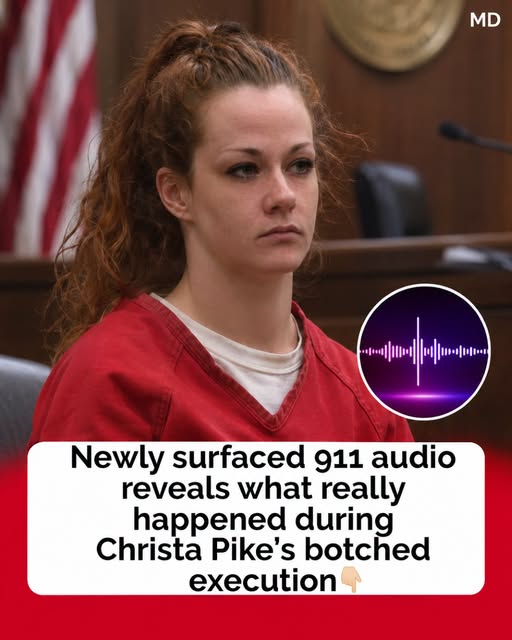
Confusion at Tennessee Prison After Scheduled Execution — 911 Recordings Reveal a troubling delay
Emergency responders arrived outside a Tennessee prison expecting to provide urgent medical assistance, but instead they found themselves caught in a confusing series of conflicting instructions. Inside the facility, a woman who had been scheduled for execution was still alive and needed immediate hospital care. The first emergency call came in at 8:40 p.m., yet responders were reportedly left waiting outside the prison gates as officials struggled to confirm whether the request was genuine. By 9:03 p.m., a dispatcher had been told that the call was false and that no medical assistance was needed. Minutes later, however, another official reportedly…
left waiting outside the prison gates as officials struggled to confirm whether the request was genuine. By 9:03 p.m., a dispatcher had been told that the call was false and that no medical assistance was needed. Minutes later, however, another official reportedly insisted that the emergency was real. The conflicting messages created a delay that would become the focus of serious questions about what happened that night
The newly released recordings, obtained by the Associated Press through a public records request, reveal how difficult it was for emergency personnel to get clear instructions. Responders reportedly spoke with prison staff who said they had not made the original call. Around 9:07 p.m., someone described as a state official was telling responders to enter the facility. At approximately the same time, attorney Kelly Gleason contacted emergency personnel and stressed that her client was still alive and required immediate medical attention. The prison finally confirmed the emergency call at 9:11 p.m., allowing the gates to open. The woman was transported to a hospital at 9:34 p.m., nearly an hour after the first call. But the delay was only one part of a much larger situation that would raise questions about medical care, prison procedures, and the state’s responsibility.
The woman at the center of the incident was 50-year-old Christa Pike, whose scheduled execution took place on September 30 in Tennessee using pentobarbital. The attempted execution did not result in her death, and she was taken to a hospital for treatment. Her attorneys later reported that she had spent several days on a ventilator and that they initially feared she might not survive. She eventually regained consciousness, began speaking, and was able to walk with assistance before being discharged and returned to prison. Pike has since described ongoing physical discomfort and emotional distress. Her legal team has also challenged the conditions of her confinement, arguing that keeping her in the prison infirmary without a clear end date and limiting her contact with other inmates violates an earlier agreement. The case has therefore raised questions extending beyond the execution itself, including medical oversight and the legal obligations surrounding her treatment.