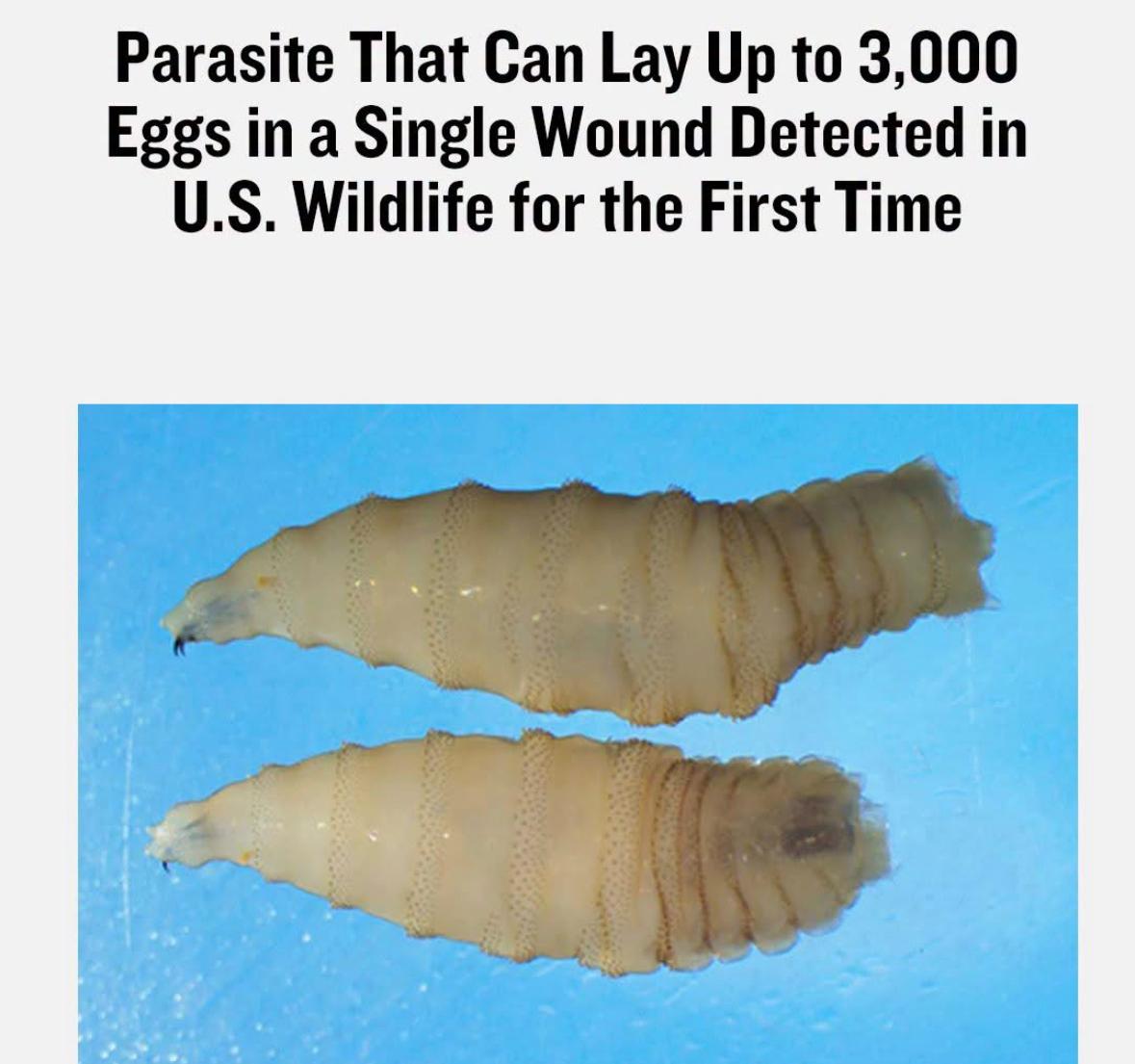
Parasite That Can Lay Up to 3,000 Eggs in a Single Wound Detected in U.S. Wildlife for the First Time
The infected elk was found on a game ranch in Pecos County, Texas, and was reported after a hunter harvested it
- Federal officials confirmed the flesh-eating parasite in an elk harvested on a Texas game ranch
- The discovery expands an outbreak previously detected in livestock and dogs across Texas and New Mexico
- Hunters are urged to report animals with worsening wounds, visible maggots or unusual behavior
New World screwworm has made its way into America’s wildlife.
The U.S. Department of Agriculture’s Animal and Plant Health Inspection Service (APHIS) confirmed the first detection of the flesh-eating parasite in U.S. wildlife on Wednesday, Oct. 21. The infested elk was on a game ranch in Pecos County, Texas, and was reported after a hunter harvested it, according to the agency.
“Early reporting is one of the most important tools we have to protect wildlife, livestock, and pets in the United States,” the United States Department of Agriculture (USDA) said in the announcement.
In response, the USDA and the Texas Parks and Wildlife Department are expanding wildlife surveillance around the ranch. At the same time, the Texas Animal Health Commission plans to redraw an infested zone it had previously established. Animals in that zone must be inspected and treated if necessary before they can be moved, REUTERS reported.
According to the agency, hunters and others who spend time outdoors often encounter infected wildlife first. Officials asked them to watch for visible maggots in wounds or body openings; open wounds that drain or keep growing; foul-smelling injuries; and animals that seem weak, lethargic, isolated, or distressed, as well as signs of infestation around the nose, mouth, ears, eyes, or genitals.
According to the centre of disease control and prevention , the pest is a parasitic fly that deposits eggs in the open wounds or body openings of warm-blooded animals, and in rare cases, humans. Once hatched, the larvae feed on living tissue.
Speaking at an American Veterinary Medical Association (AVMA) session in July, Nebraska delegate Dr. Theresa Kelliher called the fly’s 21-day life cycle “frighteningly efficient.” She said a single female can lay up to 3,000 eggs in one wound over a 10- to 30-day lifespan.
“A quarter-inch wound on Day 1 can become a five-inch wound by Day 2,” Kelliher said, per the AVMA “These are deep wounds that can penetrate into body cavities.”
The flies are drawn to the scent of blood, Kelliher explained, which puts newborns, animals that recently gave birth, and those healing from surgery at higher risk. Even a tick bite can attract them. Infested animals may also act differently, shaking their heads, rubbing against trees, isolating or refusing food.
To protect pets and livestock, the AVMA recommends keeping animals on routine parasite preventives, clearing yards and pens of hazards like sharp wire, exposed nails or broken fencing, and treating cuts, surgical sites and fly bites right away with an approved topical insecticide.
The USDA says the parasite poses no food safety risk. Long entrenched in South America and parts of the Caribbean, screwworm has crept north through Central America and Mexico in recent years, and a travel-associated Human case was confired in US That patient recovered.
Anyone who suspects an infestation should contact their veterinarian, state animal health official, or the USDA immediately.